Launch of Women’s Policy Action Network
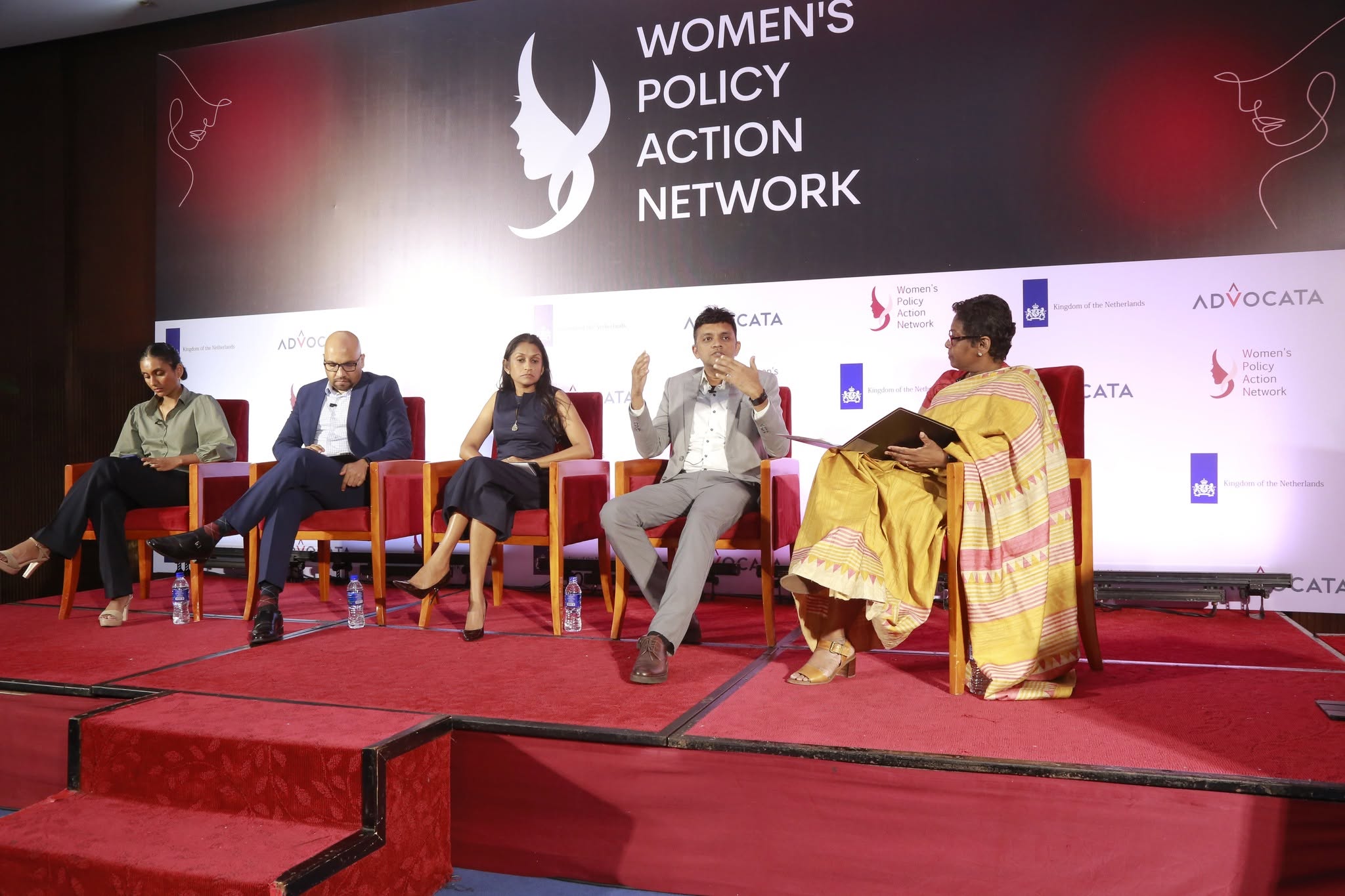
Date: Thursday, 30 March 2023, 6:30 PM
Venue: Lavender Hall, BMICH, Colombo (livestreamed on the Advocata Institute’s Facebook and YouTube channels)
Host: Advocata Institute
Supported by: Kingdom of the Netherlands
Keynote Speaker: Shiromal Cooray, Chairman and Managing Director, Jetwing Travels
Remarks by: Anouk Baron, Deputy Ambassador of the Kingdom of the Netherlands
Moderator: Dr. Roshan Perera, Senior Research Fellow, Advocata Institute
Panelists: Shan Yahampath (Advisor to the Ministry of Labour and Foreign Employment), Sampath Thrimawithana (Director, Virtusa), Anarkali Moonesinghe (Former CEO, CIMB Investment Bank Sri Lanka; Board Member, Lankan Angel Network), Sumini Siyambalapitiya (Senior Research Analyst, Verite Research)
Overview
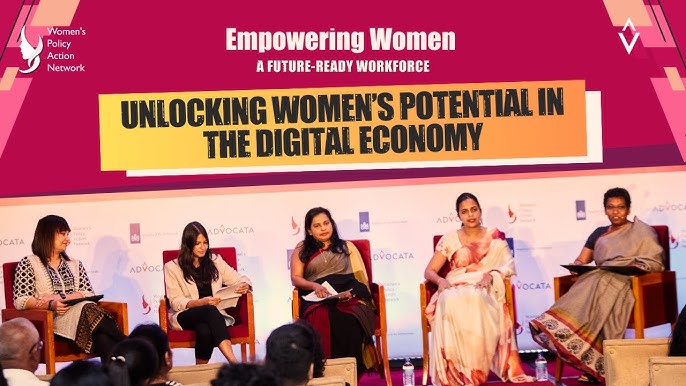
On 30 March 2023, the Advocata Institute launched the Women’s Policy Action Network (WPAN) at Lavender Hall, BMICH, marking the start of what is intended to be a sustained, multi-stakeholder platform for advancing women’s economic empowerment in Sri Lanka. WPAN was conceived as a network of civil society organisations, policymakers and women leaders working together to harness advocacy, consolidate research, and identify the specific structural barriers holding back women’s participation in the economy. The launch was supported by the Kingdom of the Netherlands and was followed immediately by a panel discussion on the network’s founding theme: “Reforms to Empower Women During an Economic Crisis.”
The timing of the launch was deliberate. Sri Lanka’s 2022 economic collapse — its worst contraction since independence — and the preceding pandemic had disproportionately affected women, eroding household incomes and pushing many out of paid work altogether. With income-generating opportunities scarce at home, outward labour migration accelerated sharply, and WPAN’s own research noted that 77% of Sri Lankans registering for overseas employment were women, overwhelmingly in unskilled categories such as domestic work. Against this backdrop, the organisers framed the launch not simply as a networking event but as the beginning of a sustained advocacy effort to remove the reforms standing between women and full economic participation.
Opening Remarks and Introduction
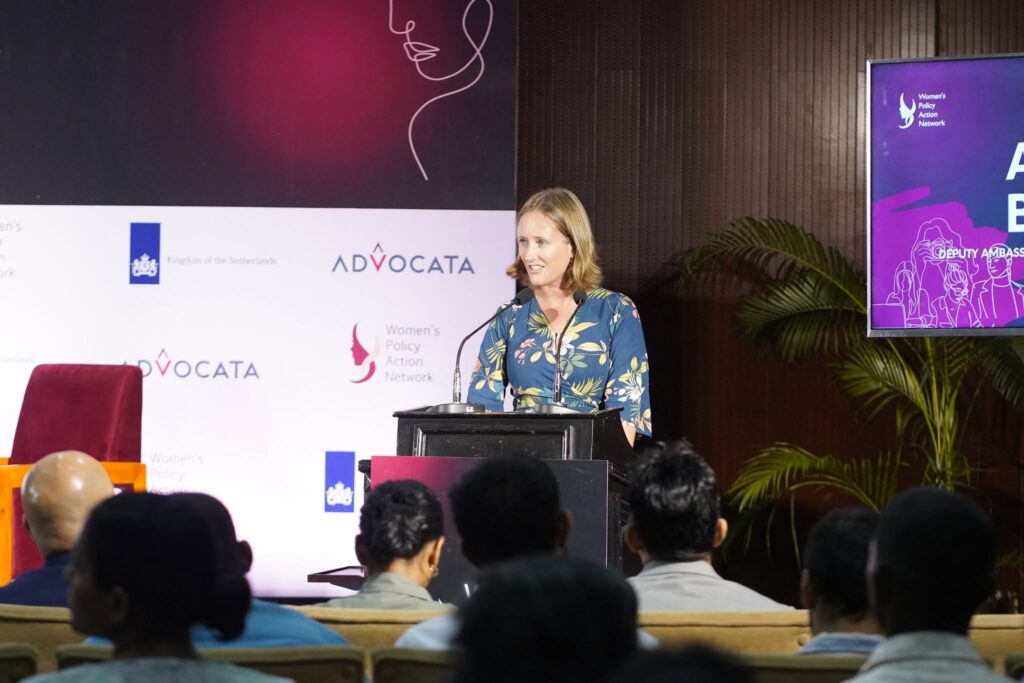
The event opened with Thathsarani Siriwardana introducing the new initiative, describing WPAN’s ambition to help build an economic system that reflects women’s aspirations and to position women’s economic participation as a genuine growth accelerator for the country, rather than a peripheral social concern.
Anouk Baron, Deputy Ambassador of the Kingdom of the Netherlands, followed with remarks underscoring the importance of women’s representation in decision-making spaces and cautioned against imported, one-size-fits-all policy solutions — arguing instead that reform agendas need to be shaped by Sri Lanka’s own local context and lived realities.
Keynote Address: Shiromal Cooray
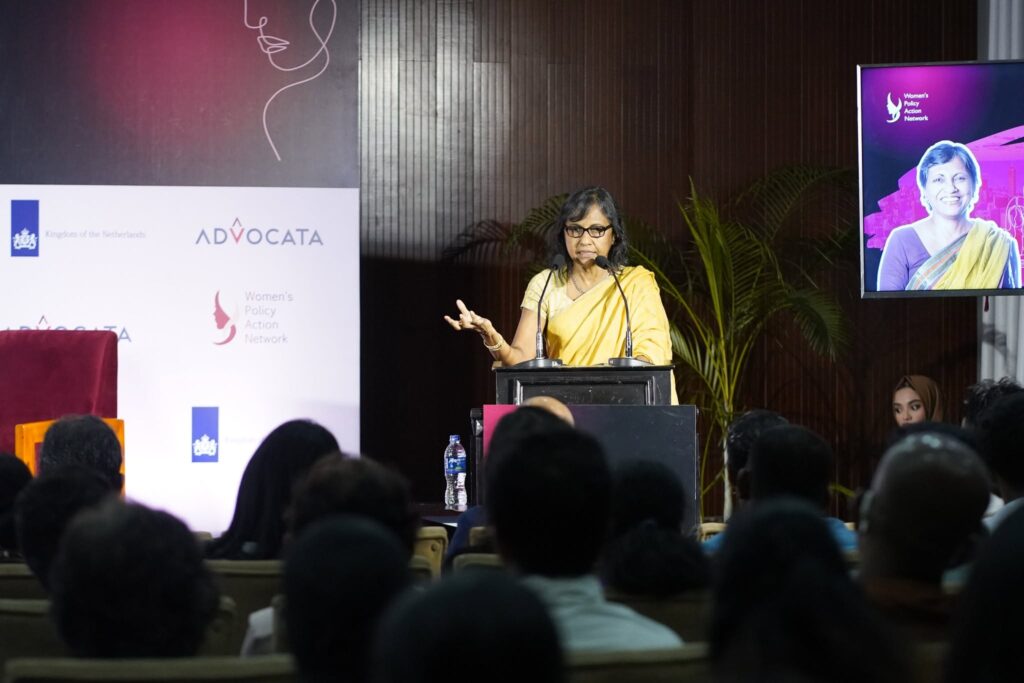
The keynote address was delivered by Shiromal Cooray, Chairman and Managing Director of Jetwing Travels, one of Sri Lanka’s most prominent women business leaders. Her address centred on the idea that the constraint on women’s economic participation is not a lack of capability — women, she argued, are already strong — but rather outdated global attitudes and economic systems that have not evolved to accommodate and enable that strength. It was a call for structural and cultural change to catch up with the capacity that already exists, setting a tone that carried through into the panel discussion that followed.
WPAN’s Objectives: Dr. Roshan Perera
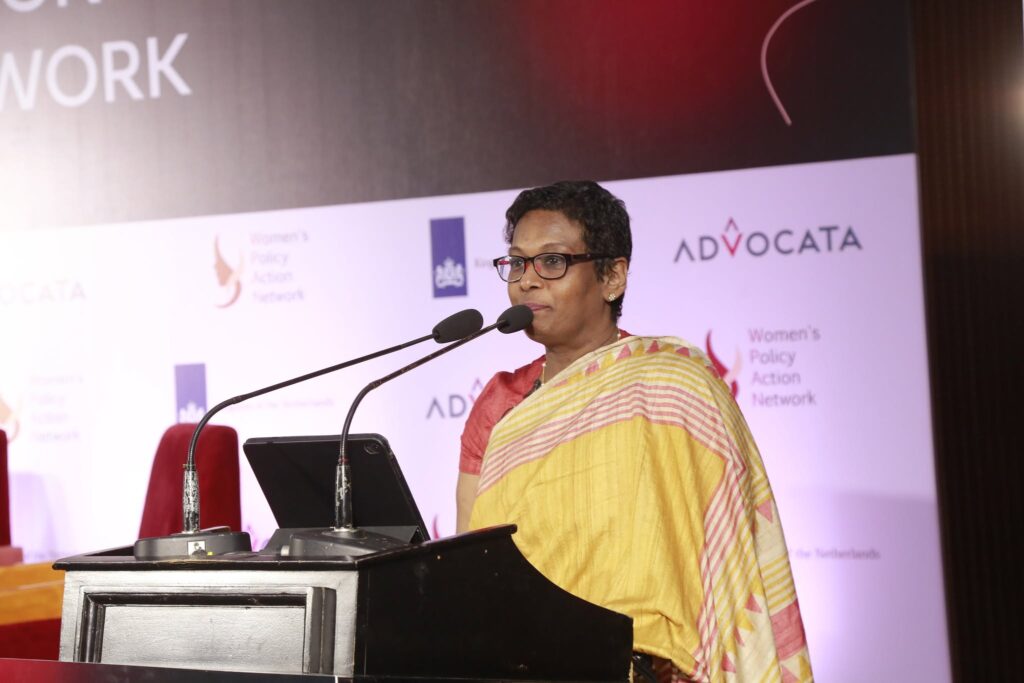
Dr. Roshan Perera, Senior Research Fellow at the Advocata Institute, outlined the network’s founding objectives before moderating the panel. She described WPAN’s role as consolidating the efforts of the many different agencies and organisations already working on women’s economic issues, advocating for legislative reform to remove what she characterised as archaic, outdated barriers still embedded in Sri Lankan labour law, and pushing for meaningful, practical change within workplaces themselves — not just at the level of policy on paper.
Panel Discussion: Reforms to Empower Women During an Economic Crisis
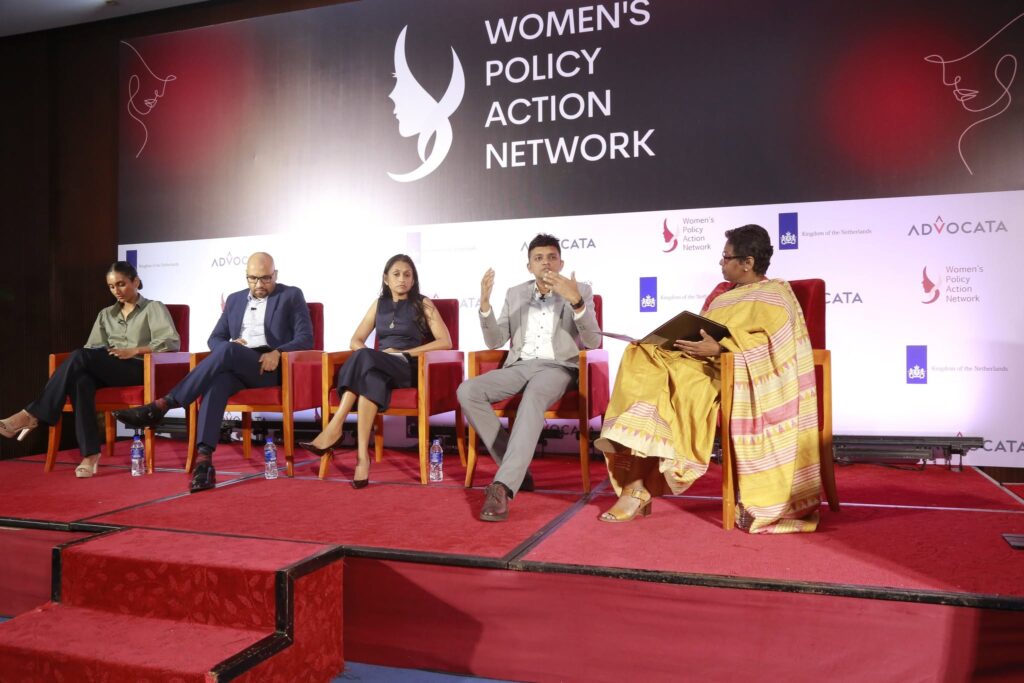
The panel discussion that followed brought together perspectives from government, the private sector, research and finance, and ranged across several of the specific structural reforms identified in WPAN’s founding policy brief.
Unpaid Care Work
A recurring theme — and the centrepiece of WPAN’s policy brief — was the unequal burden of unpaid care work. The brief notes that women globally spend two to ten times more time on unpaid care work than men, and that for every hour spent on domestic chores, a woman forgoes the opportunity to participate in the labour market or invest in education. Critically, the research found that the “explicit cost” of care work — in terms of foregone earnings — often outweighs any income a woman might otherwise generate, regardless of her employment status, which helps explain why so many women exit the labour force at key life stages rather than staying engaged in it.
Sumini Siyambalapitiya of Verite Research brought this data to life on the panel, identifying marriage and childbirth as the primary points at which women drop out of the labour force, largely because affordable, quality childcare is simply not available at scale. This diagnosis aligned closely with WPAN’s policy recommendations on care work, which called for expanding access to child and adult daycare through public institutions, incentivising the private sector to operate daycare centres, strengthening regulatory oversight of existing childcare facilities, and mandating paid, substantial parental leave for both men and women — not mothers alone.
Reforming the Labour Code
Shan Yahampath, Advisor to the Ministry of Labour and Foreign Employment, gave the panel a government-side view of reform already underway, detailing ongoing work on a unified labour code. He pointed to planned measures including unemployment insurance, reform of maternity leave provisions, and digitisation of labour market information — all framed as steps toward a more modern and more equitable labour framework than the one currently in place.
Outdated Restrictions on Women’s Work
WPAN’s brief devoted particular attention to Sri Lanka’s statutory restrictions on night work for women — a protection-oriented provision that, in practice, the brief argues functions as a barrier, limiting both women’s choice over when they work and their earning capacity. The Shop and Office Employees Act currently prevents women over 18 from working past 8 p.m. in most sectors, with no exception carved out for the IT/BPM industry, despite that sector’s operations regularly extending beyond standard hours to serve international time zones. Key informant interviews conducted by the Advocata Institute with the Sri Lanka Association of Software Services Companies (SLASSCOM) found that companies in the sector already operate past the statutory cut-off in practice, and while Cabinet approval has been granted to amend the law to allow the IT/BPM sector to employ women before 6 a.m. and after 6 p.m., the amendment has yet to be formally gazetted. The brief’s recommendations call for removing work-at-night restrictions altogether across the relevant statutes — the Shop and Office Employees Act, the Factories Ordinance, and the Employment of Women, Young Persons and Children Act — paired with a requirement for safe transport or a transport allowance to address the legitimate safety concerns the original restrictions were meant to address.
Part-Time and Flexible Work
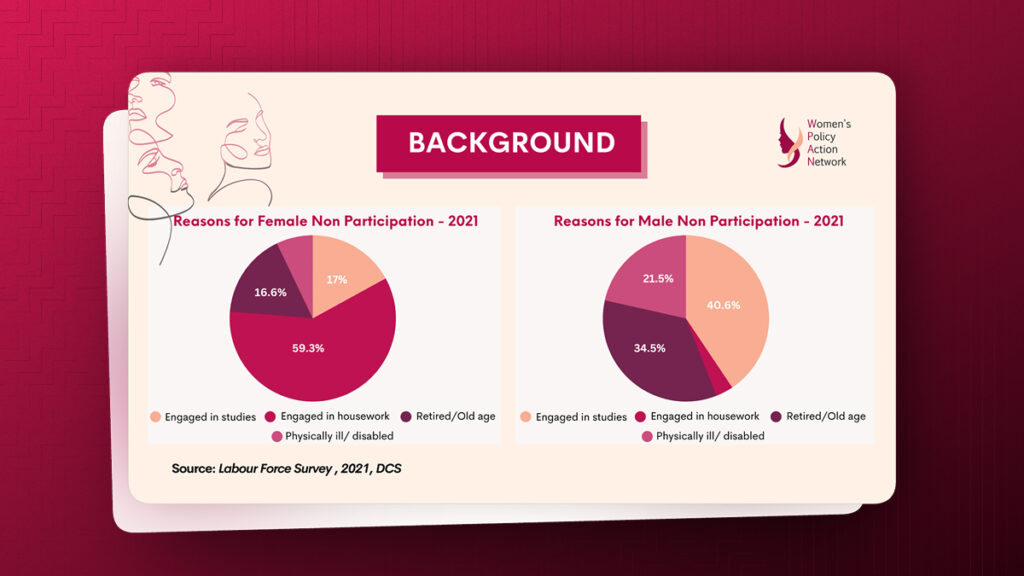
Sampath Thrimawithana of Virtusa brought a private-sector perspective on retention, observing that while entry-level female participation in his industry is strong, attrition rises sharply in the middle of women’s careers. His prescription — greater flexibility, including remote and part-time work arrangements — mapped directly onto another major theme of WPAN’s brief: that Sri Lanka’s current statutory framework does not recognise part-time work as a distinct category, leaving employers reluctant to hire part-time staff, who are nonetheless entitled to the same benefits as full-time employees. According to the Labour Force Survey 2021 cited in the brief, 59.3% of women who are outside the labour force cite household work as the reason, compared to just 3.6% of men — underscoring how directly the absence of legally recognised flexible work options constrains women’s ability to remain economically active. The brief points to Austria, Belgium and Germany, where legislating part-time work contributed to an average 26% increase in women’s employment rates between 1992 and 2011, as evidence of what formal recognition of flexible work could achieve. Its recommendations call for amending the Shop and Office Employees Act to grant part-time workers pro-rated annual and casual leave, and for reforming the Payment of Gratuity Act so that social security calculations account separately for full-time and part-time earning histories.
A Finance and Investment Perspective
Anarkali Moonesinghe brought a finance and investment lens to the discussion, reflecting her background in investment banking and her role on the board of the Lankan Angel Network — adding a perspective on the barriers women face not only as employees but as entrepreneurs and investors seeking capital and access within Sri Lanka’s financial ecosystem.