Closing The Divide Through Women’s Access to Finance
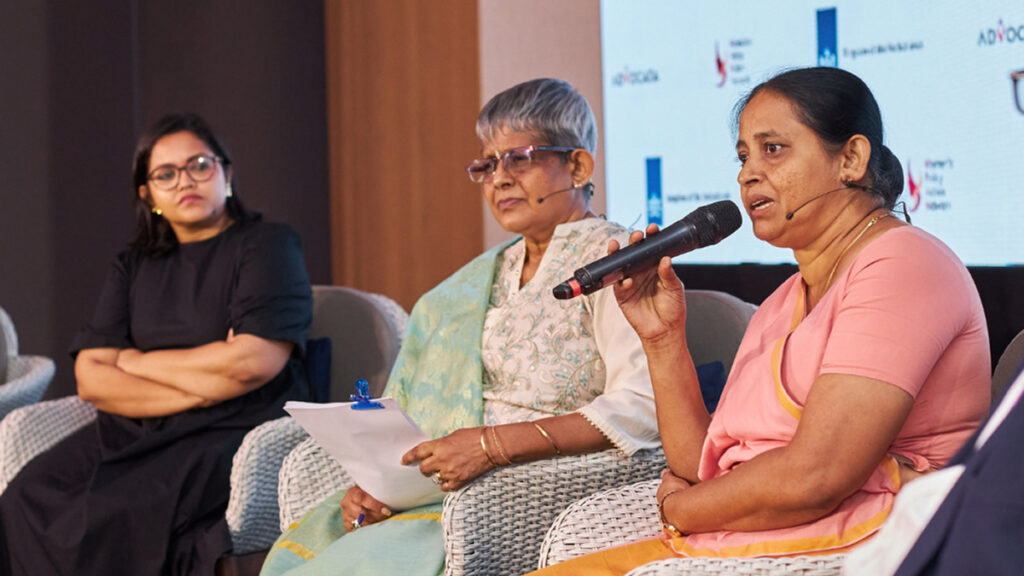
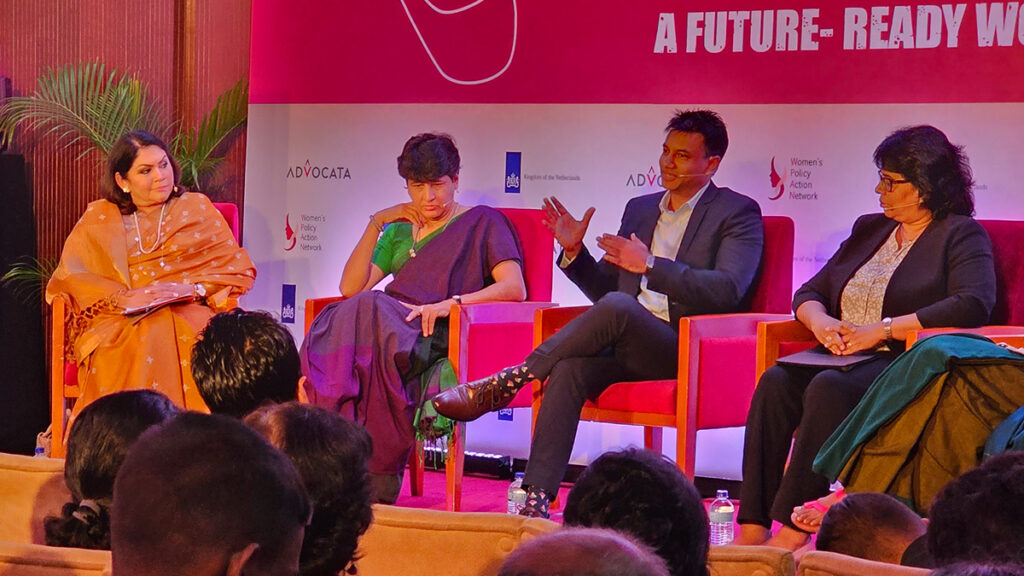
Organizer: Advocata Institute & Women’s Policy Action Network (WPAN)
Supported by: Embassy of the Kingdom of the Netherlands
Date: March 2024
Location: Colombo, Sri Lanka
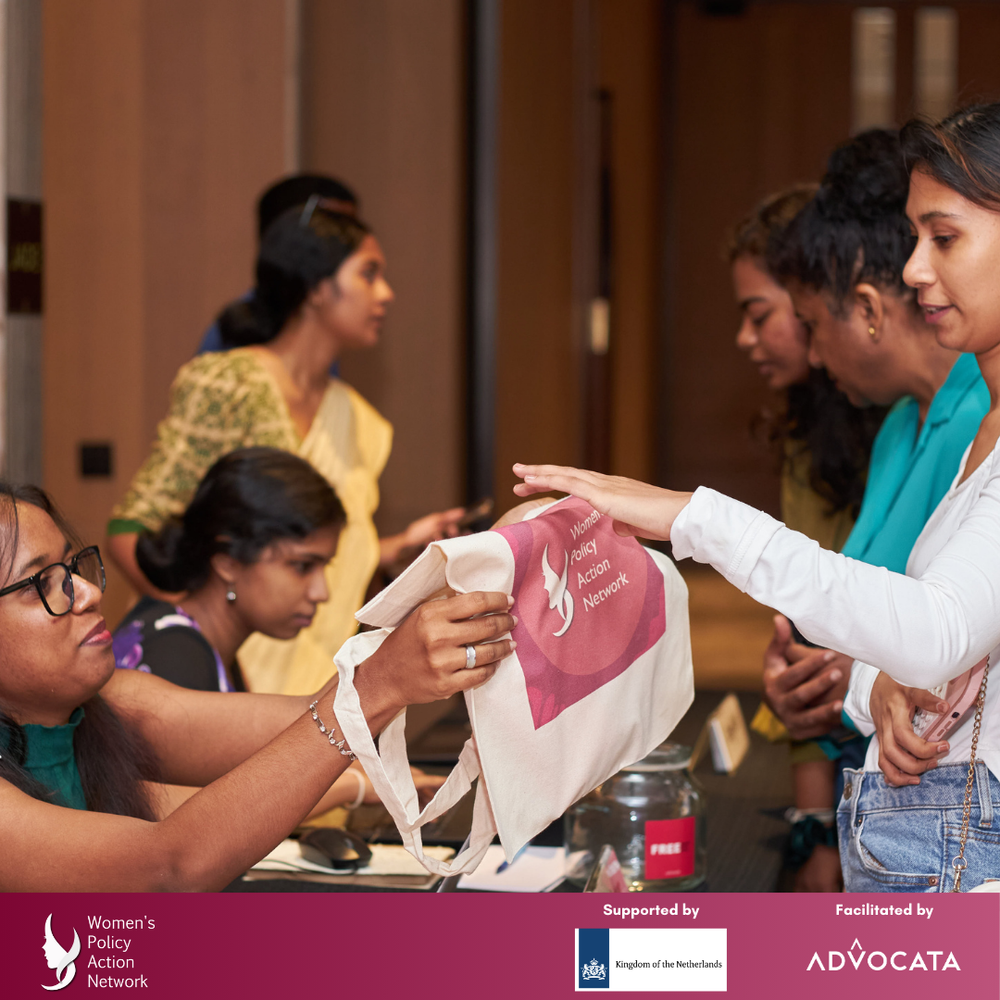
Event Context and Macroeconomic Framework
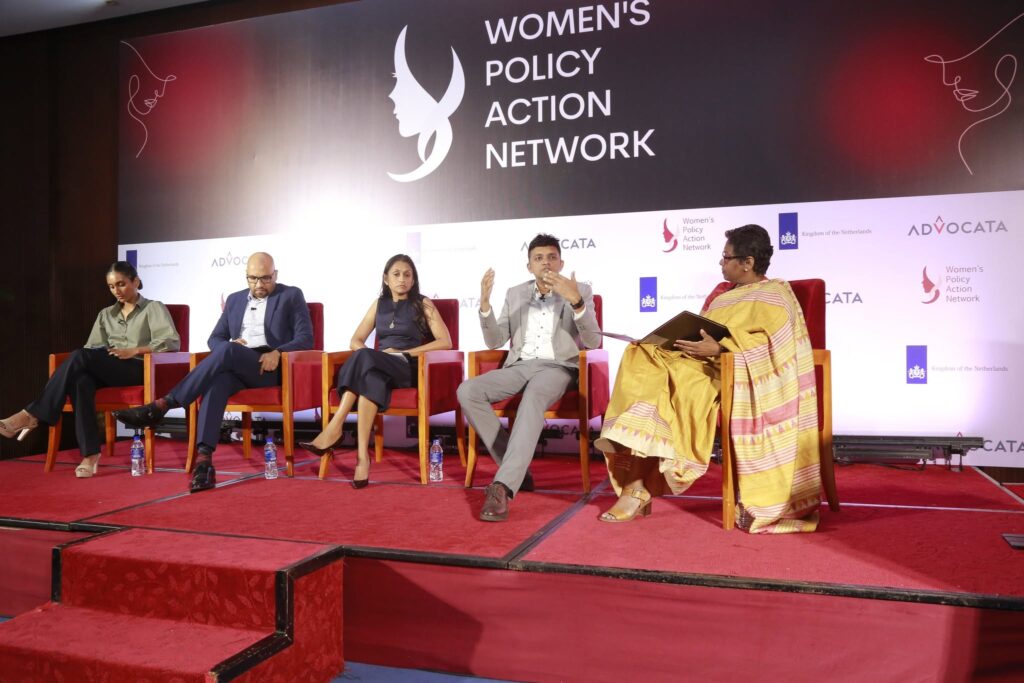
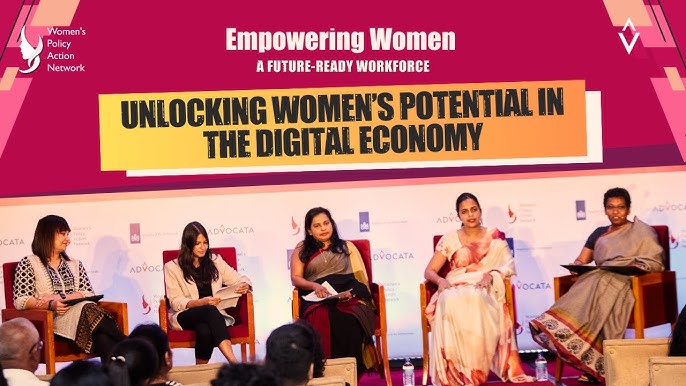
In March 2024, the Advocata Institute, in collaboration with the Women’s Policy Action Network (WPAN) and with support from the Embassy of the Kingdom of the Netherlands, convened a policy panel discussion and report launch titled “Closing the Divide Through Women’s Access to Financial Inclusion” in Colombo, Sri Lanka. The session brought together economic analysts, regulatory figures, development partners, and private sector leaders to unpack the structural, financial, and regulatory bottlenecks that keep Sri Lankan women economically marginalized. Rather than treating female financial access as an isolated social welfare objective or a narrow niche issue, the session framed financial inclusion as a paramount macroeconomic imperative. The central thesis presented by the organizers and speakers was that expanding financial access to women represents one of the most immediate, addressable, and impactful levers for raising Sri Lanka’s long-term economic growth trajectory and unlocking latent national productivity.
During the opening proceedings, Murtaza Jafferjee, Chair of the Advocata Institute, presented a macroeconomic overview demonstrating the opportunity cost of female financial exclusion. Out of Sri Lanka’s economically active population of roughly 16 million people, male labor force participation remains at approximately 70%. In stark contrast, female labor force participation severely lags behind at a mere 35%. This 35% participation rate reveals a profound structural underutilization of national human capital, particularly when evaluated against broader regional benchmarks. In East Asian economies, female labor force participation averages near 70%, while in peer nations such as Vietnam, female participation rates reach between 70% and 80%, closely matching male workforce involvement. By maintaining a system where female workforce engagement is effectively half that of male engagement, Sri Lanka leaves a substantial share of its potential Gross Domestic Product uncaptured. Jafferjee emphasized that because deep-seated structural and domestic obligations frequently prevent women from entering traditional formal employment, facilitating seamless access to capital and enterprise credit is essential. Unlocking credit allows women to engage in micro-entrepreneurship, self-employment, and scalable small business creation, providing an alternative path toward economic self-determination and national productivity.
The Financial and Digital Literacy Disconnect
A key focus of the discussion centered on the empirical findings detailed in the WPAN policy brief, led by Dr. Roshan Perera, WPAN Chair and Senior Research Fellow at the Advocata Institute. Dr. Perera highlighted a critical analytical distinction between basic adult literacy and practical, functional financial capability. Sri Lanka historically boasts an exceptionally high national adult literacy rate of 93.3%, which often creates a false sense of security regarding educational attainment. However, when examining financial literacy—defined as the practical knowledge required to evaluate credit terms, understand interest compounding, manage debt, and navigate formal financial institutions—the national rate drops precipitously to just 57.9%. This substantial gap demonstrates that general educational attainment does not automatically translate into financial empowerment or consumer resilience, leaving a broad segment of the population vulnerable to poor financial decision-making and exploitation.
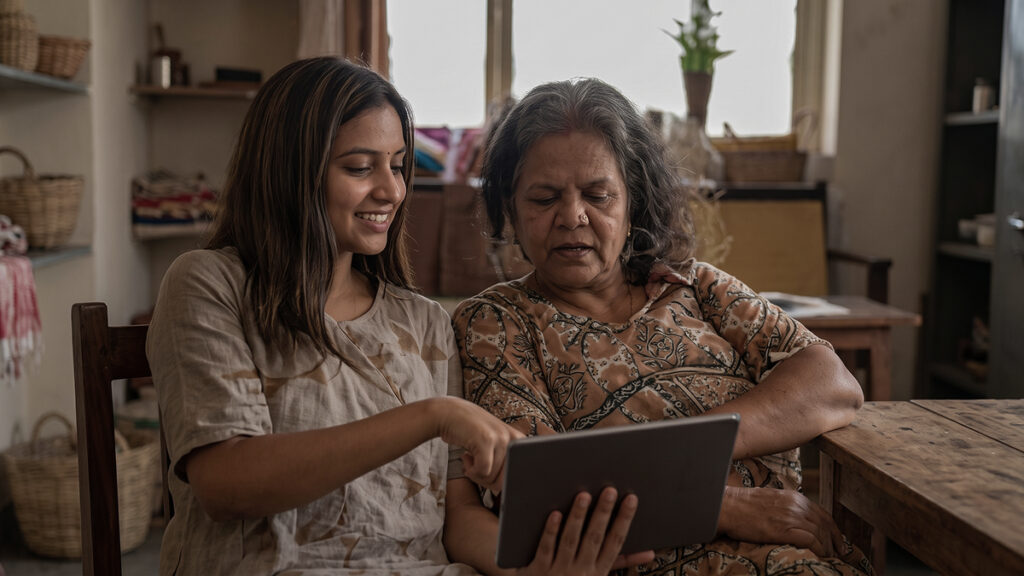
This divide becomes even more acute when evaluating digital adoption and technological readiness across the country. While official statistics report a general digital literacy rate of 57.2%, deeper empirical inquiry reveals that a mere 17.8% of the population functionally uses digital devices for basic online tasks, enterprise management, or digital financial transactions. This staggering drop from baseline literacy to functional utilization illustrates that millions of citizens who are nominally classified as digitally literate lack the operational skills or tools necessary to interact with modern digital banking ecosystems. The panel examined the underlying structural drivers of this technological divide, identifying data pricing, device affordability, and fiscal policy as primary bottlenecks. Mobile data affordability constraints impact roughly 60% of the Sri Lankan population. Furthermore, heavy government import tariffs on digital hardware, combined with indirect taxes levied on telecommunications and internet services, render smart mobile devices financially out of reach for low-income rural women. Consequently, the vast majority of rural women remain restricted to basic feature phones capable only of voice calls and simple SMS messages. Because basic feature phones cannot run mobile banking applications or process digital merchant payments, low-income female entrepreneurs are systematically cut off from modern digital financial services, forcing the rural economy to remain heavily cash-dependent, inefficient, and isolated from formal credit pipelines.
Collateral Barriers and the Informal Debt Trap
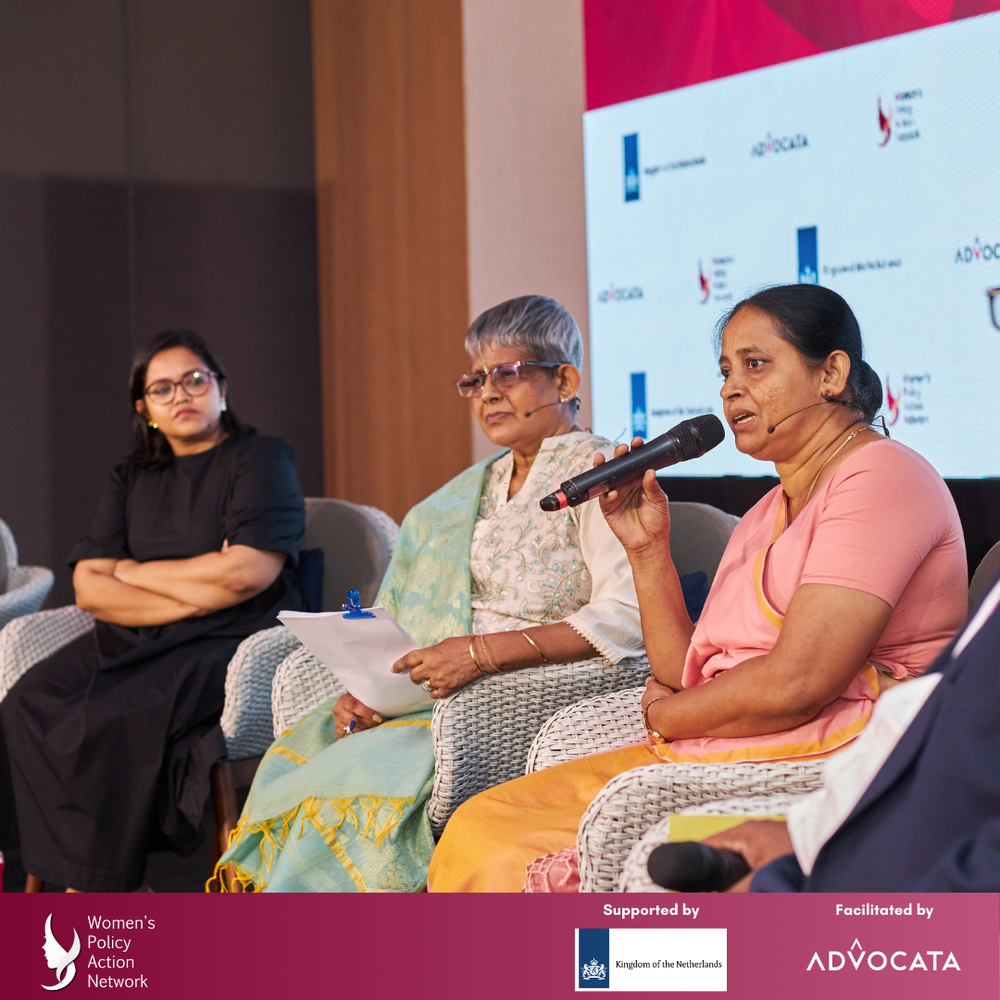
The panel conducted an examination of the structural barriers within traditional commercial banking practices that systematically exclude women from formal credit markets. Commercial banks and non-bank financial institutions in Sri Lanka rely overwhelmingly on asset-backed lending models, which demand physical land titles or real estate property as collateral before granting enterprise loans. This requirement creates an almost insurmountable barrier for women due to customary property inheritance patterns and social norms, which result in land and real estate titles being predominantly held in the names of male family members. Because women rarely possess formal property titles in their own names, they are consistently categorized as high-risk or un-collateralized borrowers by commercial credit officers, regardless of the viability or cash-flow potential of their business ideas.
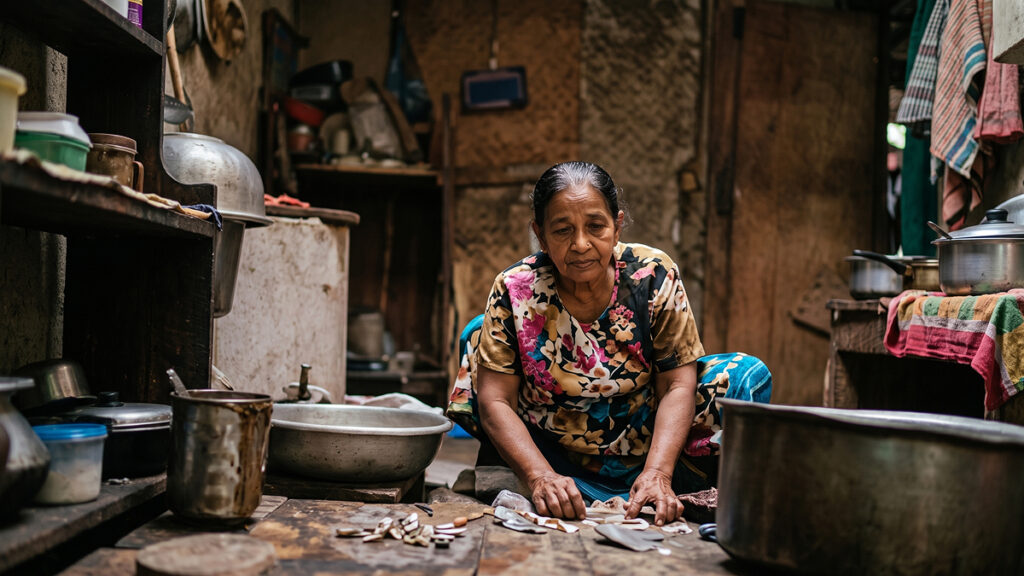
Unable to satisfy the rigid collateral requirements of traditional banking institutions, female entrepreneurs are systematically driven into informal credit markets. Drawing on insights from sector leaders, including Samadanie Kiriwandeniya, Managing Director of SANASA International, the panel highlighted that an estimated 62% of female borrowers rely on informal financial channels, unregulated micro-lending entities, or informal rotating savings arrangements such as security networks. While these informal sources offer immediate accessibility without demanding land titles, they carry catastrophic financial risks. Unregulated micro-lenders routinely charge exorbitant annualized interest rates exceeding 70%, while employing aggressive, coercive, and predatory debt collection practices. Instead of serving as a catalyst for enterprise growth and poverty alleviation, informal credit frequently becomes an extractive debt trap. Low-income women find themselves taking on additional high-interest loans simply to service existing debt obligations, culminating in severe mental stress, asset depletion, and deeper socio-economic vulnerability.
Intersecting Structural Obstacles to Women’s Work
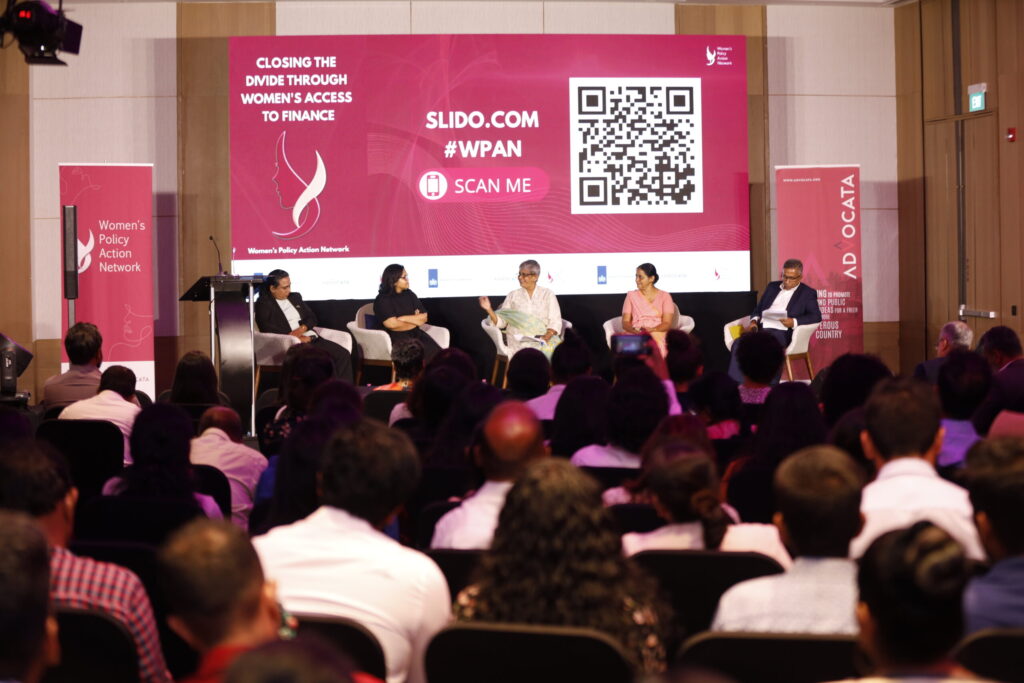
The research presented by Advocata and WPAN demonstrated that financial exclusion does not operate in a vacuum; rather, it intersects dynamically with restrictive labor legislation, gendered division of labor, and broader societal constraints. Panelists including Selyna Peiris, Director of Business Development at Selyna, and Tusitha Kumarakulasinham, Board Member of the Women’s Chamber of Industry and Commerce (WCIC), detailed how unpaid care work and domestic responsibilities disproportionately burden women across Sri Lanka. Heavy domestic obligations, eldercare, and childcare duties severely restrict women’s physical mobility and limit their capacity to commit to rigid, full-time formal employment schedules. Without accessible, high-quality childcare infrastructure, millions of women are forced to forfeit formal career opportunities.
This domestic burden is further compounded by outdated and inflexible labor legislation. Sri Lanka’s statutory labor framework currently lacks modern provisions for formal part-time employment, flexible working hours, or job-sharing arrangements. Additionally, archaic legal restrictions regarding night-time employment for female workers continue to restrict women from participating in lucrative sectors such as night-shift logistics, global service operations, and flexible shift work. In the absence of flexible formal employment options or startup capital to launch scalable businesses, women are systematically channeled into low-yielding, survivalist informal enterprises. These informal micro-businesses operate without social safety nets, formal contracts, or growth capital, reinforcing a cycle of low productivity and economic precarity.
Building Gender-Inclusive Digital Public Infrastructure and Regulatory Protections
To resolve these systemic barriers, the WPAN policy brief outlines a strategic blueprint for developing gender-inclusive Digital Public Infrastructure (DPI) designed to drastically lower customer acquisition costs and eliminate physical barriers for women-led enterprises. This proposed DPI framework rests on three crucial pillars. First is the rapid deployment of a biometric-enabled National Digital Identity (NDID) system, which would facilitate remote Electronic Know-Your-Customer (e-KYC) verification. A functioning e-KYC framework would allow rural women to open formal bank accounts, verify their identities, and complete financial transactions remotely using secure digital channels, thereby eliminating the travel costs and time burdens associated with visiting distant physical bank branches. Second is the expansion of interoperable, low-cost merchant payment networks, such as LankaQR. By scaling zero- or low-fee digital payment frameworks, informal female vendors can seamlessly transition into digital commercial ecosystems, building a verifiable transaction history that can be used to establish creditworthiness. Third is the formal establishment of a standardized, unified national definition for Women-Owned Small and Medium Enterprises (WSMEs) across all financial institutions. Without an official, legal definition, targeted concessional credit quotas and donor-funded lending programs frequently fail to reach their intended female recipients due to commercial misclassification.
Addressing the regulatory architecture required to enforce these changes, Sirikumara Kudagama, Assistant Governor of the Central Bank of Sri Lanka, and Uresha Walpitagama, Financial Sector Specialist at the Asian Development Bank, highlighted critical legislative priorities. They emphasized the urgent necessity of passing and enacting the Microfinance and Credit Regulatory Authority Bill. This legislation is vital for establishing a dedicated regulatory authority capable of licensing, monitoring, and supervising unregulated microfinance entities, thereby curbing predatory lending and illegal digital loan applications. Concurrently, the speakers stressed the need for full enforcement of the Central Bank of Sri Lanka’s Financial Consumer Protection Regulations No. 01 of 2023. Strict enforcement of these regulations is mandatory to mandate transparent interest rate disclosures, eradicate abusive debt recovery practices, and protect vulnerable low-income female borrowers from financial exploitation.
Strategic Action Plan and Policy Recommendations
Achieving meaningful, long-term female financial inclusion in Sri Lanka requires a coordinated, multi-stakeholder strategy executed across four main policy pillars. In the realm of national policy and regulation, state authorities must prioritize the passage of the Microfinance and Credit Regulatory Authority Bill to eliminate predatory lending practices, while simultaneously adopting a legal, standardized national definition for Women-Owned Small and Medium Enterprises (WSMEs) to ensure targeted credit quotas reach legitimate women-led businesses. In terms of labor market reform, parliament must modernize statutory employment frameworks by formalizing flexible part-time work regimes, encouraging remote work, and repealing antiquated restrictions on night-time employment for female workers to lower entry barriers into the formal economy.
Within financial sector practice, commercial banks, non-bank financial institutions, and credit bureaus must actively transition away from strict, asset-backed collateral lending. Institutions should adopt alternative credit scoring models based on cash-flow assessments, digital transaction histories, and utility payment records, thereby unlocking enterprise credit for capable entrepreneurs who lack real estate titles. Finally, regarding digital infrastructure and fiscal policy, the government must accelerate the nationwide rollout of the biometric National Digital ID system, scale low-cost interoperable payment rails like LankaQR, and urgently review its tax policy. Re-evaluating import tariffs on smart digital devices and reducing indirect taxes on internet services will lower onboarding costs for rural entrepreneurs, bridging the digital divide and integrating Sri Lankan women into the modern financial economy.