 Research Publication
Unlocking Women’s Potential in the Digital Economy
29, August 2023
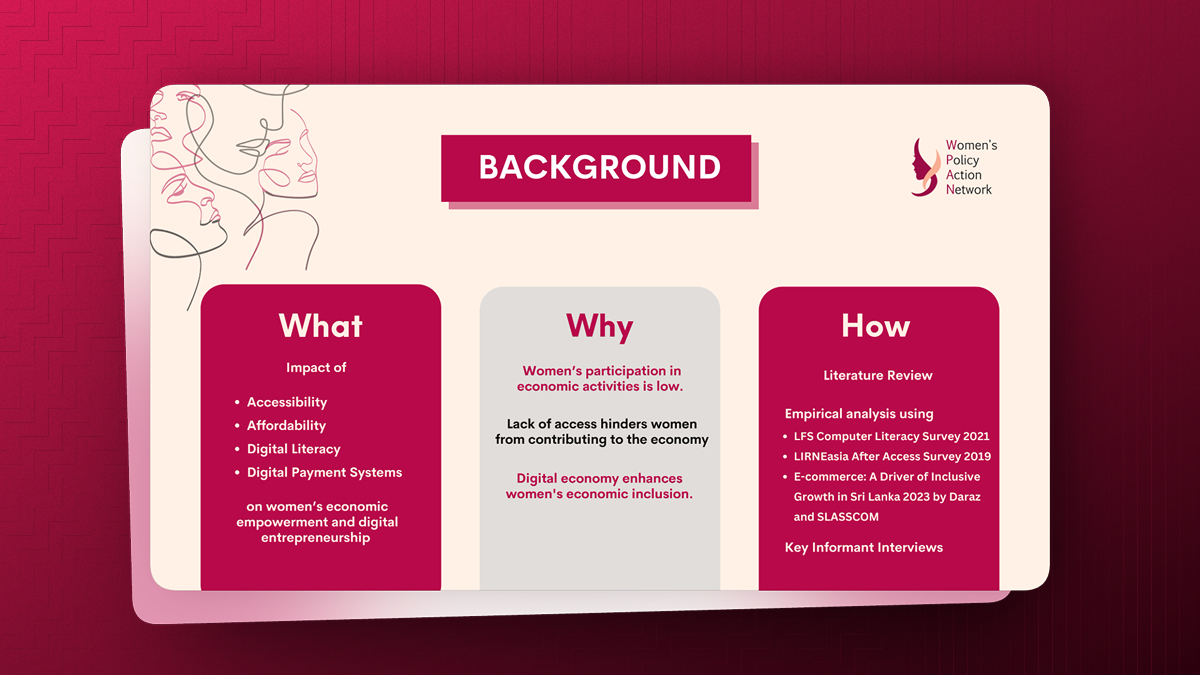
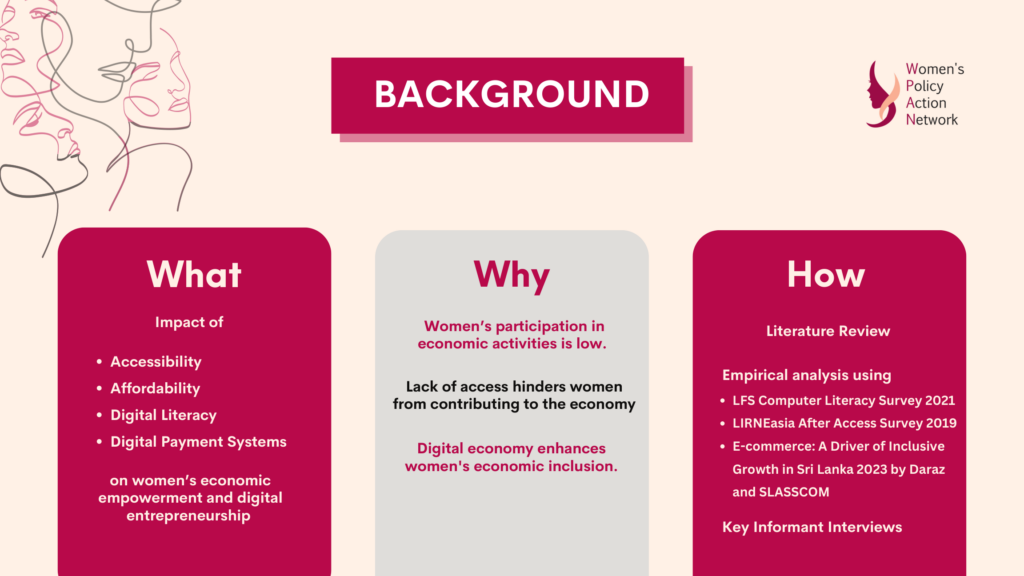
Women’s participation in economic activities is low. Lack of access to digital infrastructure, affordability challenges, limited digital literacy, and weaknesses in digital payment systems can hinder women’s economic participation.
The digital economy has the potential to enhance women’s economic inclusion and entrepreneurship.
This analysis draws on a literature review, empirical analysis, the LIRNEasia AfterAccess Survey 2019, E-commerce: A Driver of Inclusive Growth in Sri Lanka? 2023, and key informant interviews.
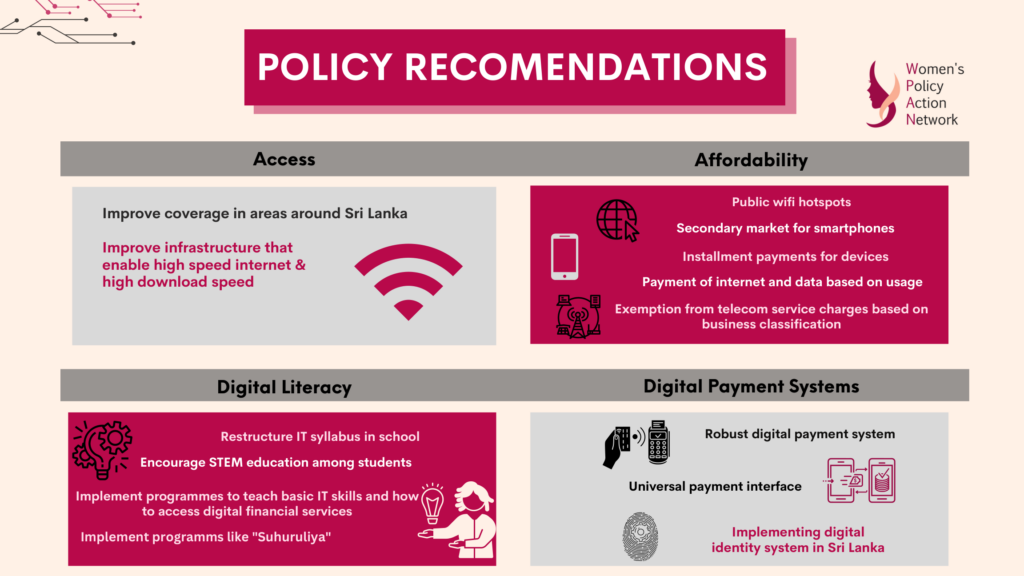
Access
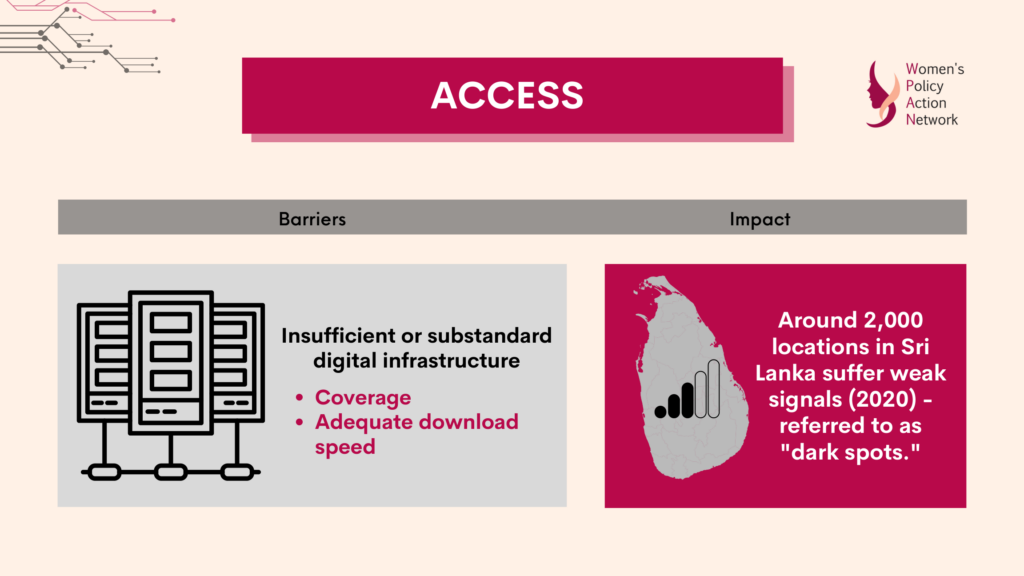
Insufficient or substandard digital infrastructure remains a barrier to women’s participation in the digital economy.
Some locations in Sri Lanka experience weak coverage signals and inadequate download speeds. These areas are sometimes referred to as “dark spots.”
4G Coverage – 2022
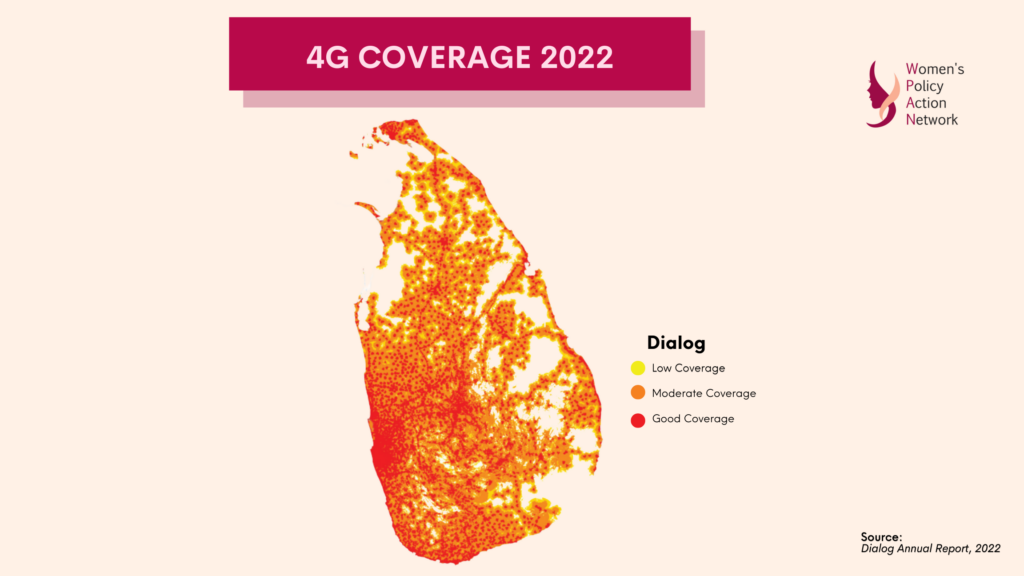
Coverage levels can be categorised as low coverage, moderate coverage, and good coverage.
Source: Dialog Annual Report, 2022.
Affordability
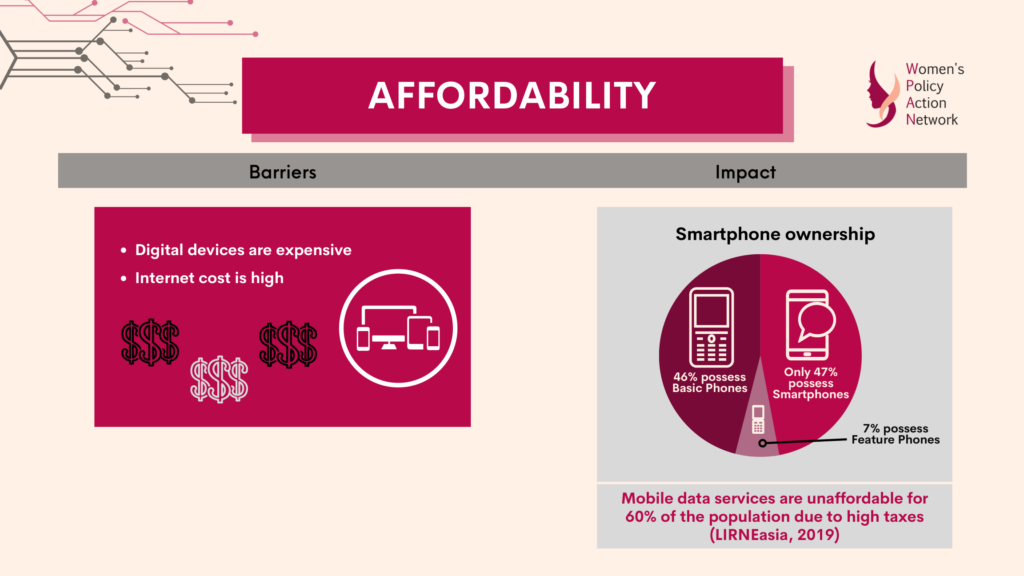
Digital devices remain expensive for many people, while the cost of internet access can also create a significant barrier.
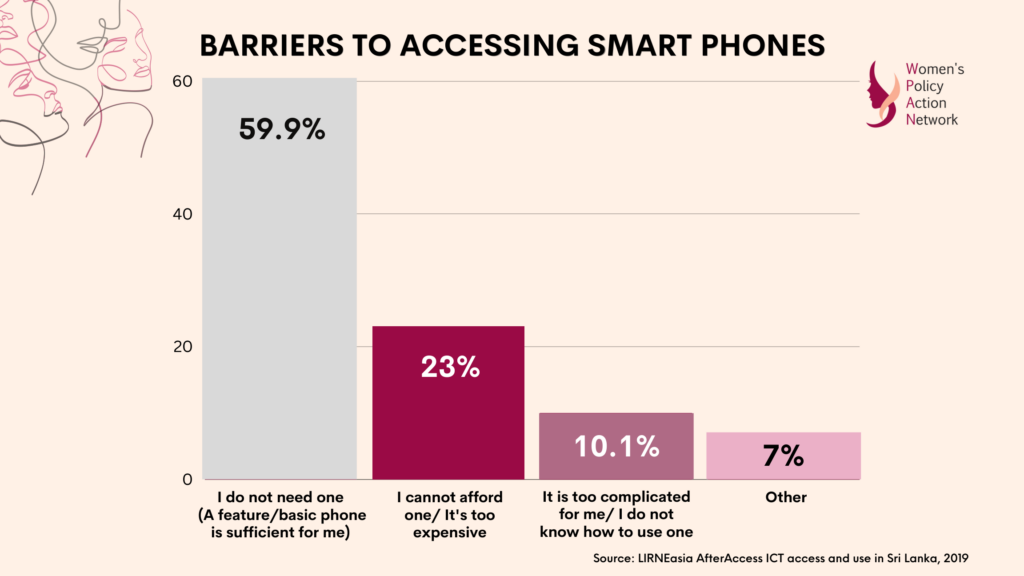
Smartphone ownership remains limited, with many users continuing to rely on basic or feature phones.
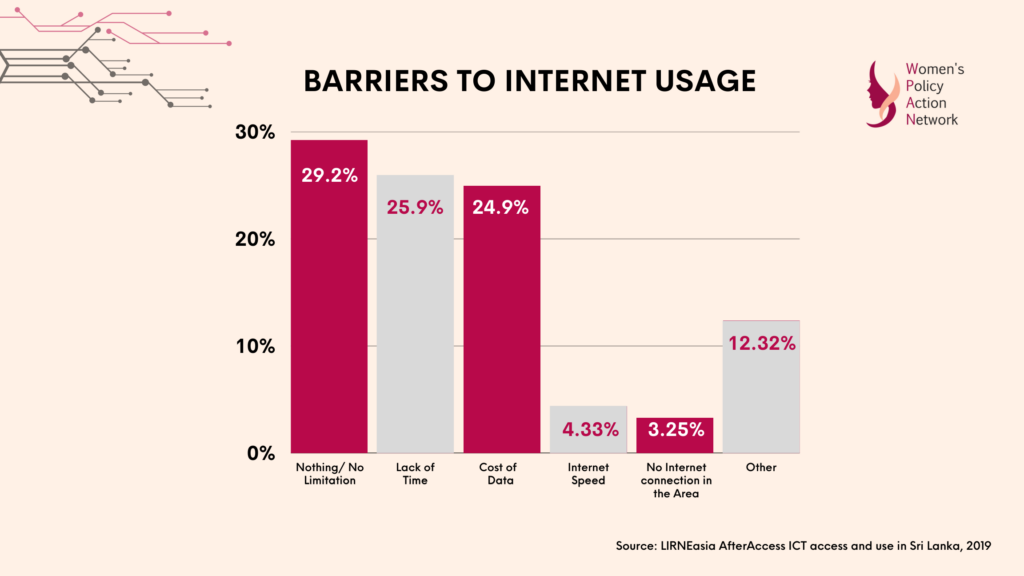
Mobile data services are unaffordable for a significant share of the population due in part to high costs and taxes.
Source: LIRNEasia AfterAccess ICT Access and Use in Sri Lanka, 2019.
Taxes on Internet Services in Sri Lanka
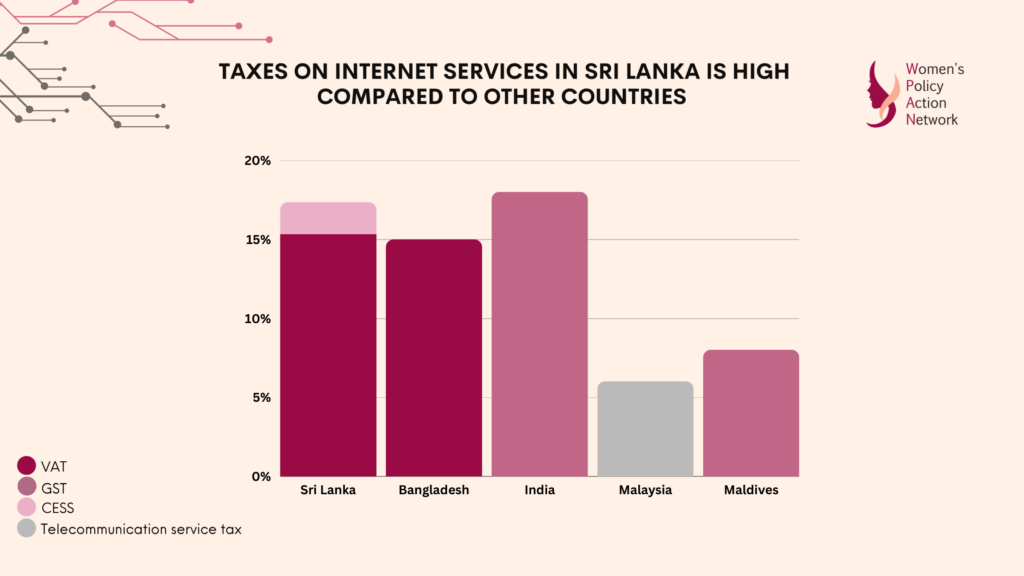
Taxes on internet and telecommunications services in Sri Lanka have been high compared with several other countries in the region.
The comparison considered Sri Lanka, Bangladesh, India, Malaysia, and the Maldives, including VAT, GST, and telecommunications service taxes.
Digital Literacy in Sri Lanka
Computer Literacy by Gender
A person aged 5-69 is considered computer literate if they have the ability to use a computer independently.
For example, if a five-year-old child can independently play a computer game, they may be considered computer literate under the survey definition.
Digital Literacy by Gender
A person aged 5-69 is considered digitally literate when they can use digital devices and related technologies independently.
Source: Labour Force Survey, 2021.
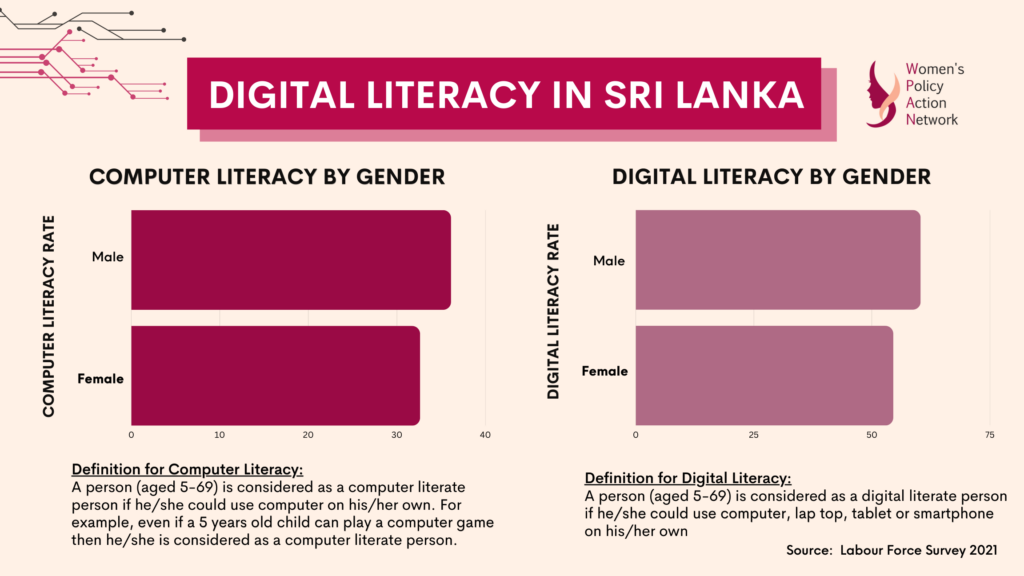
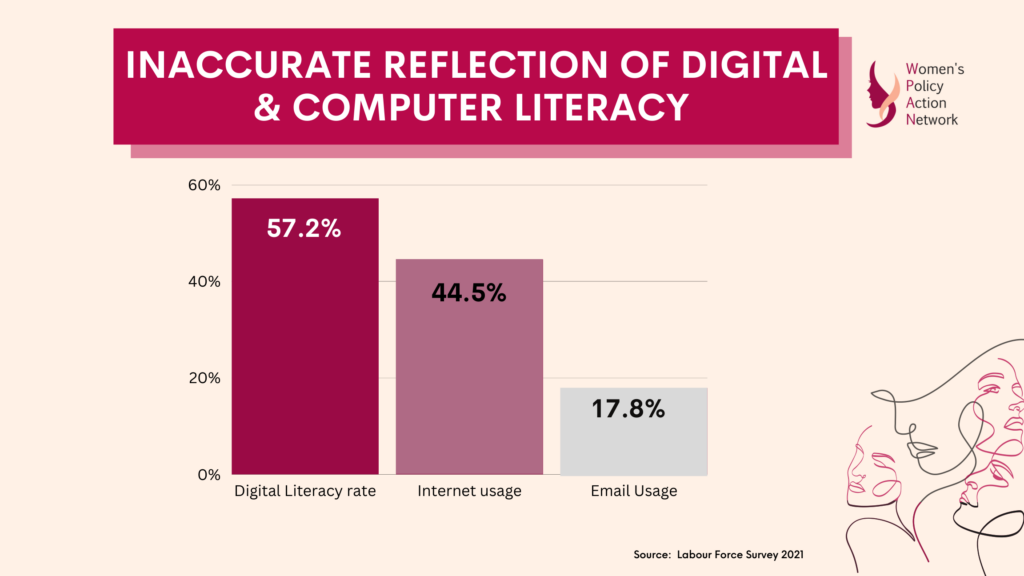
Existing measures of computer and digital literacy may not fully reflect the level of practical digital capability required for participation in the modern digital economy.
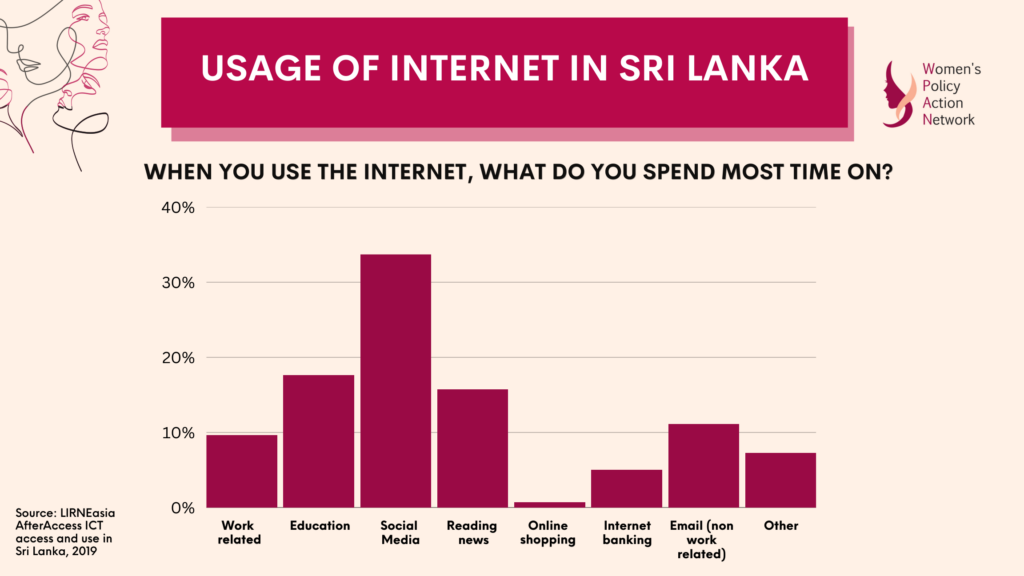
The LIRNEasia AfterAccess survey examined the activities on which people spend the most time when using the internet.
Source: LIRNEasia AfterAccess ICT Access and Use in Sri Lanka, 2019.
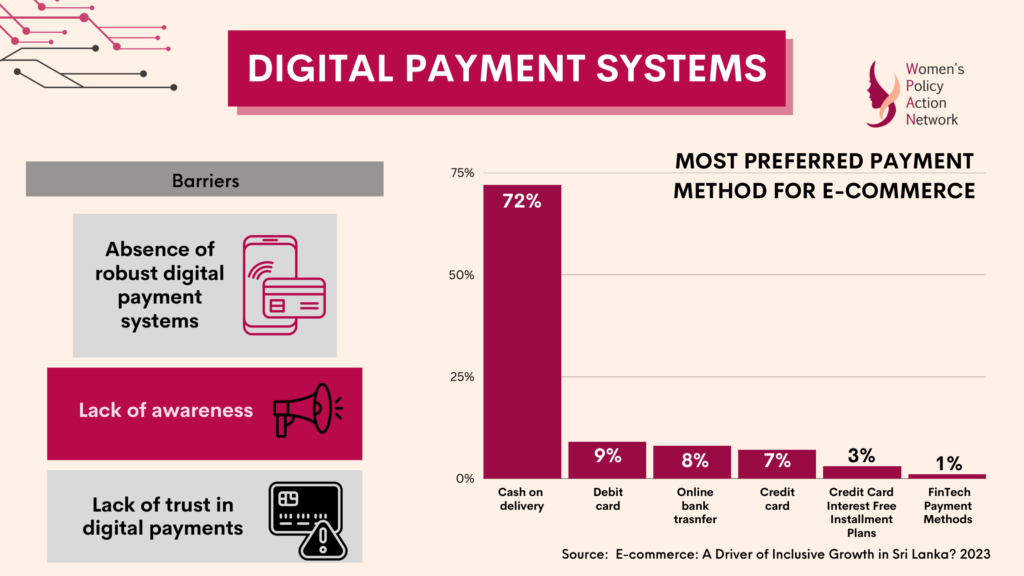
The absence of robust digital payment systems and limited awareness of digital payment methods remain barriers to wider participation in e-commerce.
Preferred Payment Methods for E-commerce
Consumer payment preferences include cash-based payments, digital payments, bank transfers, and instalment-based payment methods.
Source: E-commerce: A Driver of Inclusive Growth in Sri Lanka?, 2023.
E-commerce Participation
E-commerce participation varies according to gender, age group, household income, and education level.
The analysis considers age groups from 18-20 through 61-65 years, household income categories, and education levels ranging from primary education to professional qualifications.
Source: E-commerce: A Driver of Inclusive Growth in Sri Lanka?, 2023.

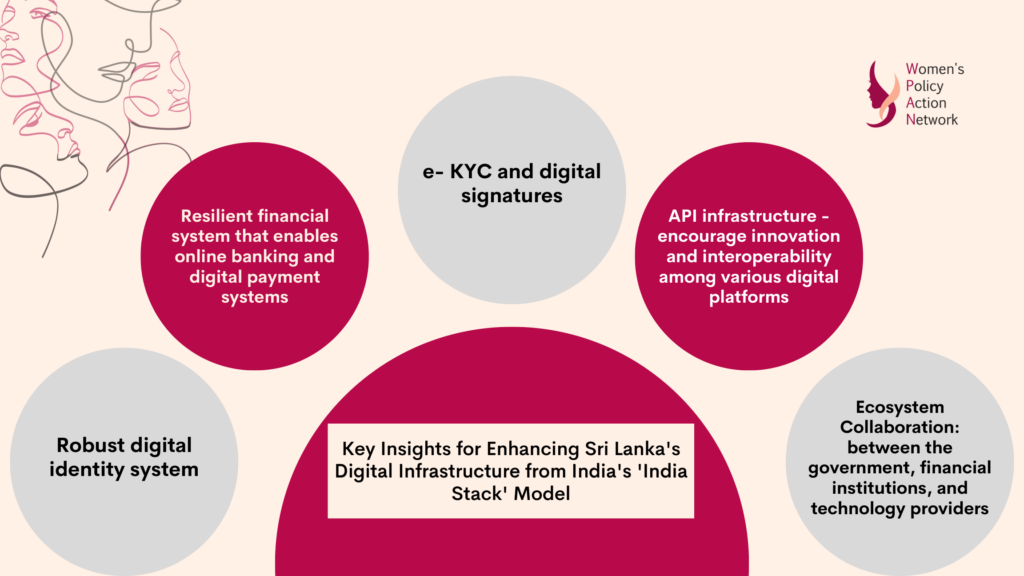
Key Insights for Enhancing Sri Lanka’s Digital Infrastructure
Lessons from India’s “India Stack” model highlight several areas that could support Sri Lanka’s digital ecosystem.