 Research Publication
The State of State-Owned Enterprises 2022
5, August 2022
Summary
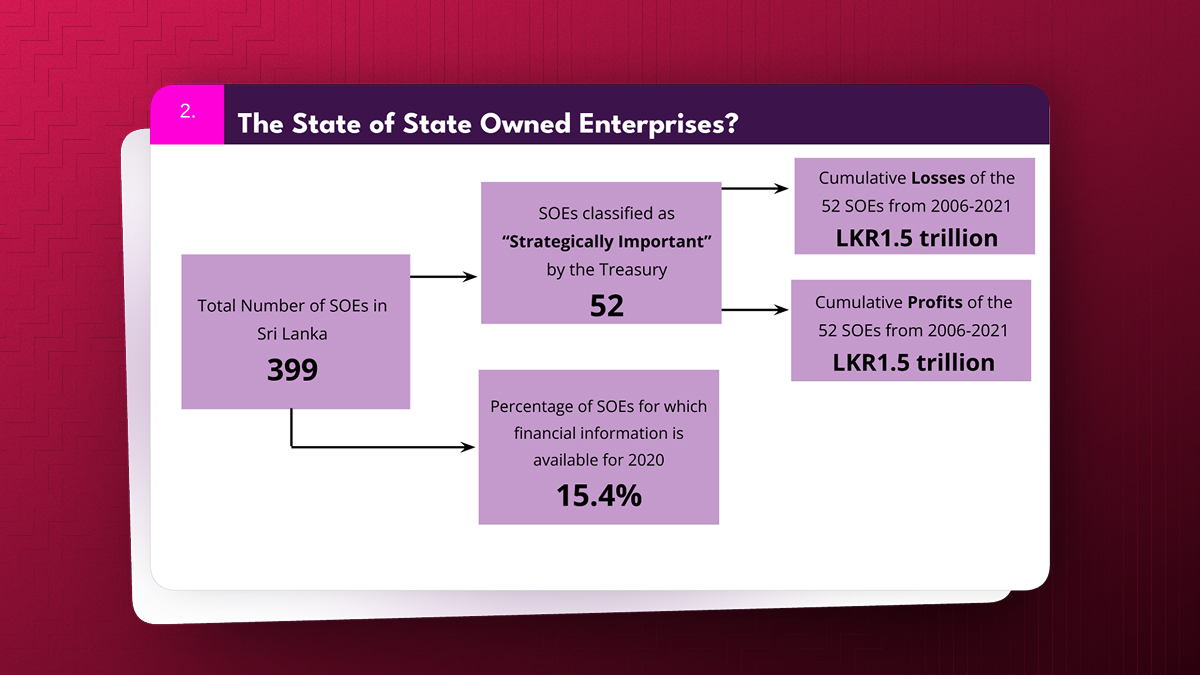
Ravi Ratnasabapathy examines the fiscal and governance risks created by Sri Lanka’s state-owned enterprises. Although the Treasury classifies 52 SOEs as strategically important, the country has hundreds of state entities and financial information is available for only a small proportion of them. Major enterprises have accumulated substantial profits and losses, while debt, government guarantees and recurrent support expose taxpayers and the banking system to significant risk.
The presentation proposes assessing SOEs through both financial and non-financial measures. Return on assets should be compared with the government’s effective borrowing cost and, where possible, with private-sector peers. A governance scorecard should also test the availability of annual reports, audit quality, compliance with right-to-information obligations and the accessibility of organisational and procurement information. Persistent underperformance strengthens the case for privatisation or other forms of private participation that remove fiscal burdens, reduce banking-sector risk and improve competition and productivity.
Key Points
- Sri Lanka has hundreds of state-owned entities but reliable financial information is available for only a small share of them.
- SOE losses, debt and treasury guarantees create direct and contingent risks for taxpayers and the financial system.
- Financial performance should be evaluated using return on assets relative to the government’s cost of borrowing.
- Where markets are competitive, SOEs should also be compared with private-sector performance.
- A governance scorecard can expose weaknesses in reporting, audit quality, right-to-information compliance and procurement transparency.
- Privatisation and private participation can raise revenue, stop recurrent losses, reduce financial risk and improve competition.
Tags