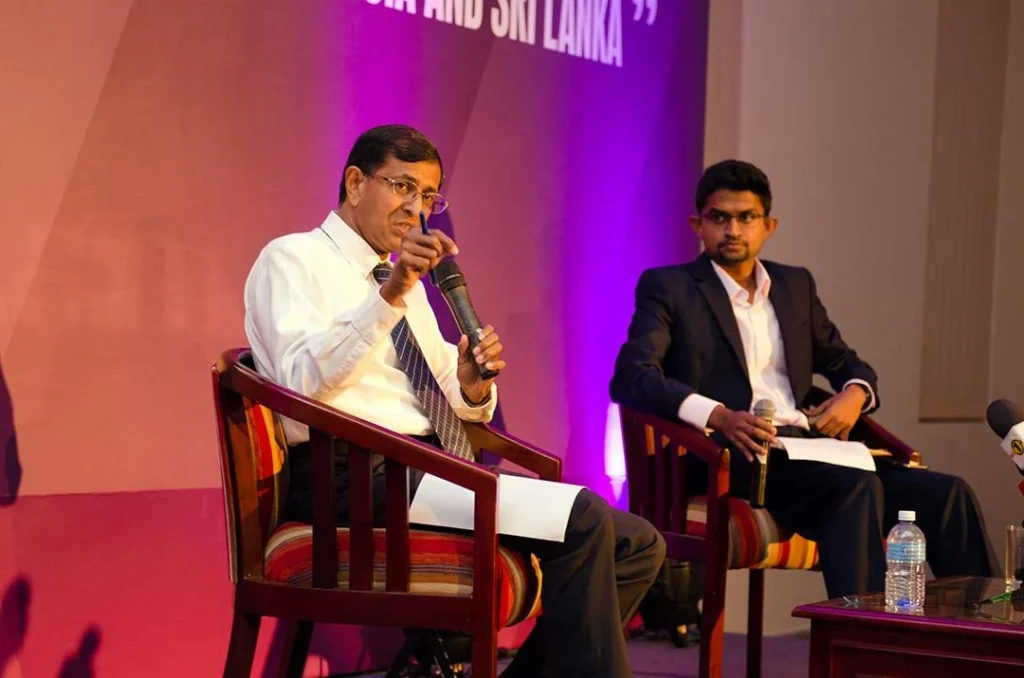
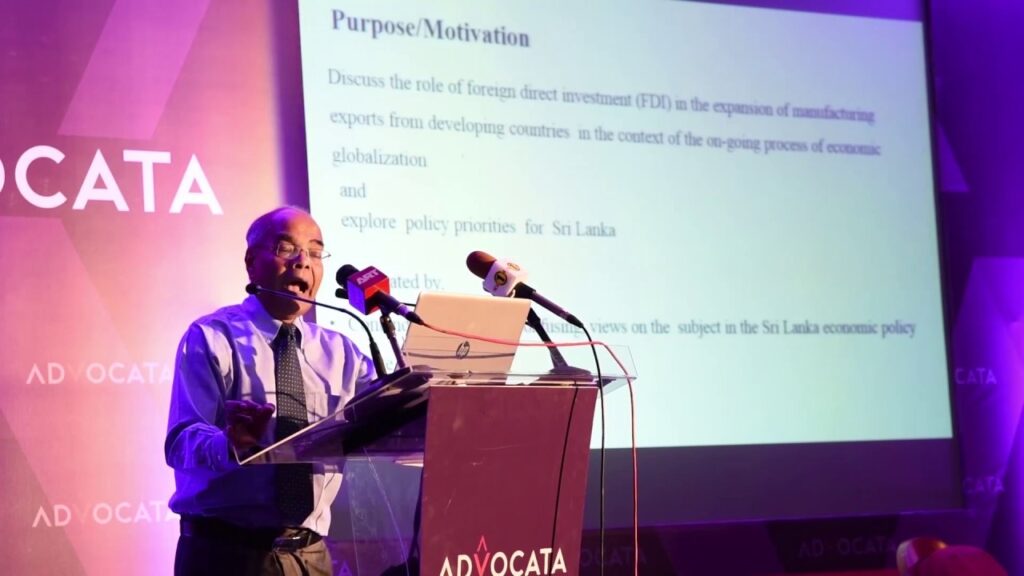
Public Lecture #4: Dr Ganeshan Wignaraja on Has the Era of Export-led Growth Ended?
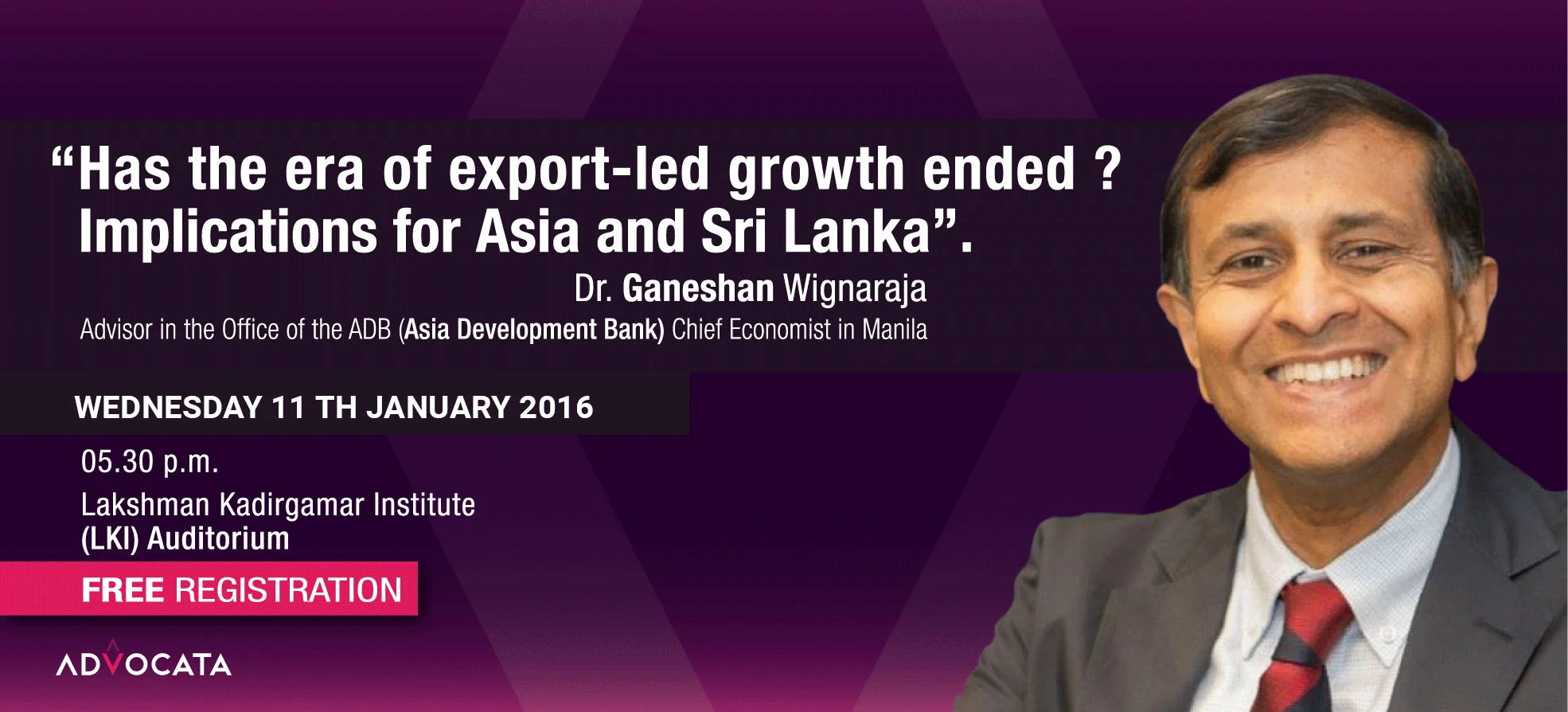
Delivered on 11 January 2017, this lecture by Dr. Ganeshan Wignaraja — a Sri Lankan-born economist and advisor to the Asian Development Bank with decades of development experience — tackled a genuinely open question troubling trade economists at the time: with global trade growth decelerating and protectionist pressures rising worldwide, was the classic East Asian model of export-led growth, which had lifted South Korea, Taiwan, and more recently China out of poverty, simply no longer available to a late developer like Sri Lanka? Wignaraja’s answer was more nuanced than a simple yes or no. He argued that as China itself moves up the value chain — with rising wages and an expanding middle class pushing it to follow Japan and South Korea’s earlier transition toward higher value-added production and innovation — this shift opens a genuine window for Sri Lanka and other ASEAN-adjacent economies to absorb the labour-intensive manufacturing activity China is vacating, including by attracting Chinese export-oriented foreign investment directly. The main highlight was his identification of trade in services as a particularly promising avenue for growth in this more difficult global trading environment, alongside a clear-eyed policy prescription: Sri Lanka needed to focus on removing its own internal barriers to services trade, closing skill gaps, and fixing basic infrastructure constraints in power and digital connectivity, rather than assuming export-led growth was simply a closed chapter.
Wignaraja recommended reforming para-tariffs and improving the price, quality and delivery of products and services. He noted that Sri Lanka had struggled to enter global value chains outside garments, including in BPO and ICT. With the Trans-Pacific Partnership facing an uncertain future, he expected the Regional Comprehensive Economic Partnership to gain importance, while stressing that Sri Lanka should establish its domestic reform agenda before allowing trade agreements to determine it.
He cautioned that sophisticated industrial policy requires government capabilities that Sri Lanka did not yet possess, favouring a market-led approach under those conditions. He also urged policymakers to provide safety nets and address the concerns of those adversely affected by liberalisation in order to build support for reform.