Charting the Course: Revitalizing Economic Governance for Prosperity
Sri Lanka’s economic crisis exposed not only weaknesses in fiscal and monetary management, but also deeper challenges in the institutions and systems that underpin economic governance. Rebuilding confidence in the economy therefore requires more than short-term stabilisation. It requires strengthening the rules, institutions, and processes through which economic decisions are made, implemented, and held accountable.
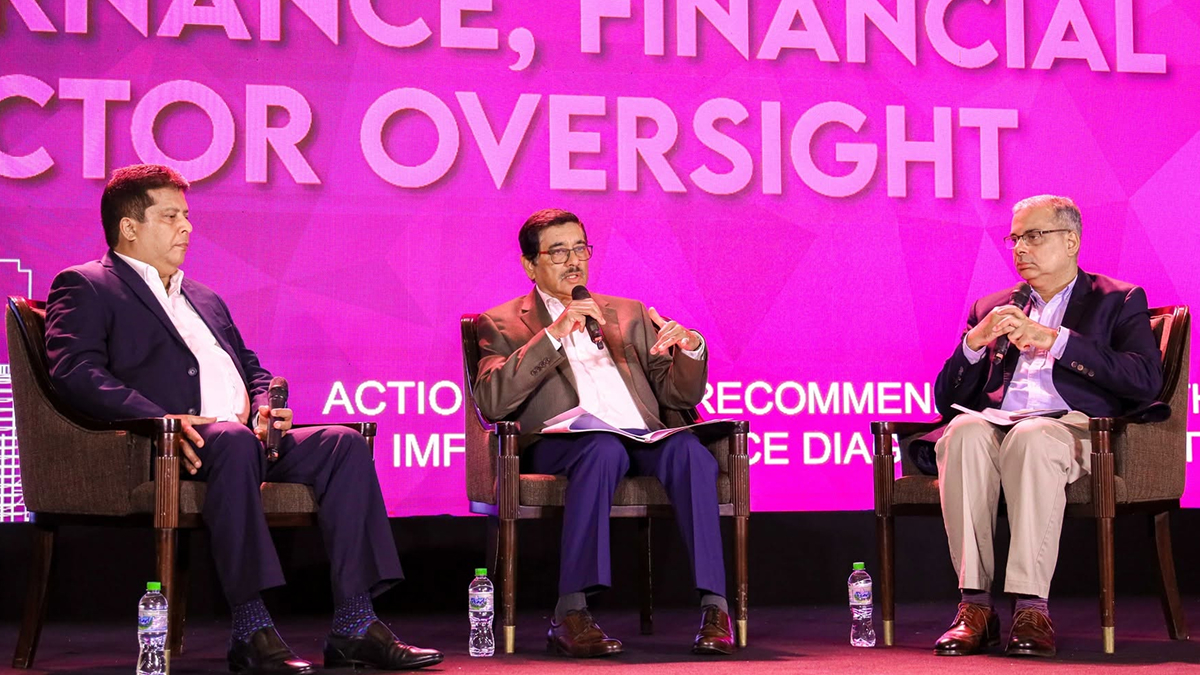
Against this backdrop, the Advocata Institute convened “Charting the Course: Revitalizing Economic Governance for Prosperity” on 18 May 2024 at the Galle Face Hotel in Colombo. The conference brought together policymakers, legal experts, economists, business leaders, academics, and civil society representatives to examine the findings of the IMF Governance Diagnostic Assessment and consider how its recommendations could be translated into meaningful reforms for Sri Lanka.
The conference provided a platform for open discussion on some of the most consequential governance questions facing the country: How can Sri Lanka strengthen institutions responsible for economic policymaking? How can public resources be managed more transparently and effectively? What safeguards are necessary to strengthen central bank independence and financial sector oversight? How can the country improve tax administration and fiscal governance? And how can the rule of law and legal institutions provide a stronger foundation for economic activity and investment?
The discussions recognised that good economic governance is not an abstract institutional objective. It directly affects the ability of businesses and individuals to invest, innovate, create employment, access finance, and participate in the economy. Stronger institutions can reduce uncertainty, improve accountability, limit opportunities for corruption and rent-seeking, and create a more predictable environment for long-term economic growth.
From Diagnosis to Reform
The IMF Governance Diagnostic Assessment provides a framework for identifying vulnerabilities in governance and corruption that can undermine economic performance. For Sri Lanka, the value of the assessment lies not simply in identifying institutional weaknesses, but in creating an opportunity to consider how those weaknesses can be addressed through concrete reforms.
The conference therefore focused on moving beyond diagnosis towards implementation.
Across the sessions, speakers examined the legal, institutional, fiscal, monetary, and judicial dimensions of economic governance. Discussions explored the importance of clearly defined institutional mandates, appropriate checks and balances, transparency in decision-making, effective oversight, and credible enforcement mechanisms.
A central theme throughout the conference was that sustainable economic reform requires institutions that are capable of operating independently, transparently, and predictably. Where institutional weaknesses create room for discretion, political interference, conflicts of interest, or weak accountability, economic outcomes can be distorted and public trust can deteriorate.
Legal, Organisational and Strategic Frameworks
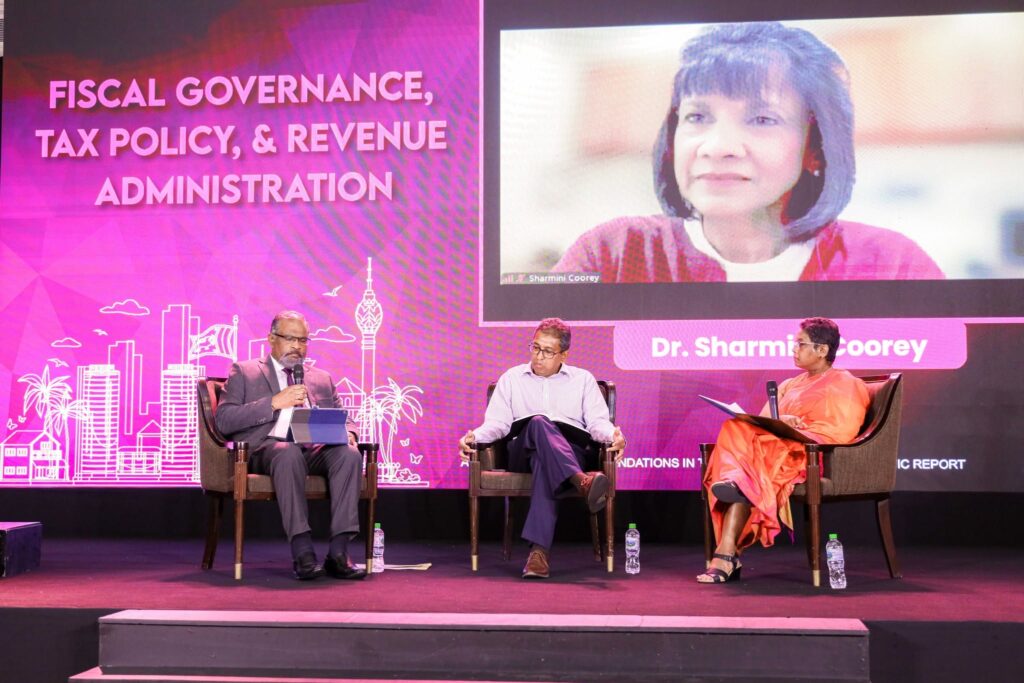
The conference examined the legal and institutional architecture necessary to strengthen anti-corruption, anti-money laundering, and countering the financing of terrorism frameworks.
Effective governance depends not only on having appropriate laws on the books, but also on whether institutions have clear mandates, adequate capacity, and the independence required to enforce those laws consistently.
The session on Legal, Organisational and Strategic Frameworks for Anti-Corruption and Anti-Money Laundering and Combating the Financing of Terrorism (AML/CFT) brought together perspectives from the legal profession, financial intelligence, and anti-corruption institutions.
The panel featured Sarath Jayamanne, PC; Dr. Subhani Keerthiratne, Head of the Financial Intelligence Unit; and Mrs. Disna Gurusingha, Assistant Director General at the Commission to Investigate Allegations of Bribery or Corruption (CIABOC). The discussion was moderated by Prof. Rohan Samarajiva, Chairman of LIRNEasia.
The discussion highlighted the importance of strengthening institutional frameworks so that anti-corruption measures are supported by effective enforcement, coordination, and accountability.
Central Bank Governance and Financial Sector Oversight
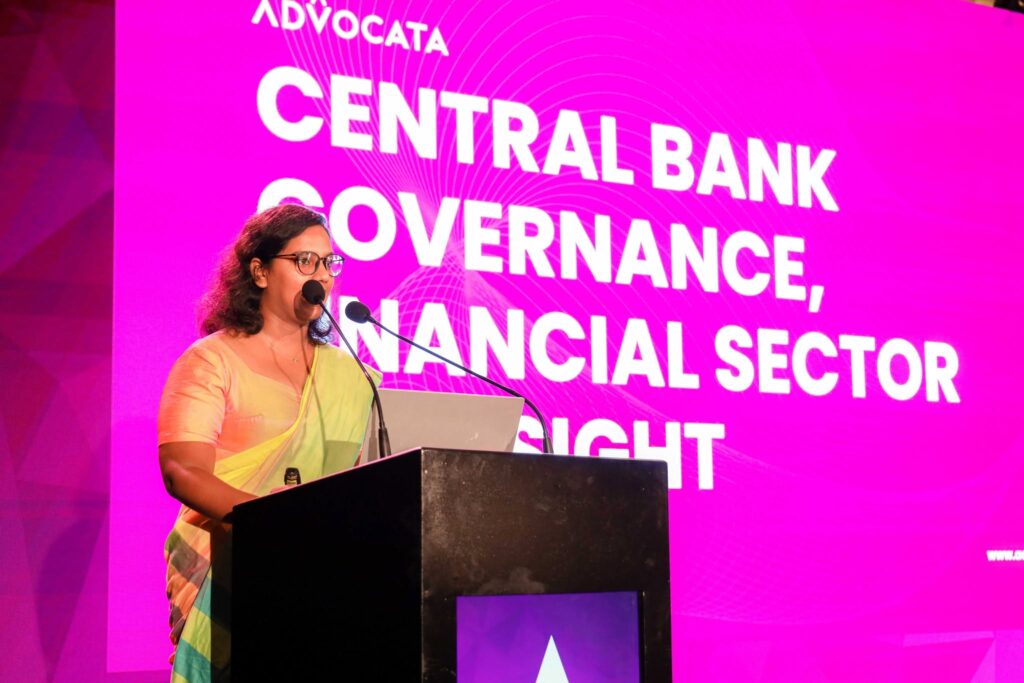
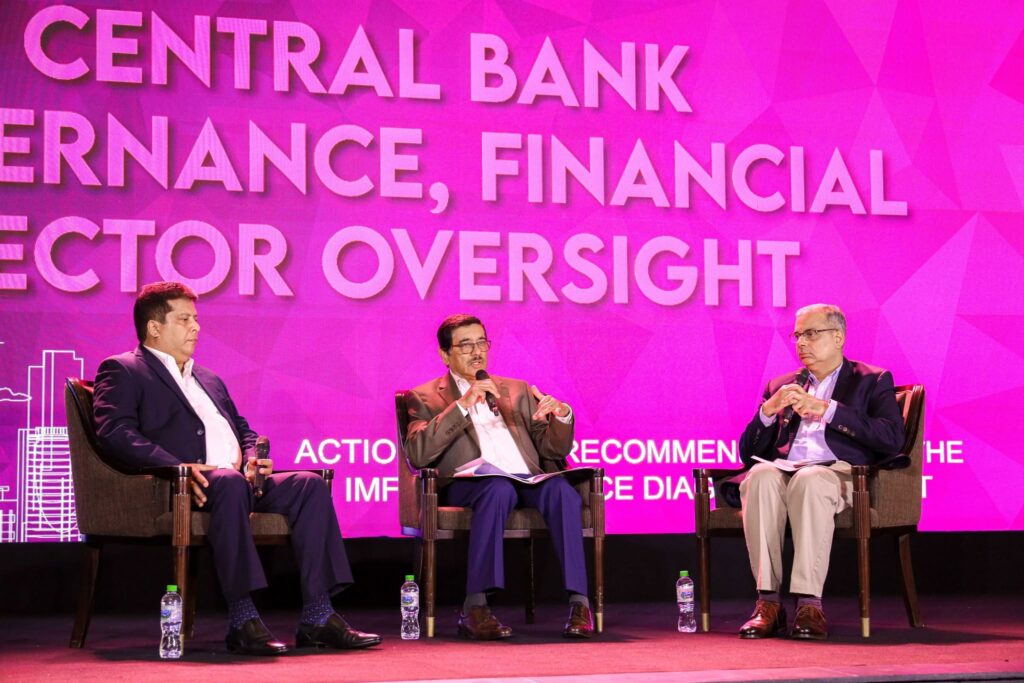
A credible monetary and financial system is fundamental to economic stability. The conference therefore devoted a session to Central Bank Governance and Financial Sector Oversight, examining the institutional safeguards necessary to support effective monetary policy and financial regulation.
The session brought together Dr. Nandalal Weerasinghe, Governor of the Central Bank of Sri Lanka, and Lakshman Silva, former CEO of DFCC Bank, with Murtaza Jafferjee, Chairman of the Advocata Institute, serving as moderator.
The discussion considered why sound central bank governance and effective financial sector oversight matter for Sri Lanka’s long-term growth. A strong institutional framework can help ensure that monetary and regulatory decisions are guided by clearly defined objectives and supported by appropriate accountability mechanisms.
For an economy emerging from a severe crisis, the credibility of these institutions is particularly important. Investors, businesses, and households require confidence that economic policy will be guided by transparent rules and that financial institutions will be appropriately supervised.
Fiscal Governance, Tax Policy and Revenue Administration
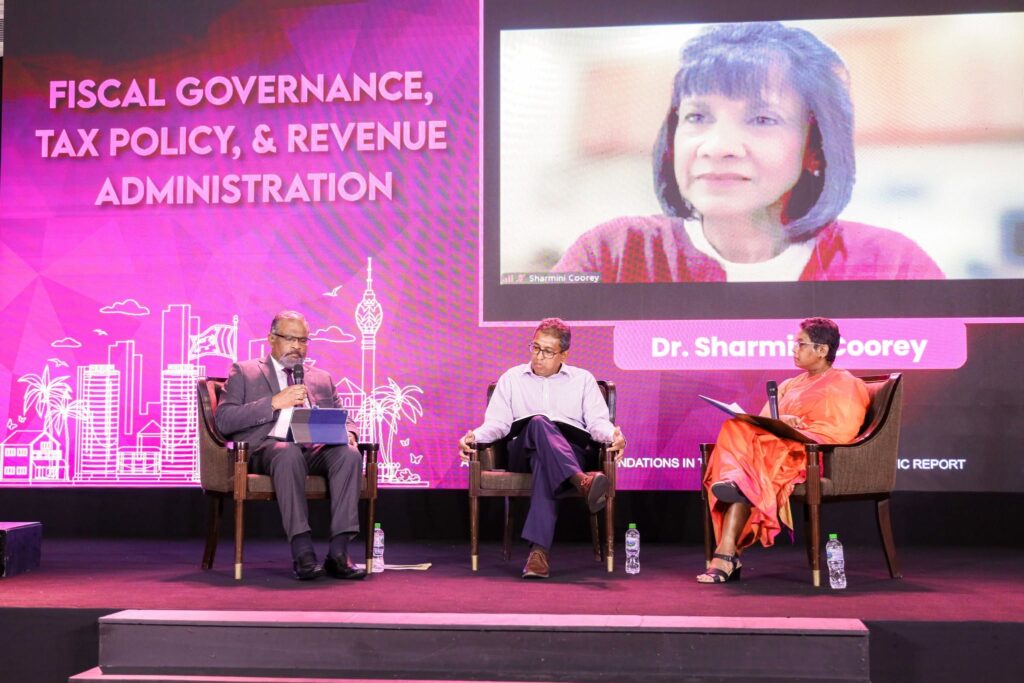
Fiscal governance was another central pillar of the conference.
Sri Lanka’s economic crisis demonstrated the consequences of persistent fiscal imbalances and weaknesses in public financial management. Strengthening fiscal institutions is therefore essential to restoring fiscal sustainability and ensuring that public resources are managed responsibly.
The Fiscal Governance, Tax Policy and Revenue Administration panel brought together Mahinda Siriwardena, Treasury Secretary; Dr. Sharmini Cooray, Presidential Advisor on Multilateral Engagement and Debt Sustainability and former Department Director of the IMF; and Harsha de Silva, Member of Parliament and Chairman of the Committee on Public Finance. The discussion was moderated by Dr. Roshan Perera, Senior Research Fellow at the Advocata Institute.
The session examined the governance dimensions of fiscal policy, taxation, and revenue administration, including the importance of institutions that can support sustainable public finances.
Tax policy is not only about raising revenue. The design and administration of the tax system can influence investment, business activity, compliance, and perceptions of fairness. Similarly, effective fiscal governance requires transparency around how public funds are raised, allocated, and spent.
The Rule of Law and Economic Governance
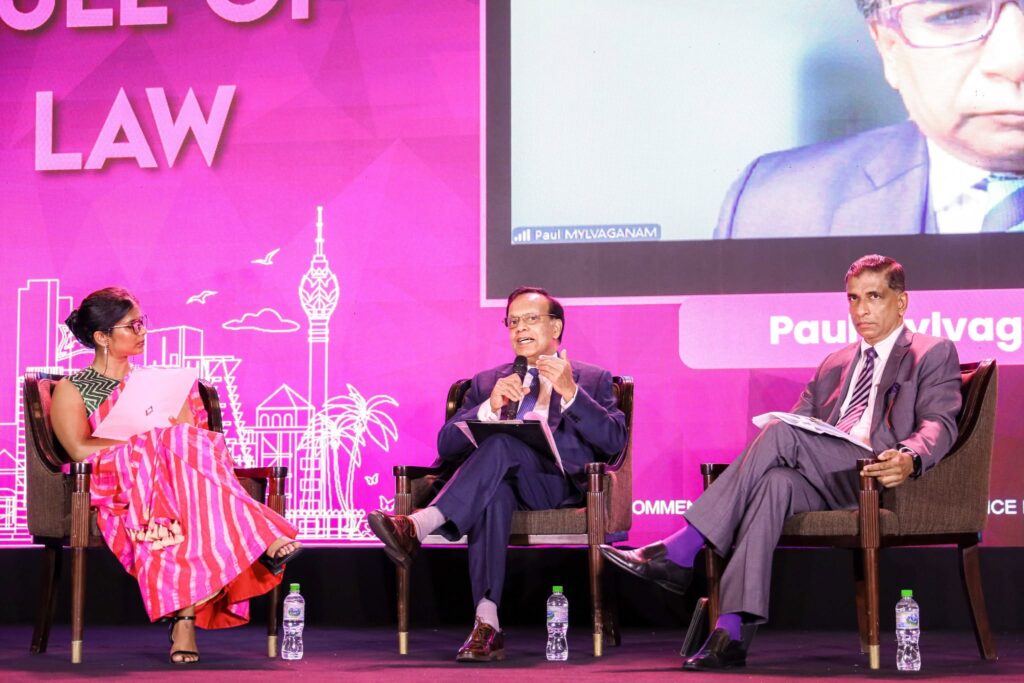
No economic governance framework can function effectively without a credible rule of law.
The rule of law provides the foundation for secure property rights, enforceable contracts, predictable regulation, and fair dispute resolution. These are essential conditions for individuals and businesses to make long-term economic decisions.
The conference’s Rule of Law session examined these issues from the perspective of legal practitioners and the judiciary. The panel featured Justice Aluwihare, former Justice of the Supreme Court; Harsha Fernando, President’s Counsel; and Paul Mylvaganam, Barrister-at-Law, moderated by Romali Tudawe, CEO of Tudawe Brothers (Pvt) Ltd.
The discussion considered the role of legal institutions in strengthening economic governance and ensuring that rules are applied consistently and impartially.
A related discussion also examined the importance of an independent and impartial prosecutor system, reflecting the broader need for institutions capable of enforcing laws without undue influence.
Bringing Different Perspectives Together
One of the defining features of “Charting the Course” was its effort to bring different parts of Sri Lanka’s governance ecosystem into the same conversation.
Economic governance does not sit within a single ministry or institution. Monetary policy, public finance, taxation, financial regulation, anti-corruption enforcement, the legal system, and the business environment are interconnected. Weaknesses in one area can undermine progress in another.
For this reason, the conference brought together representatives from public administration, government, business, academia, the legal profession, civil society, and non-profit organisations.
This diversity of perspectives allowed the discussions to move beyond institutional silos and consider governance as a system.
For businesses, predictable institutions and clear rules reduce the uncertainty associated with investment and expansion. For policymakers, stronger governance can improve the credibility and effectiveness of economic reforms. For citizens, transparent and accountable institutions can strengthen confidence that public resources and state power are being exercised in the public interest.
Charting a Course for Reform

Sri Lanka’s recovery presents an opportunity to address the institutional weaknesses that contributed to economic instability.
Economic reform cannot be sustained through policy announcements alone. It requires institutions that can implement those policies effectively, legal frameworks that provide clear and predictable rules, and accountability mechanisms that ensure decision-makers are answerable for the use of public power and resources.
The discussions at “Charting the Course” reflected the importance of taking a comprehensive approach to economic governance. Strengthening the independence and accountability of key economic institutions, improving fiscal governance, strengthening financial sector oversight, addressing corruption vulnerabilities, and upholding the rule of law are interconnected components of a functioning market economy.
The conference also underscored the importance of translating recommendations into action. Governance reform is ultimately measured not by the quality of a diagnosis, but by whether institutions change, incentives improve, and better outcomes are delivered.
For Sri Lanka, this means building an economic governance framework that is more transparent, accountable, predictable, and responsive. It means creating institutions capable of supporting sustainable growth while protecting the integrity of public decision-making.