A Deep Dive into the Market Competitiveness of Ceylon Tea
Date: Thursday 29 February 2024, 5:30 PM – 8:30 PM
Venue: Orchid Hall, BMICH, Colombo
Format: Evening policy conference and report launch featuring dual research presentations and multi-stakeholder panel discussions

Overview
Organized by the Advocata Institute, “The Economics of the Cup: Deep Dive on the Market Competitiveness of Ceylon Tea” served as a flagship policy conference designed to address long-standing structural inefficiencies across Sri Lanka’s tea export sector. The gathering marked the official launch and public evaluation of Advocata’s comprehensive research report titled “Market Competitiveness of the Tea Industry of Sri Lanka,” authored by Research Consultant Sudaraka Ariyaratne. Bringing together cabinet ministers, regional plantation company executives, government regulators, estate housing advocates, tea brokers, exporters, smallholders, and economic researchers, the conference aimed to move the national conversation away from short-term wage disputes and political fixes toward fundamental, evidence-based structural reforms.
The conference addressed urgent challenges that threaten the long-term viability of Ceylon tea in global markets, including surging labor costs, persistent labor shortages, rigid land management frameworks, deteriorating tea quality, and the lack of a coherent brand premiumisation strategy. The proceedings were structured around a clear narrative arc divided into two distinct sessions. The first session examined microeconomic constraints in land and labor markets under the theme of efficiency through liberalisation. The second session turned to product quality, auction dynamics, regulatory enforcement, and international brand positioning to evaluate how Sri Lanka can unlock the full value of its tea exports.
Analytical Foundations of the Research Report
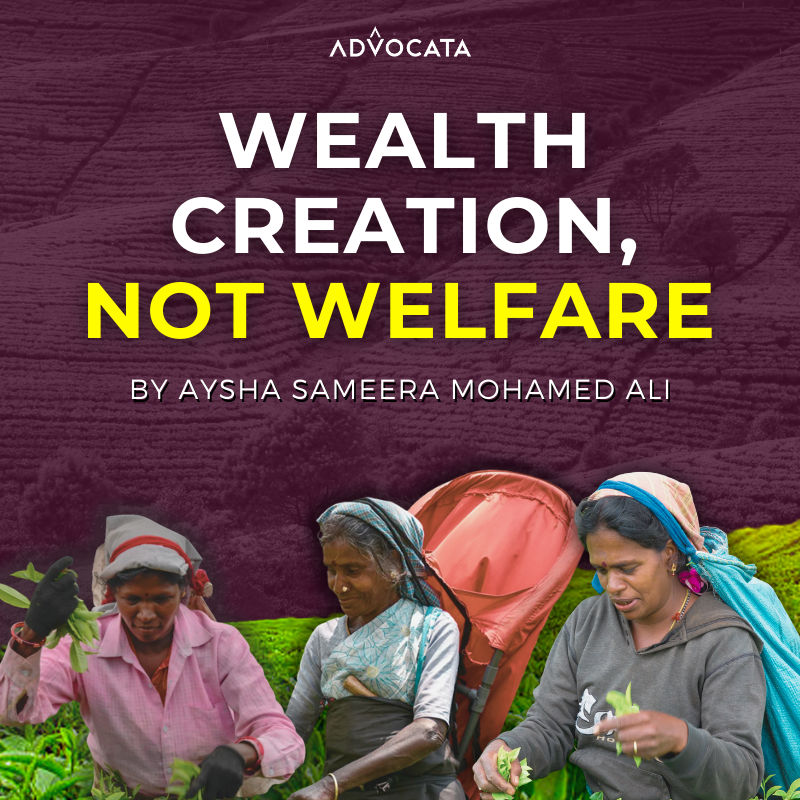
The foundation of the conference rested on the four discussion papers comprising Sudaraka Ariyaratne’s research report, which evaluates Sri Lanka’s tea supply chain through established economic theories. The first paper analyzes the labor market, establishing that the traditional attendance-based daily minimum wage model inflates production costs for Regional Plantation Companies while simultaneously dampening worker productivity and capping individual earning potential. The second paper investigates long-term capital investments, demonstrating how low returns on capital, liquidity constraints, and land tenure insecurity prevent both corporate plantations and smallholders from undertaking critical field reinvestments, such as systematic replanting and infilling.
The third paper applies Michael Porter’s competitive advantage framework to evaluate value addition within the industry. It examines how profit margins are distributed along the supply chain and outlines strategic pathways for domestic stakeholders to capture higher returns across mass and specialty global markets. The fourth paper utilizes George Akerlof’s theoretical model of adverse selection and information asymmetry to explain quality degradation. It illustrates how unverified quality variation at the auction level depresses average prices, penalizes high-quality producers, and incentivizes manufacturers to lower processing standards.
Session 1 — Land and Labour Reforms: Efficiency Through Liberalisation

Diagnostic Presentation: The Replanting and Labor Dilemma
The first technical session opened with a diagnostic presentation by Sudaraka Ariyaratne, who outlined critical empirical findings on estate land productivity and labor dynamics. Ariyaratne highlighted a stark discrepancy between agronomic benchmarks and real-world field investment, noting that while the recommended annual tea replanting rate stands at 2.5% to maintain healthy rootstock, Sri Lanka’s actual replanting rate has fallen drastically lower for decades. This prolonged underinvestment in field renewal has led to aging tea bushes, declining land yields, and a widening productivity gap relative to international competitors such as Kenya.
Simultaneously, traditional estates are experiencing a severe labor shortage driven by generational out-migration, as younger members of upcountry plantation communities seek alternative employment in urban centers. Ariyaratne pointed out that the rigid daily wage model exacerbates this departure by disconnecting compensation from output. In contrast, certain smallholder tea operations adopting flexible revenue-sharing arrangements have demonstrated higher worker productivity and substantial income growth, with participating workers achieving daily earnings significantly higher than traditional estate wages.
Panel Discussion: Dignity, Rights, and Operational Realities
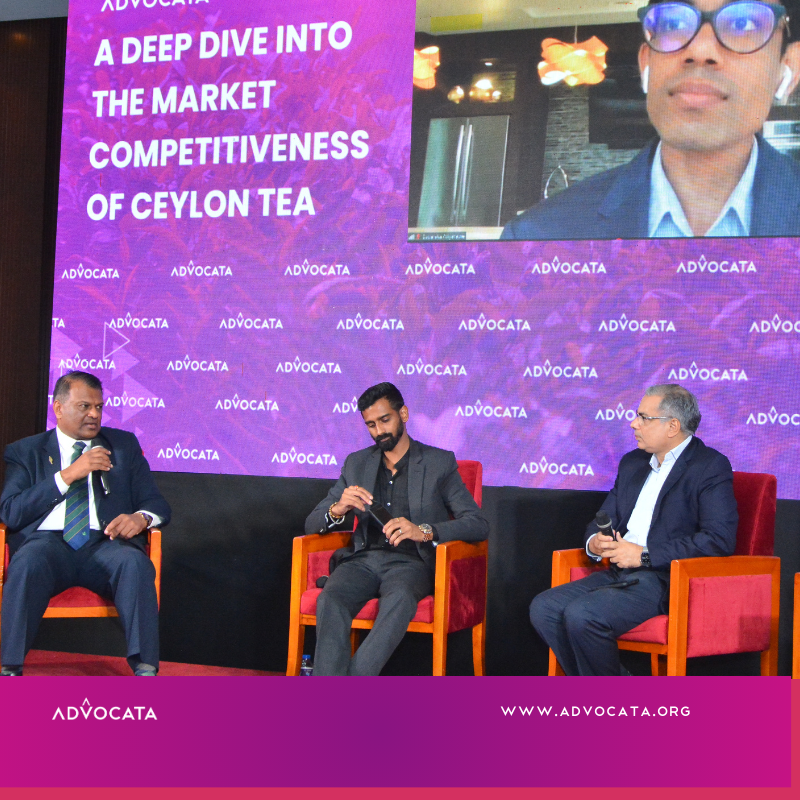
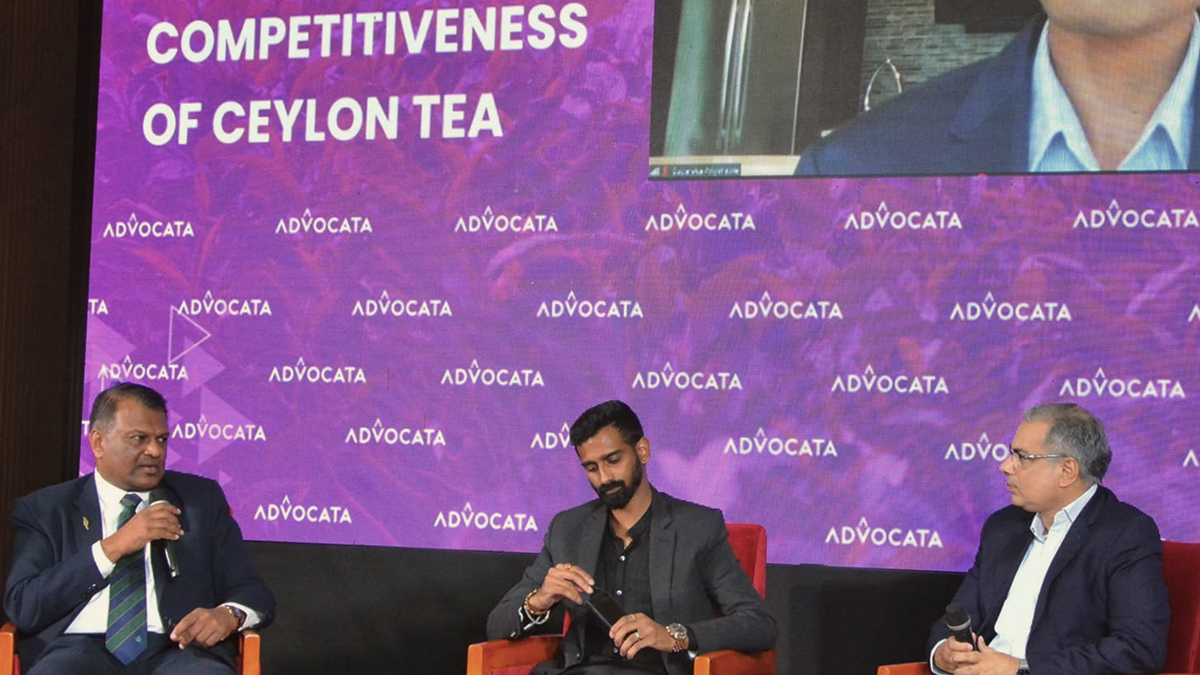
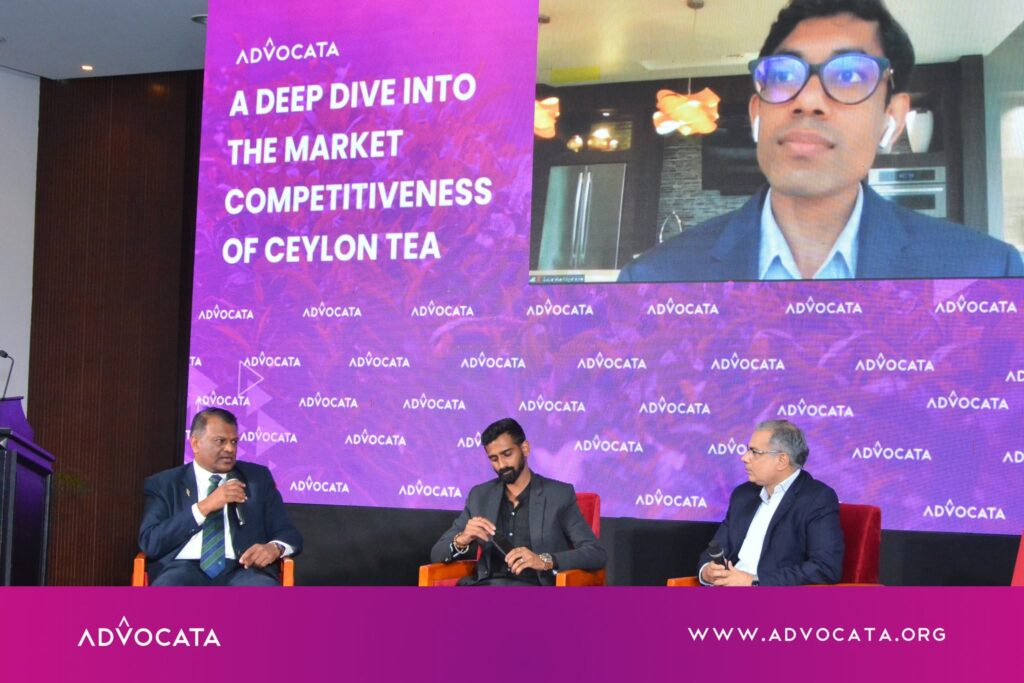
Following the presentation, a panel discussion moderated by Advocata Institute Chair Murtaza Jafferjee brought together Water Supply and Estate Infrastructure Development Minister Jeevan Thondaman, Hayleys Plantation Sector Managing Director Dr. Roshan Rajadurai, and former Plantation Management Monitoring Division Director Dr. Romesh Dias Bandaranaike. Minister Jeevan Thondaman re-framed the plantation labor discussion by asserting that the challenges facing the upcountry Tamil community extend far beyond basic daily wage negotiations. He emphasized that achieving sustainable labor productivity requires addressing core living conditions, including health, education, infrastructure, and land ownership rights. Minister Thondaman highlighted the necessity of providing land title security, such as allocating 10 perches of land per family for the approximately 170,000 estate families facing housing insecurity, to establish an independent socio-economic foundation.
Representing corporate estate management, Dr. Roshan Rajadurai advocated for a shift toward flexible work arrangements and performance-linked revenue-sharing systems. Dr. Rajadurai argued that prioritizing employee well-being and offering revenue-share incentives directly improves productivity, enhances worker quality of life, and aligns individual earnings with company profitability. The panelists noted that smallholders, who now produce the majority of Sri Lanka’s green leaf, have successfully utilized revenue-sharing models to maximize yield, providing a practical blueprint for corporate estate reform.
The discussion also addressed the institutional limitations governing Regional Plantation Companies since the state estate privatizations of the 1990s. Dr. Romesh Dias Bandaranaike provided historical context on the privatization process, explaining that state management had accumulated unsustainable operational losses. However, the resulting privatized leasehold framework remained burdened by bureaucratic restrictions, political wage fixing, and rigid land-use mandates that hindered crop diversification. The panel concluded that achieving true efficiency requires complete market liberalisation, allowing estate managers the operational flexibility to implement revenue-sharing contracts, privatize estate housing to foster community ownership, and reallocate underperforming tea lands toward alternative commercial crops.
Session 2 — Quality Control and Premiumisation: Unlocking the True Potential of Ceylon Tea

Diagnostic Presentation: Adverse Selection and Quality Degradation
The second session shifted focus toward product quality, regulatory oversight, and global brand positioning, beginning with a presentation by Sudaraka Ariyaratne on market distortion and price premiums. Drawing on Akerlof’s “Market for Lemons” framework, Ariyaratne illustrated how asymmetric information regarding made-tea quality damages market efficiency. When global buyers are unable to accurately verify tea quality prior to auction purchases, high-quality producers fail to receive adequate price premiums. This dynamic drives premium producers out of the market and incentivizes factories to compromise processing standards.
A major structural symptom of this quality decline is the dramatic rise in domestic refuse tea levels. Historically, refuse tea accounted for less than 3% of total production, but recent figures indicate that refuse tea levels have escalated to between 15% and 25% across domestic processing facilities. To eliminate these distortions, Ariyaratne proposed structural solutions centered on strict statutory enforcement, factory operational automation, housing privatization, and a targeted transition toward international brand premiumisation.
Panel Discussion: Regulatory Enforcement and Global GI Recognition

The second panel, moderated by Advocata Research Consultant Rehana Thowfeek, featured Sri Lanka Tea Board Chairman Niraj de Mel, Ceylon Tea Services PLC (Dilmah Tea) CEO Dilhan C. Fernando, and John Keells PLC Consultant Dasarath Dassanayake. Sri Lanka Tea Board Chairman Niraj de Mel announced that Sri Lanka expects to secure European Union Geographical Indication (GI) protection for Ceylon Tea within 12 to 18 months, providing crucial intellectual property protection and brand authenticity in European markets. De Mel stressed that the industry must prioritize tea quality over production volume, urging growers and factories to return to strict green-leaf plucking standards to restore price leadership. While acknowledging the administrative benefits of digital auction systems, de Mel cautioned that technology alone cannot resolve physical quality defects, calling for the strict enforcement of statutory laws, such as the Tea Control Act of 1957, to eliminate sub-standard leaf and refuse tea from supply channels.
Expanding on international market positioning, Dilhan C. Fernando addressed the strategic demands of global brand building. Fernando defended the Colombo Tea Auction system as a highly democratic and transparent marketplace that accurately reflects true global supply and demand dynamics. He argued that Sri Lankan exporters should avoid competing in a low-cost volume race against cheaper producing nations, emphasizing instead that Ceylon Tea must differentiate itself by satisfying rising global consumer demand for ethical labor practices, environmental sustainability, and product traceability. Fernando noted that establishing a distinct premium market position requires a unified commitment across smallholders, plantation companies, processors, and state agencies.
Addressing factory processing dynamics, Dasarath Dassanayake identified structural overcapacity among bought-leaf processing factories as a primary driver of declining leaf quality. Dassanayake explained that intense competition among factories to secure raw green leaf leads to the acceptance of coarse, inferior leaf, directly inflating refuse tea percentages during manufacture. To address this challenge, Dassanayake proposed establishing a regional supply-mapping model to evaluate local leaf availability and rationally allocate green leaf across processing facilities. Implementing such a model would curb destructive leaf-purchasing practices, optimize factory capacity utilization, and uphold manufacturing standards across the sector.
Highlights and Significance
What distinguished “The Economics of the Cup” was its integration of microeconomic analysis with practical industry policy. By combining diagnostic research from Advocata’s analytical team with direct insights from cabinet ministers, corporate executives, estate housing advocates, and global exporters, the conference successfully reframed the tea sector’s decline from an intractable wage dispute into an addressable institutional reform challenge. The event demonstrated Advocata’s capacity to convene key sector stakeholders around rigorous, evidence-based policy solutions.
The conference established a clear public blueprint for sector-wide revitalization. It highlighted an emerging industry consensus on replacing rigid daily wages with productivity-linked revenue-sharing contracts, securing land and housing rights for estate worker families, enforcing strict statutory quality controls under the Tea Control Act, and protecting Ceylon Tea’s global brand equity through Geographical Indication recognition and sustainable product differentiation