Video and Podcast
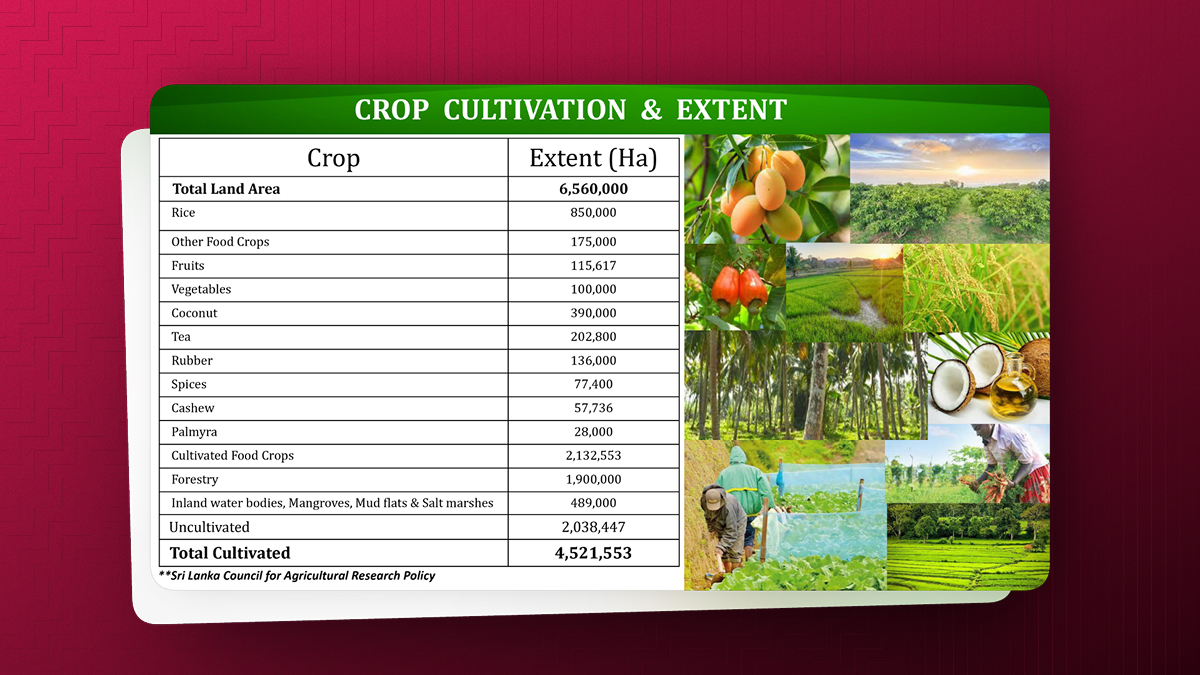
Dr Roshan Rajadurai presents agricultural land as a critical but underperforming national asset. Agriculture supports roughly a quarter of Sri Lanka’s employment while contributing only around 7–8% of GDP, reflecting low productivity, fragmented holdings, weak tenure and a predominantly informal workforce. The sector is further constrained by inconsistent policy, overlapping institutions, complex land administration, inadequate research and extension, weak infrastructure and limited technology adoption.
The presentation proposes a coordinated reform programme built around a national land policy, a central digital land inventory, clearer and more secure tenure, consolidation of uneconomic smallholdings and the release of suitable state land for commercial agriculture. It also calls for science-based policymaking, stronger research and extension, investment in mechanisation and value addition, improved market information and infrastructure, and greater private and external investment. These reforms should be paired with climate resilience, crop insurance and stronger social protection for agricultural communities.