#Reform Now Conference : Let’s Reset Sri Lanka
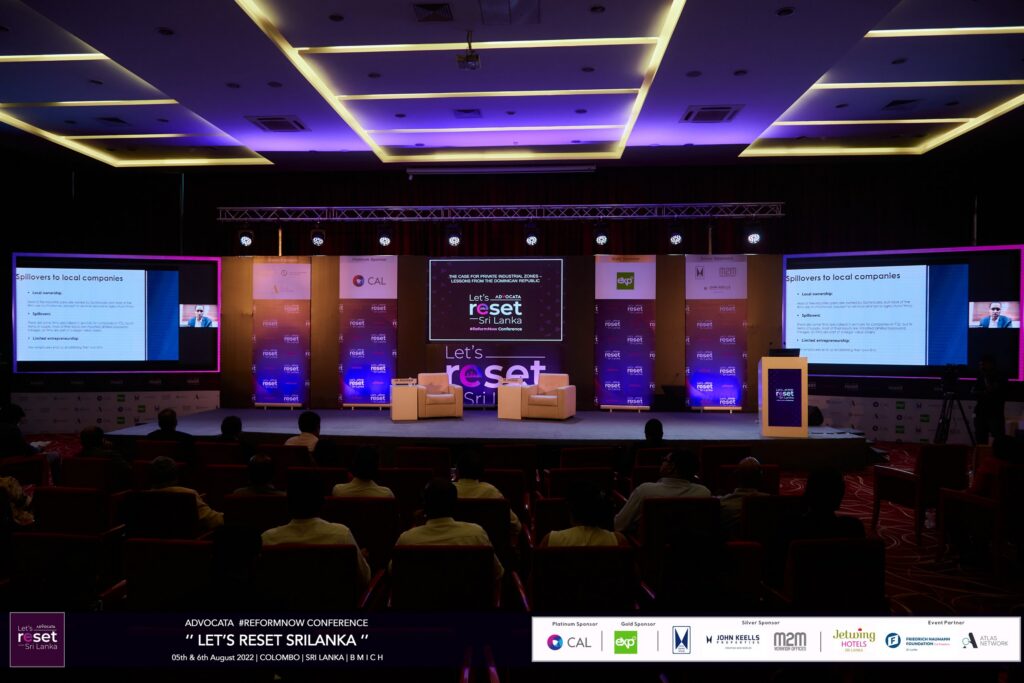
On the 5th and 6th of August 2022, the Lotus Hall at BMICH in Colombo became the unlikely stage for a very public conversation about a country in crisis. Over two days, the Advocata Institute brought together economists, technocrats, business leaders, and ordinary citizens for the #ReformNow Conference — billed as Sri Lanka’s first “reset” economic conference, and one of the largest policy gatherings the country had seen in years.
The timing could not have been more urgent. By mid-2022, Sri Lanka was living through what analysts described as its worst economic crisis since independence. Fuel queues stretched for kilometres, power cuts had become part of the daily routine, and shortages of medicine, cooking gas, and basic food items were pushing ordinary households — especially the poorest — to breaking point. Against that backdrop, Advocata’s pitch was simple: rather than another round of handwringing about how the country got here, spend two days working through what a genuine economic reset would actually require.
Why “Reset”
The conference framing borrowed deliberately from the language of a system reboot. The idea was to move past crisis management and diagnosis — which Sri Lankans had been living through for months — and into a structured conversation about reform pathways: what other countries had done when they hit similar walls, and what a realistic reform agenda for Sri Lanka could look like.
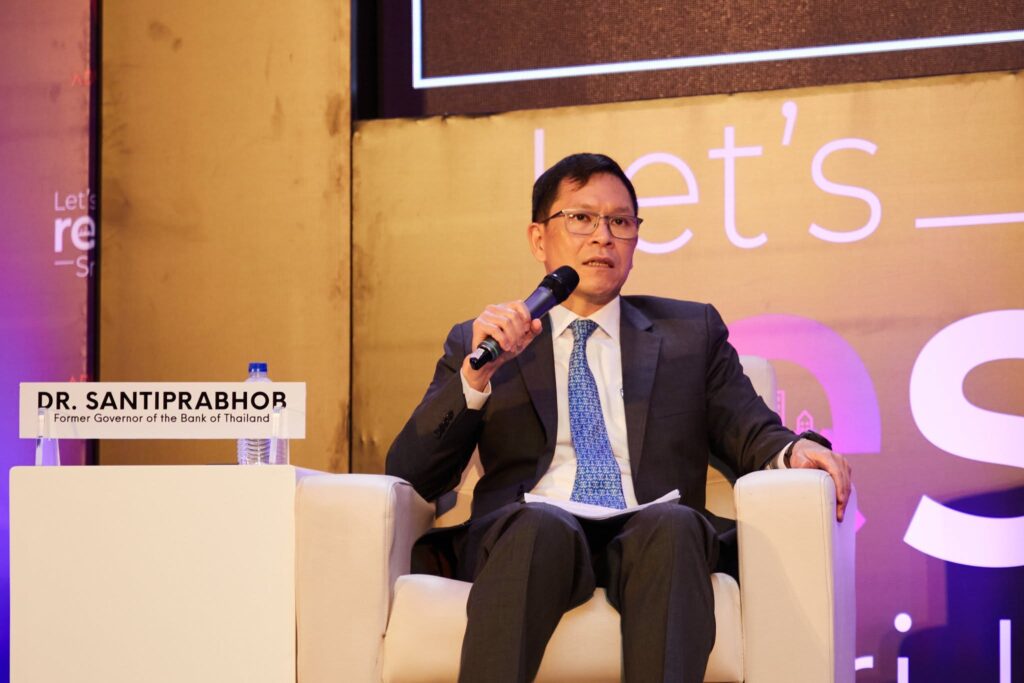
To make that case, Advocata leaned heavily on international experience. The headline guest was Dr. Veerathai Santiprabhob, who governed the Bank of Thailand from 2015 to 2020 and had lived through Thailand’s own reckoning during the 1997 Asian Financial Crisis.
Alongside him, Professor Premachandra Athukorala of the Australian National University — also a senior advisor to Advocata — brought decades of research on Asian development and trade to the table.
Two Days, Five Sessions, One President
The conference opened with a keynote from President Ranil Wickremesinghe, who was at the time also serving as Minister of Finance. Speaking to the room, the President pointed to engagement with the IMF as a starting point on the road to recovery, and spoke candidly about the constraints facing the government — including the fact that Sri Lanka could not turn to the London Club of private creditors for help with the debt crisis it was navigating. He also used the platform to press for institutional reform, telling the audience that existing organisations would either need to change or be replaced by new structures that broadened stakeholder participation rather than leaving decision-making in the hands of a small circle.
From there, day one moved into a run of panel discussions structured around specific reform questions rather than abstract debate:
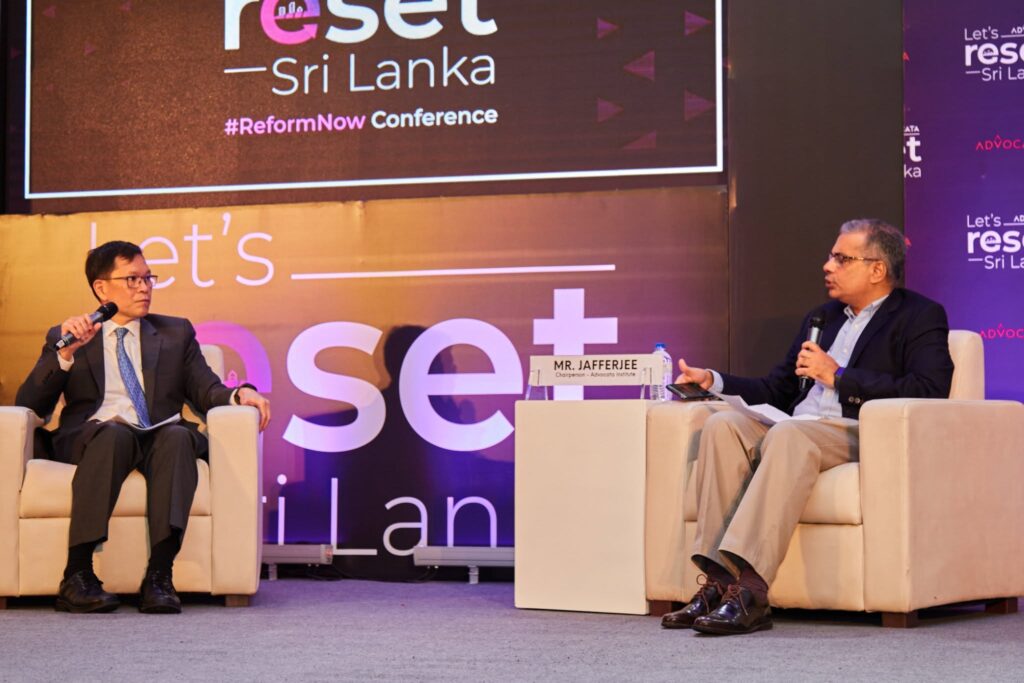
Learning from Thailand. A fireside chat between Dr. Santiprabhob and Advocata chairperson Murtaza Jafferjee unpacked how Thailand had rebuilt its financial system after 1997, and what lessons — and limits — that experience held for Sri Lanka’s very different crisis.
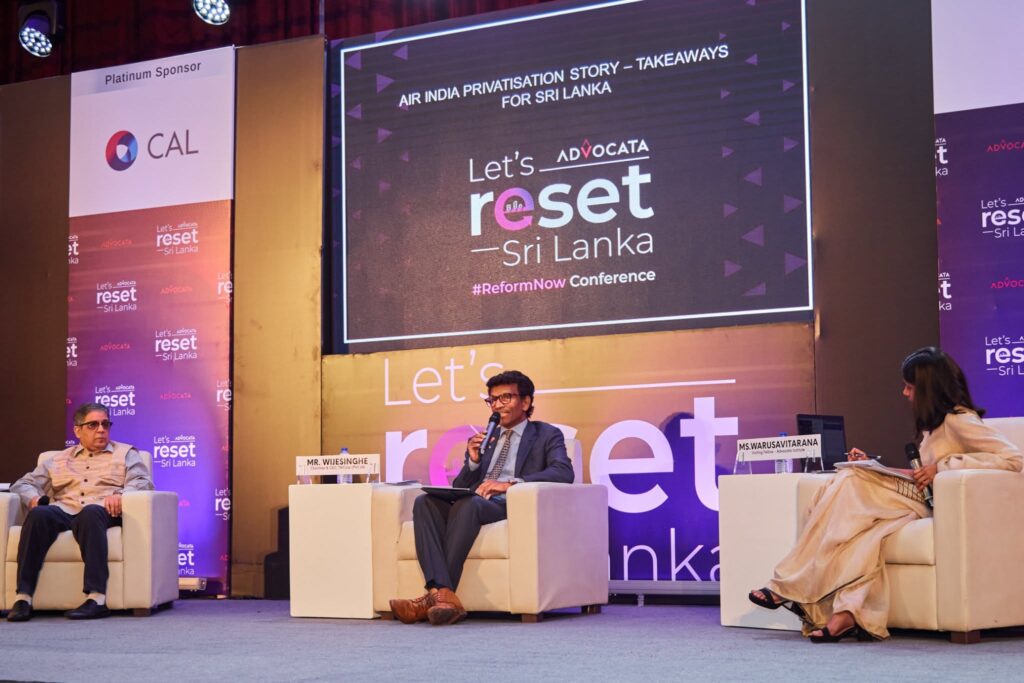
The Air India question. With privatisation of Sri Lankan Airlines on the table as a policy option, a panel featuring Ashwini Phadnis, Thilan Wijesinghe, and Akhilesh Tilotia examined India’s own privatisation of Air India, moderated by Aneetha Warusavitarana. The session used the Indian experience as a reference point for what a similar move might mean locally.
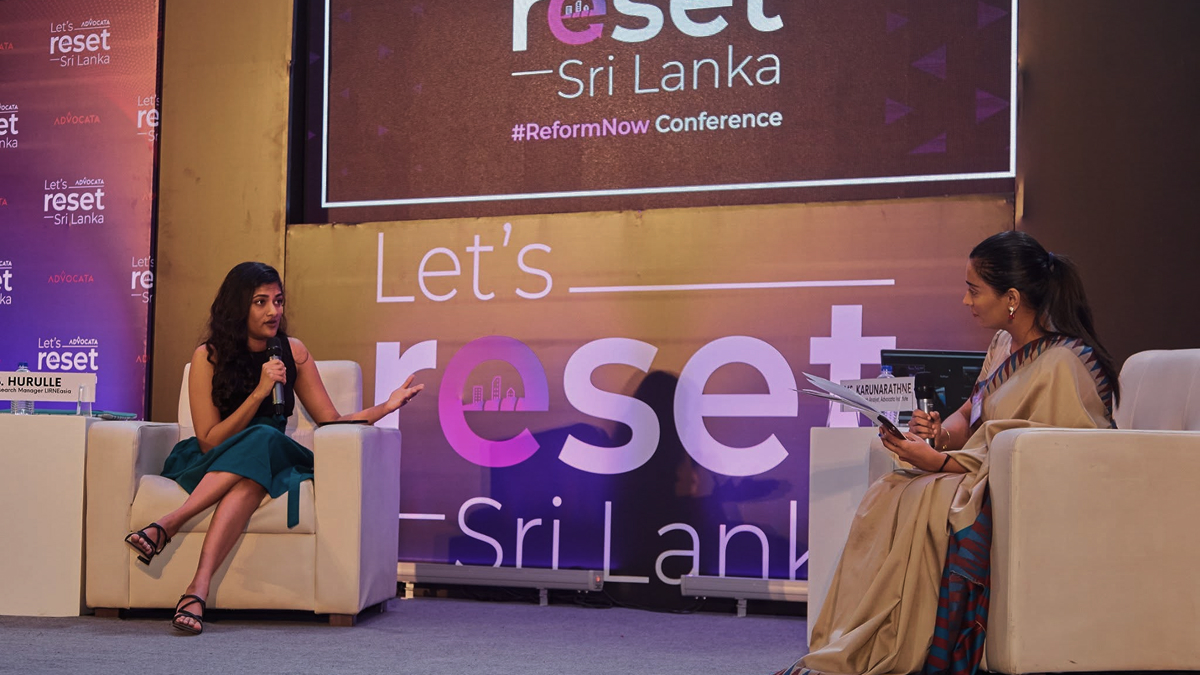
Resetting Samurdhi. Gayani Hurulle presented an assessment of Sri Lanka’s social safety net, followed by a panel with Dr. Ganga Tilakaratna and social protection specialist Dr. Stephen Kidd on how targeted welfare support could be redesigned to actually reach the households that need it most.
Taxation, stability and growth. Dr. Roshan Perera walked through the state of Sri Lanka’s tax system, with Dr. Mick Moore joining the discussion on how fiscal reform could restore both revenue and macroeconomic stability — a theme that recurred throughout the conference as panellists argued for greater efficiency in how taxes are levied and exemptions granted.
Day one closed with the launch of a new Advocata policy tool tracking the performance of state-owned enterprises (SOEs), presented by Ravi Rathnasabapathy, followed by a session on centralising the state’s ownership functions.
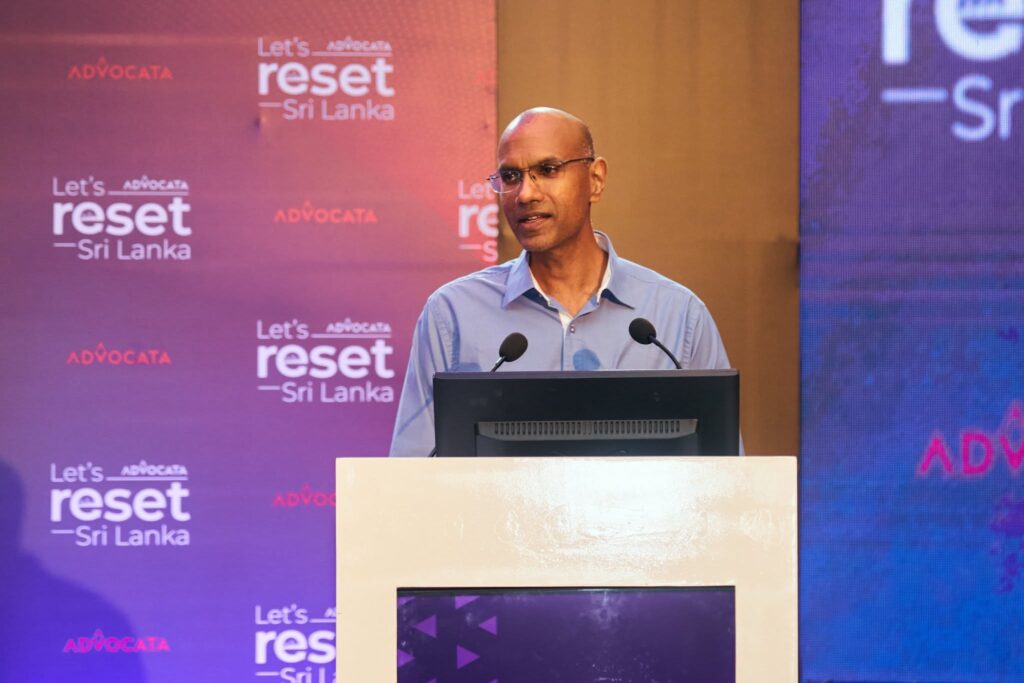
That discussion, featuring Daniel Alphonsus alongside panellists Professor Rohan Samarajiva and Ajit Gunawardena, tackled a structural problem that has long dogged Sri Lanka’s SOEs: many are gazetted under ministries that are simultaneously policymaker and regulator, creating conflicts of interest that undermine performance and capital allocation. The panel weighed whether a holding-company style structure, with SOEs consolidated under a single ownership entity, could improve governance.
Day two carried the reform conversation into labour markets, business insolvency, and land policy — three areas where Sri Lanka’s legal framework had long lagged behind its economic needs.
One panel, featuring Dr. Ramani Gunatilake and attorney Shyamali Ranaraja, dug into labour law reform, noting that Sri Lanka has more than 40 laws touching employment, of which only around 15 are still in active use — the rest, in many cases, predating independence. Panellists argued that any credible labour reform effort would need to be championed at the highest level of government, with genuine stakeholder participation in shaping it, rather than being left to technical committees alone.
A separate panel addressed the rising wave of business insolvencies triggered by the crisis, questioning whether Sri Lanka had an adequate resolution framework to help viable businesses restructure rather than collapse outright. A further session, with speaker Roshan Rajadurai and panellists including S.D.A.B. Boralessa and Indrajith Fernando, took on the thicket of laws governing agricultural land ownership and use, and what reforms could make the sector more productive.
Throughout the two days, one line of argument surfaced repeatedly: Sri Lanka’s economic freedom — its openness to trade, ease of doing business, and flexibility of labour and credit markets — had been eroding even before the crisis hit, leaving the country more exposed when the shock came. The message from several speakers was that recovery would require not just short-term stabilisation, but a genuine widening of economic freedom across the board.
More Than a Talking Shop
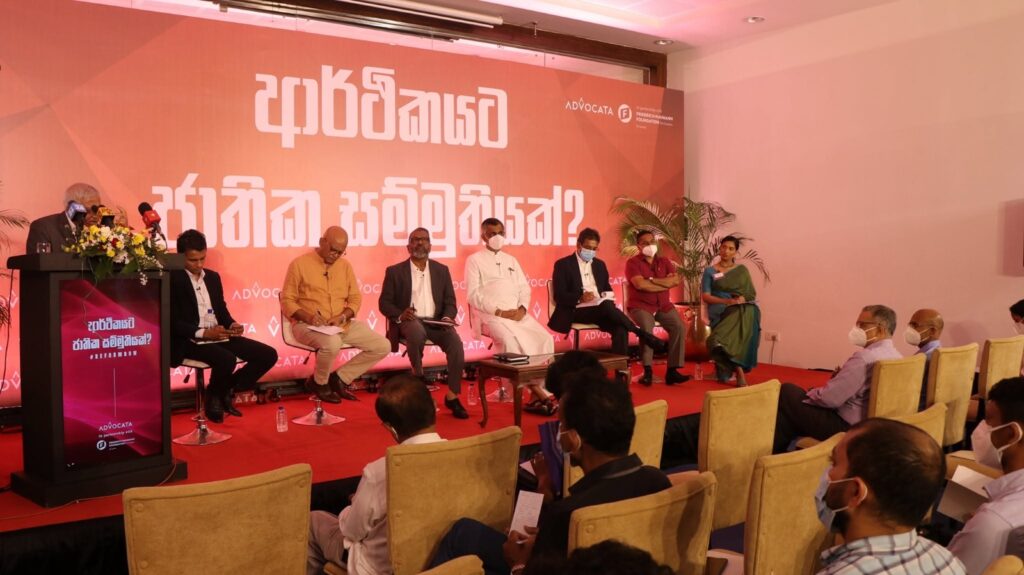
What distinguished #ReformNow from a typical conference circuit event was its attempt to fold in more than just policymakers and economists. Alongside the closed-door sessions with technocrats and business leaders, organisers built in time for participants — students, civil society representatives, and members of the public — to put forward their own ideas during the sessions, treating the audience as contributors to the reform conversation rather than passive spectators. The event also drew a mix of platinum, gold, and silver sponsors, along with an event partner, reflecting the level of private-sector interest in the reform debate at a moment when businesses were themselves grappling with the fallout of the crisis.
What Came After
#ReformNow was explicitly framed as a first step rather than a conclusion — the Advocata Institute has since described it as its inaugural reform conference, laying the groundwork for follow-up events built on the same premise. Several of the specific proposals raised in the sessions, from SOE restructuring to labour law consolidation, remain part of the country’s ongoing reform debate years on, a reminder of how difficult it is to translate a two-day conversation about reform into lasting policy change. But as a moment of public reckoning — bringing government, international experts, and citizens into the same room to talk plainly about how Sri Lanka got into its worst crisis in decades, and what it would take to get out — #ReformNow marked a distinct point in the country’s economic discourse.