ආර්ථිකයට ජාතික සම්මුතියක්?Building Consensus for Sri Lanka’s Economic Recovery bb

Sri Lanka’s economic crisis was already becoming increasingly difficult to ignore in late 2021. Years of persistent fiscal deficits, rising public debt and unsustainable public finances had placed growing pressure on the country’s economy, creating an urgent need for meaningful economic and structural reforms.
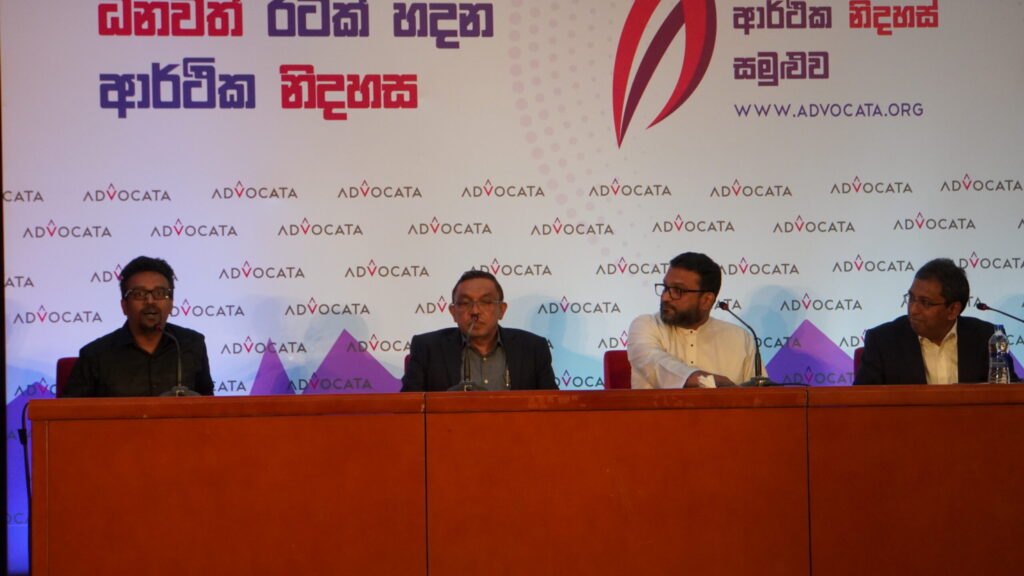
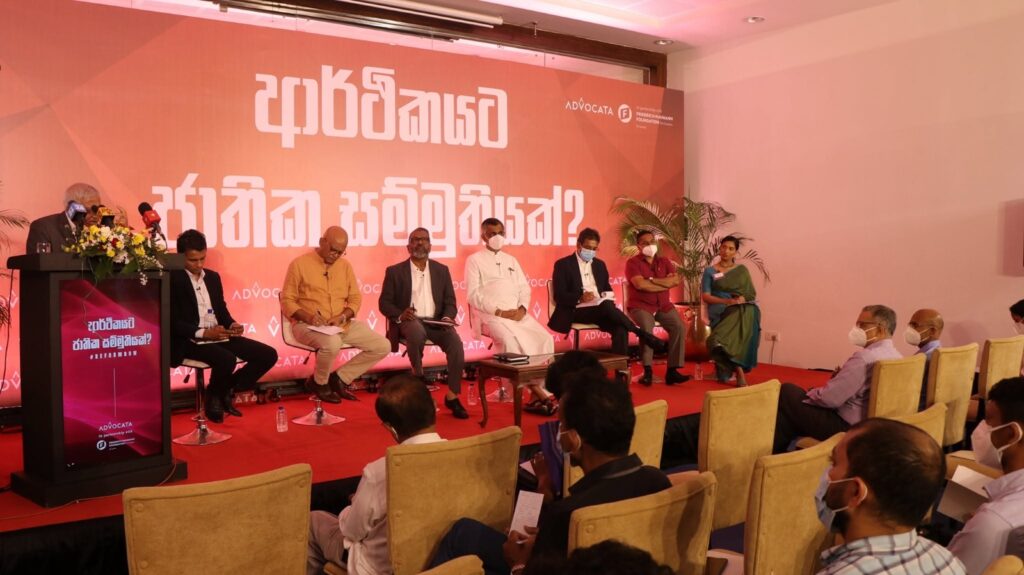
Against this backdrop, the Advocata Institute organised “ආර්ථිකයට ජාතික සම්මුතියක්?” (A National Consensus for the Economy?), a panel discussion held on 24 November 2021 as part of its efforts to encourage public dialogue on economic reform.
The discussion sought to address a fundamental question: can Sri Lanka build a national consensus around the reforms necessary to restore economic stability and place the country on a sustainable path towards recovery and growth?
The event brought together representatives from different political and policy perspectives to discuss the economic challenges facing Sri Lanka and the reforms required to address them. The panel featured Prof. Ranjith Bandara, Dr. Suren Raghavan, Dr. Harsha de Silva and Patali Champika Ranawaka, providing an opportunity to examine the crisis from a range of perspectives.
The urgency of economic reform
At the time of the discussion, Sri Lanka was facing mounting economic pressures. Government finances had deteriorated over a prolonged period, while public debt had continued to increase. Persistent fiscal deficits had constrained the government’s ability to respond to economic challenges, while growing debt obligations placed additional pressure on public finances.
For Advocata, the scale of these problems meant that addressing the crisis required more than short-term measures. A sustainable recovery would require identifying and implementing key economic and structural reforms capable of putting the economy on a stronger long-term footing.
The event was therefore organised not simply as a discussion of the immediate economic difficulties, but as an attempt to consider what a broader programme of economic recovery could look like and, importantly, how consensus around such a programme could be developed.
Can Sri Lanka build consensus on economic reform?
One of the central themes of the discussion was the importance of political and public consensus in implementing economic reforms.
Economic reforms often involve difficult decisions and can require significant adjustments for individuals, businesses and the government. As a result, reforms can be difficult to sustain when they are closely tied to changes in political administrations or short-term political priorities.
The question posed by Advocata was therefore particularly relevant: could Sri Lanka develop a shared understanding of the fundamental reforms needed for economic recovery, regardless of political differences?
The participation of politicians representing different perspectives was an important feature of the event. Bringing these voices together created space for discussion on the challenges of reaching agreement on economic policy and the importance of developing a longer-term approach to economic management.
Rather than focusing exclusively on the policies of a particular government, the discussion centred on the broader economic challenges confronting the country and the need for reforms that could contribute to sustainable recovery.
Moving beyond short-term solutions
A recurring concern surrounding Sri Lanka’s economic policy has been the tendency to address immediate pressures without sufficiently addressing the structural causes behind them.
The discussion highlighted the importance of looking beyond short-term fixes and considering the underlying weaknesses in the economy. Persistent fiscal imbalances, high levels of public debt and weaknesses in economic governance cannot be resolved through temporary measures alone.
A credible recovery programme would require reforms that improve the sustainability of public finances while creating an environment in which businesses can invest, expand and contribute to economic growth.
This requires difficult conversations about government expenditure, taxation, public debt, the role of the state in the economy and the broader regulatory environment.
The event therefore sought to contribute to a wider public conversation about what these reforms should look like and how Sri Lanka could build the political will necessary to implement them.
The role of political leadership
The participation of senior political figures was particularly important given the scale of the challenges facing Sri Lanka.
Prof. Ranjith Bandara, Dr. Suren Raghavan, Dr. Harsha de Silva and Patali Champika Ranawaka brought different political and policy perspectives to the discussion. Their participation demonstrated the importance of engaging across political lines when considering issues that affect the country’s long-term economic future.
Building consensus does not necessarily mean that all political actors agree on every policy. Rather, it requires identifying areas of common ground and establishing agreement around fundamental objectives.
For economic policy, this could include maintaining sustainable public finances, improving productivity, encouraging investment, strengthening institutions and creating the conditions necessary for long-term economic growth.
The discussion highlighted the importance of having this conversation openly and bringing different stakeholders into the process.
Creating a public discourse on reform
For Advocata, an important objective of “ආර්ථිකයට ජාතික සම්මුතියක්?” was to create a public discourse around economic recovery.
Economic policy discussions can often remain confined to policymakers, economists and political actors. Yet the consequences of economic policy are felt across society — by households, workers, entrepreneurs and businesses.
Building support for reform therefore requires public understanding of both the problems facing the economy and the difficult choices involved in addressing them.
The panel discussion provided a platform to bring these issues into the public sphere. By facilitating a conversation between political representatives with different perspectives, the event aimed to encourage greater awareness of the need for economic reform and the importance of developing a common direction for the country’s economic future.
Why consensus matters
Economic recovery is rarely achieved through a single policy intervention. It requires a coordinated set of reforms that are implemented consistently over time.
For Sri Lanka, this makes consensus particularly important. Economic policies that change significantly with each political cycle can create uncertainty for businesses, investors and households. A broad agreement around key economic principles can provide greater policy stability and make it easier to implement reforms over the long term.
The event therefore raised a question that extends beyond the immediate crisis: what kind of economic framework should Sri Lanka seek to establish for the future, and can political actors agree on the fundamentals required to achieve it?
This question remains relevant whenever Sri Lanka considers how to balance immediate economic pressures with the need for long-term structural change.
Continuing the conversation on economic reform
“ආර්ථිකයට ජාතික සම්මුතියක්?” formed part of Advocata Institute’s broader efforts to promote evidence-based discussion on economic policy and reform in Sri Lanka.
The event brought together different political perspectives at a time when the country’s economic challenges were becoming increasingly urgent. More importantly, it emphasised that economic recovery requires not only identifying the reforms that are needed, but also building the political and public support necessary to implement them.
The discussion ultimately sought to encourage a wider conversation about Sri Lanka’s economic future — one that moves beyond short-term political considerations and focuses on establishing the foundations for sustainable economic stability and growth.
As Sri Lanka continues to confront questions surrounding fiscal sustainability, public debt, investment and economic growth, the need for informed public discussion and broad-based consensus around economic reform remains critical.
The “ආර්ථිකයට ජාතික සම්මුතියක්?” panel discussion provided a platform for that conversation, bringing together policymakers and political representatives to consider how Sri Lanka could move towards a more sustainable economic future.