 Research Publication
Beyond Restrictive Work Hours: A Unified Gender-Neutral Labour Framework
8, May 2026
33 min read
Authored by Sathya Karunarathne, Senior Policy Analyst, Advocata Institute
This policy discussion paper is based on a series of key informant interviews with Shyamali Ranaraja, Attorney-at-Law, who brings over three decades of experience in legal practice specialising in labour and employment law, human resource management, gender equality, and labour migration. She has served as a consultant to both Sri Lankan and international organisations on research related to the world of work, with her work published nationally and internationally.
Ranaraja currently serves as a Visiting Lecturer at the Department of Law, University of Peradeniya, and sits on the Boards of Directors of several non-profit and research organisations. She holds a Master of Business Administration from the Faculty of Graduate Studies at the University of Colombo and is currently pursuing her PhD at the same institution.
Executive Summary
Sri Lanka’s labour regulatory framework continues to impose structural constraints on women’s full participation in the workforce. A fragmented system of laws including the Shop and Office Employees Act, the Factories Ordinance, the Employment of Women, Young Persons and Children Act, and the Wages Boards Ordinance creates overlapping restrictions on night work, overtime, and working hours that disproportionately affect women. Although originally designed as protective measures, these provisions now limit women’s employment opportunities, restrict access to overtime earnings, and contribute to regulatory complexity across sectors.
Recent reforms permitting women to work night shifts in sectors such as IT, KPO/BPO and hospitality represent positive progress, but they remain narrow, sector- and occupation-specific. As a result, structural inequalities in working hours and employment flexibility persist across much of the labour market.
This discussion paper argues that Sri Lanka should move beyond piecemeal amendments and adopt a unified, gender-neutral labour framework. A modernised system with consistent standards across sectors would remove structural barriers to women’s employment while ensuring fair and safe working conditions for all workers.
Introduction
Sri Lanka’s labour regulatory framework continues to impose a disproportionately restrictive, gendered burden that limits women’s full and equal participation in the workforce. This discussion paper argues that a series of outdated and fragmented labour laws, originally introduced as protective measures, now operate in ways that constrain women’s employment opportunities and economic mobility.
Sri Lanka’s labour code is not a single coherent statute but a patchwork of laws enacted in a markedly different economic and social context, many dating back to the pre-or immediate post- independence period. The regulatory architecture remains rigid and segmented.
For example, office and shop employees are regulated separately from industrial workers. Those covered by the Shop and Office Employees (Regulation of Employment and Remuneration) Act operate under a distinct framework, while industrial workers fall within the scope of the Factories Ordinance. In addition, shops employing four or more workers are brought within the Wages Board for the retail trade, and industrial employees are subject to 43 separate wage regimes administered through different Wages Boards.
This multiplicity of sector- and occupation-specific rules has produced a complex and inconsistent system of labour governance. The result is regulatory uncertainty for employers, uneven protections for workers, and a framework that embeds gender-differentiated standards across sectors. Such differentiation distorts hiring incentives, reduces labour market flexibility, and contributes to the systematic underutilisation of female human capital in Sri Lanka’s economy.
Although one of the objectives of restrictive labour legislation was to safeguard women workers from exploitative or unsafe working conditions (Gunatilaka, 1999), these laws have not evolved in line with contemporary labour market realities or the aspirations of modern working women. Provisions within the Shop and Office Employees (Regulation of Employment and Remuneration) Act, No. 19 of 1954 (SOEA), the Factories Ordinance, No. 45 of 1942 (FO), the Employment of Women, Young Persons and Children Act, No. 47 of 1956 (EWYPCA), and the Wages Boards Ordinance, No. 27 of 1941(WBO) collectively restrict night-time work, overtime work, part-time employment, and other flexible arrangements. At the same time, the interaction of these laws creates regulatory grey areas that can enable exploitation while limiting employment opportunities for women, particularly those engaged in labour-intensive manual work in factories, service industries, and the health sector. In practice, these constraints limit women across sectors regardless of personal circumstances or preference from accessing, remaining in, and progressing within the workforce, reinforcing structural barriers that reduce labour force participation of women.
According to the Sri Lanka Labour Force Survey (LFS), in the third quarter of 2025, the female Labour Force participation Rate (LFPR) (Department of Census and Statistics [DCS], 2025)1 stood at 33.9%, compared to 68.6% for men. The gender disparity becomes even more pronounced when examining unemployment. The overall unemployment rate for Q3 2025 was 4.3%, with male unemployment at 3.2% and female unemployment at 6.2%. More strikingly, among individuals with GCE A/L and above, educated women are nearly twice as likely to be unemployed as educated men. In Q3 2025, the unemployment rate for educated men was 4.9%, while for educated women it was 9.0%. This indicates that educated women face a higher unemployment rate than the average woman, nearly double that of educated men, and more than double that of the average man (DCS, 2026).
1 As per the Sri Lanka Labour Force Survey 2024 Annual Report, LFPR is defined as the percentage of the currently “economically active population” or the “labour force” to the total working age population. The “economically active population” is defined broadly as comprising of all persons above a specific age (15 years and above) of either gender who furnish the supply of labour for the production of economic goods and services during a specified time (reference period). The currently economically active population or the ‘labour force’ is usually recognized as the sum of ‘employed’ and ‘unemployed’ population.
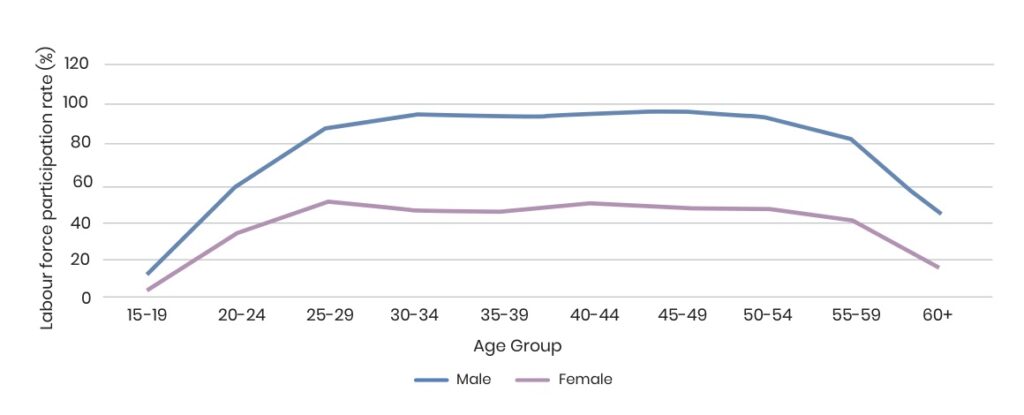
Figures 1.1 and 1.2 present LFPR by gender for the period 2018–2024 and LFPR by gender and age group for the third quarter (Q3) of 2025, respectively.
Figure 1.1: Labour Force Participation Rate by Gender (2018–2024)
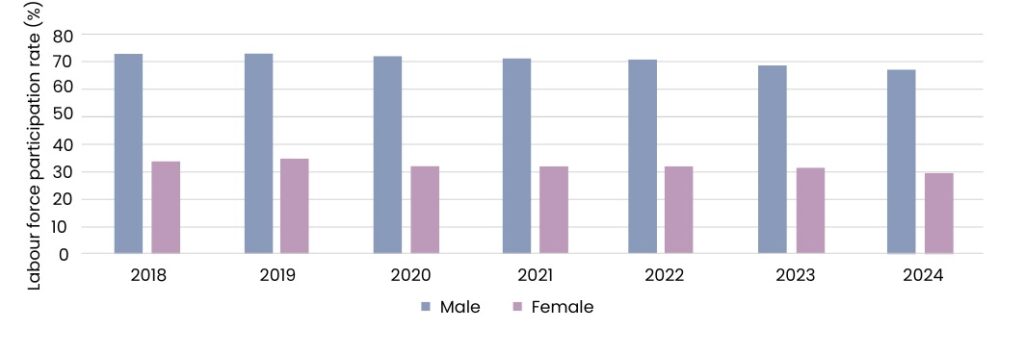
Figure 1.2: Labour Force Participation Rate by Gender and Age Group (Q3 2025)
As per the World Bank (2024) South Asia Development Update, female LFPR is shaped by both supply- and demand-side factors. Supply-side factors include social norms restricting work outside the home, education and skill gaps, care responsibilities, lack of affordable childcare, and limited access to finance. Demand-side factors relate to the availability of jobs and include the structure of the economy, sectoral composition, firm incentives, export-oriented and competitive industries, and legislative or policy measures such as mandated hiring quotas, employment guarantees, and affirmative action, which directly influence women’s access to work. Addressing both sets of factors is essential to increasing female LFPR in South Asia.
Under the ongoing International Monetary Fund (IMF) Extended Fund Facility (EFF) programme, increasing female labour force participation consistently appears as a structural reform priority in IMF staff commentary and programme reviews (International Monetary Fund [IMF], 2024).The reform agenda links higher female participation not only to improved labour market outcomes, but also to raising Sri Lanka’s long-term growth potential and mitigating demographic pressures from an ageing workforce. Expanding women’s participation is central to broadening the productive labour base and strengthening productivity alongside macroeconomic stabilisation (IMF 2023, p.103).
In Q3 of 2025, male labour force participation in the
30–44 age group exceeded 90%, suggesting limited
scope to increase labour supply through higher male
participation alone. In contrast, female participation
in the same age cohort remains around 47–50%,
indicating substantial untapped labour potential.
Accordingly, reforms that remove barriers to women’s
employment, including modernising labour laws to
enhance flexibility and strengthening part-time and
flexible work frameworks, are critical to expanding the
effective labour force (DCS, 2026)
In this context, lifting regulatory barriers that restrict women’s entry into and retention within the workforce is not a question of equity alone, it is also an economic imperative. Yet the continued underutilisation of women represents a measurable loss to output and productivity. Structural and regulatory constraints that limit women’s labour force participation restrict the effective supply of labour, suppress competitiveness, and weaken long-term growth potential. If macroeconomic stabilisation is to translate into sustained and inclusive recovery, labour market reform must prioritise unlocking women’s full economic contribution.

Analytical Framework: Gender Bias within Sri Lanka’s Fragmented Labour Code
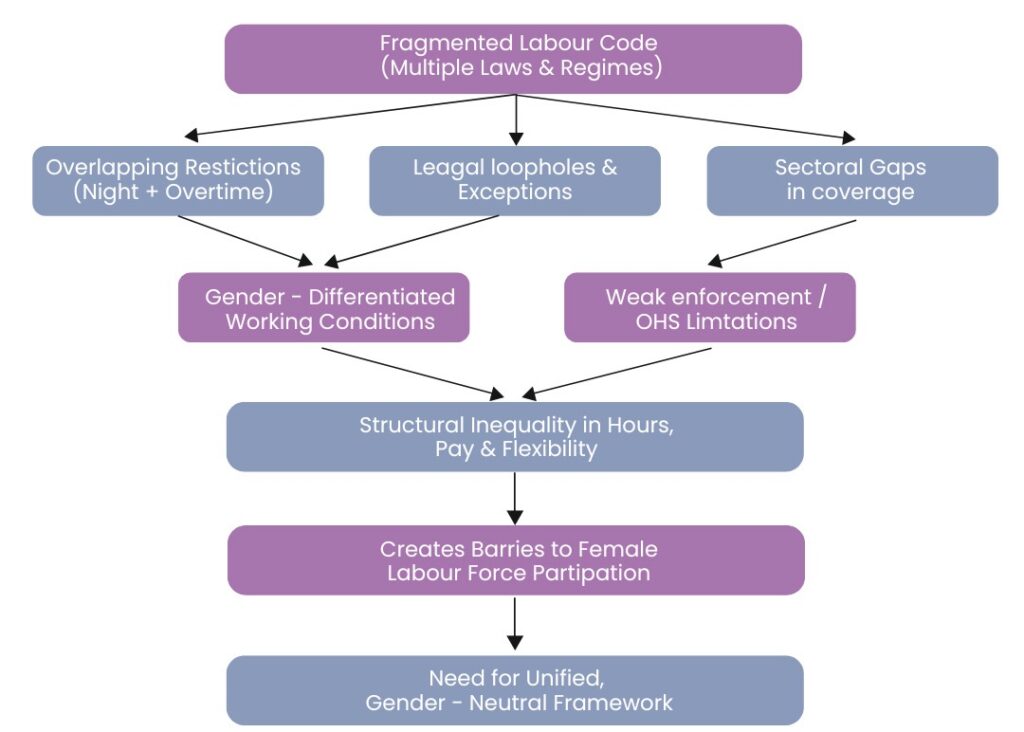
To conceptualize the challenges facing women in Sri Lanka’s workforce, this policy discussion paper utilizes a structured framework that positions gender bias within the context of a fragmented, sector and occupation specific labour code. At its core, the framework identifies the patchwork nature of the legal system as a central factor, illustrating how archaic, overlapping, and inconsistent statutes systematically disadvantage women. The analysis is structured around four key dimensions:
- Overlapping night-time and overtime restrictions
Even where night work is permitted in certain sectors, women’s capped daily and weekly working hours limit their ability to access overtime opportunities and premium pay. This creates structural inequality with male workers who can legally work longer hours.
- Exceptions and loopholes in overtime regulations
Managerial exemptions and provisions allowing extended hours for employees in positions of responsibility create loopholes that can enable misclassification and weaken working-hour protections. In addition, the Factories Ordinance permits the suspension or extension of hour limits in cases such as accidents, machinery breakdowns, or other emergencies, subject to approval by the Commissioner of Labour. While intended as safeguards, these broad exceptions risk normalising workweeks approaching the statutory maximum, particularly in labour-intensive sectors.
- Gaps in occupational health and safety (OHS) protections
Although health and safety provisions are formally gender-neutral, their effectiveness is weakened by narrow sectoral coverage, reliance on an outdated factory-based regulatory model, and gaps in workplace registration and inspection. As a result, many workplaces particularly outside the formal industrial sector remain inadequately monitored.
- Fragmented protections for private healthcare workers
Labour protections in the private healthcare sector remain uneven. Many clinical care roles are governed primarily through individual employment contracts or, where applicable, collective agreements, rather than through consistent statutory labour protections.
Together, these dimensions provide a systematic lens to critique the
current regulatory framework. They demonstrate that Sri Lanka’s labour laws are not only fragmented and sector-specific but also embed structural gender biases, underscoring the urgent need for a unified, gender-neutral labour code that provides consistent protections and equitable opportunities for all workers. Diagram 1.3 below summarises how this fragmentation operates as a structural barrier to women’s employment.
A Step in the Right Direction: Reform Progress
Relaxing Night Work Restrictions for Women in the IT, KPO/BPO Sector
A draft amendment to the SOEA, permits the employment of women at night in institutions engaged in outsourcing IT-based business processes and knowledge-based services. The amendment received Cabinet approval in August 2022 (Puvimanasinghe, 2022) and further clearance in October 2023 (Office of the Cabinet of Ministers, 2026). Under the amendment, section 68 (SOEA, Act No. 28, 2024) expands the definition of “office”
to include establishments providing IT services, Knowledge Process Outsourcing (KPO), Business Process Outsourcing (BPO), and related administrative and accounting services for foreign clients (Goonewardene, 2024).
Night work and overtime restrictions have now been removed specifically for the employment of women over the age of 18 years in the IT and BPO/KPO sectors before 6:00 a.m. or after 6:00 p.m. on any day. Section 66 of the amendment also includes provisions requiring employers to provide specific welfare measures, including security, transportation, and resting facilities for women employed during night hours (SOE Act, No. 28, 2024). Overall, this change signals a move toward aligning labour regulations with the demands of globally integrated, export-oriented service industries while retaining necessary protections for women employees.
Expanding Women’s Access to Night Work in the Hospitality and Food Service Industries
A 2026 amendment to the Shop and Office Employees Act expanded the categories of women aged 18 and above permitted to work night shifts in residential hotels and restaurants between 6:00 p.m. and 6:00 a.m., including beyond 10:00 p.m.
Previously, the exception to employ women beyond 10:00 p.m. applied only to female receptionists, ladies’ cloakroom attendants, ladies’ linen room attendants, and ladies’ lavatory attendants. The Gazette dated 30 January formalises and extends the exception to the employment of women over 18 in janitorial, food, and beverage service positions, allowing employers to engage them at night in these roles.
Employers are required to ensure safety, provide secure transport or accommodation, and maintain health and welfare protections for women working at night (Gazette No.2473/25,Jan 30th 2026).
2 In Sri Lanka, some hospitality establishments open to the public are owned or operated by military institutions and staffed by serving military personnel. Although these businesses operate in sectors normally regulated under the Wages Boards framework, the personnel working in them remain members of the armed forces and are therefore governed by military and public service regulations rather than standard labour laws. As a result, labour law provisions relating to minimum wages, overtime, and leave may not apply in the same way as they do to private-sector hospitality workers. This creates a regulatory asymmetry between military-run and private establishments, raising concerns about fair competition and unequal treatment among workers performing similar roles.

Fragmented Progress: Sector-Specific Gains and Enduring Inequalities
While recent measures to relax night-work restrictions for women in Sri Lanka represent a step in the right direction, they do not fully eliminate structural barriers to equal labour force participation. The reforms remain fragmented and highly sector-specific, reinforcing longstanding distinctions between shop and office employees and industrial workers. Rather than introducing a universal, gender-neutral framework, the law continues to rely on arbitrarily chosen, narrowly defined, role-specific exemptions without any evidence-based justification.
As a result, women employed outside the specified occupations and sectors continue to be subject to gender-differentiated conditions governing night work. Certain categories of female workers, including spa employees and private healthcare care workers such as nurses, remain subject to inconsistent regulatory coverage or gaps in night-work protections. This segmented approach perpetuates regulatory complexity and in-built discrimination, limiting the extent to which all willing and able women can benefit from the reforms.
Debates surrounding the easing of restrictions on women’s working hours have often been dominated by concerns that gender-neutral labour laws could lead to increased exploitation of women in the workforce. However, growing evidence suggests that the challenges women face in the labour market are more complex than this narrative implies. The World Bank notes that across South Asia, including Sri Lanka,low female labour force participation is driven less by labour regulations themselves and more by structural barriers within the labour market (Murthi and Raiser, 2024). These include the lack of affordable childcare services, limited access to safe and reliable transportation, restrictive social norms, and a scarcity of suitable employment opportunities for women. Addressing these constraints is therefore central to enabling women to participate productively in the labour force. In Sri Lanka in particular, research suggests that women’s aspirations for employment often exceed the opportunities available to them.
Moreover, development research has consistently demonstrated that women’s labour participation grows in the presence of supportive infrastructure and policies. The World Bank highlights the importance of investments in childcare services, safe transportation, skills training, and labour policies in increasing women’s labour force participation and enhancing their job quality. The World Bank asserts: “Investments in childcare services, safe transportation, skills training, and labour policies have been shown to be one of the most effective strategies to increase women’s labour force participation and enhance job quality”(Pswarayi-Riddihough, 2019).The evidence from the region has demonstrated that in the presence of these enabling factors, women have been able to not just participate in the labour force, but thrive in it and contribute to the well-being of their families and the national economy.
A more effective approach to labour reform would therefore combine stronger labour protections with targeted investments that enable women’s participation. This includes expanding childcare and care services, improving transportation and workplace safety, strengthening skills development, and facilitating access to decent work. Such an approach recognizes women not merely as workers in need of protection, but as professionals and economic actors who should have the same freedom as men to decide how, when, and where they participate in the labour market.

Persistent Regulatory Barriers to Women’s Full Labour Force Participation
1. Legal Safeguards for Women’s Night Work and Remaining Gaps
Recent reforms now allow women to work at night in certain sectors subject to conditions. Under the EWYPC Act (No. 47 of 1956, Section 2A), a woman cannot be forced to work at night, and she cannot be assigned a night shift after already working a day shift (between 6 a.m. and 6 p.m.). Employers must get written approval from the female worker and then submit an application to the Commissioner of Labour for approval to be granted before women can work after 10 p.m., and women cannot be assigned more than ten night shifts in a single month. The law also requires that women working at night are provided restrooms, refreshments, and suitable accommodation if safe transport home is not available (EWYPC, Act No.47, 1956).3 In addition, the 12‑hour spread‑over rule ensures that the total time at work in a single day, including breaks, cannot exceed 12 hours (Factories Ordinance, Act No. 45, 1942).4 The SOEA (Section 66) has also been amended to allow women to work night shifts in certain categories of offices and shops, again with protections for rest, safety, and welfare. However, the requirement for approval and other conditions do not apply to workers covered under the SOEA.
3 Employment of Women, Young Persons and Children Act, No. 47 of 1956, ss. 2A(2)(a)–(g)
4 Factories Ordinance, Cap. 128, s. 68(2)(b)
Although these measures are intended to reduce overwork and prevent exploitation, significant gaps remain: not all sectors follow the monthly night-shift limit, there is no law requiring a minimum rest period between shifts, and compliance depends on employers and enforcement depends on labour inspectors. So, while the law now makes night work safer for women, in practice women could still face fatigue, exploitation or unsafe schedules if these rules are not properly applied.
2. Gendered Time Restrictions and Overtime Access in Sri Lanka’s Shop and Office Framework
Despite recent reforms permitting night work for women in selected occupations and industries, Sri Lanka’s labour regulatory framework continues to impose structural constraints on women’s working hours. These constraints arise from a gender differentiated overtime entitlement and from the resulting interaction between daily hour limits, weekly caps and gender specific night work conditions under the SOEA.
Under Regulation 2(1) of the SOEA, women are prohibited from being employed in a shop or office for more than 9 hours per day, inclusive of overtime and meal intervals, within a five-day working week.
Overtime work is permitted only on the shorter working day—that is, when the normal working hours are limited to five hours in order to complete the 45-hour weekly requirement. Even in such cases, overtime may not exceed 3 hours, as work beyond 8 hours per day is generally not permitted except where specific amendments apply.
While Regulation 6 permits up to 12 hours of overtime per week for “a person,” the daily inclusive cap imposed on women prevents them from practically accessing the full weekly overtime entitlement. Regulation 7 provides that such overtime work must be compensated at not less than one and a half times the ordinary hourly rate. Adult male employees are not subject to the 9-hour inclusive restriction, resulting in a gender-differentiated effect in the allocation of overtime hours and access to overtime pay at the premium rate.
Consequently, even where night work relaxations apply, the overall weekly ceiling of 45 hours of regular (SOEA, Act No. 18, 1954)5 work remains unchanged, and overtime work must be within the statutory framework governing time-of-day employment. For example, a female employee starting a shift at 6:00 p.m. is required to end work by 3:00 a.m., whereas a male employee may continue beyond this time and claim overtime pay. However, as a female employee may not be employed for more than 9 hours on any given day, she must either be provided with safe transportation home or access to welfare facilities until it is safe to travel in daylight. Since the law does not require sleeping accommodation, a designated room for temporary rest may suffice until transport becomes available; however, no wages are payable for the time spent in such a resting space prior to returning home.
Where these safeguards are unavailable, practical constraints may deter women from undertaking extended or late-night work. Alternatively, in contexts where enforcement is weak, women may feel compelled to work under non-compliant conditions. In either case, the regulatory framework effectively reinforces gender-differentiated limitations on overtime and shift flexibility, limiting women’s ability to access overtime opportunities even when night work restrictions are relaxed. While male employees may freely distribute their permissible hours across day and night shifts, women’s participation in late-hour work remains contingent upon sectoral coverage, occupational classification, and employer compliance with prescribed safeguards, rather than solely on an individual woman’s willingness or capacity to maximise her earning potential, including in circumstances where she does not face family care responsibilities or other personal constraints on working overtime. This structural bias produces de facto inequalities in earning potential and shift flexibility.
5 Under the Shop and Office Employees Act No. 19 of 1954, normal working hours are 8 hours per day and 45 hours per week (excluding rest/meal intervals). The Act allows regulations to prescribe overtime and variations, including the 9-hour daily limit for women under the 1978 Regulations.
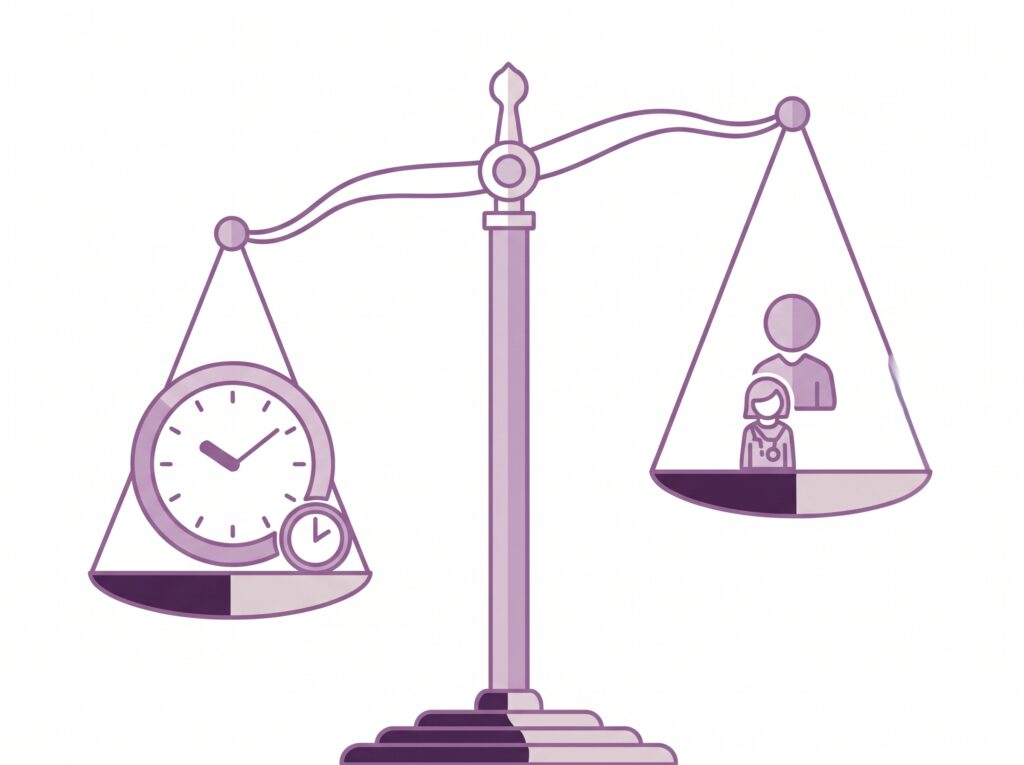
Conversely, male workers are subject to fewer statutory limits on overtime and night work, which may expose them to exhaustion, burnout, and other health risks where long hours become routine. This discrepancy illustrates the paradox of gender-differentiated labour protections: men are treated as autonomous workers, while women are treated as requiring special safeguards, even when workplace risks are comparable.
A more equitable approach would adopt gender-neutral statutory protections, where caps on overtime, night work, and maximum hours are based on evidence of safe working limits for all employees rather than assumptions tied to sex. Such reform would protect both men and women from overwork, remove structural barriers that may bias employers against hiring women, and create a fairer, more consistent labour framework. A streamlined, gender-neutral system permitting all employees to work up to a uniform maximum number of weekly or monthly hours, subject to universally applicable safety standards, would reduce these structural inconsistencies while preserving worker protection.

3. The 60-Hour Workweek and Workplace Safety: Examining Women’s Protections under the Factories Ordinance
Under the Factories Ordinance (No. 45 of 1942), the ordinary hours of work for women and young persons are set out in Section 67, which limits employment to 9 hours per day and 48 hours per week, exclusive of meal and rest intervals. This differs from the 45-hour work week prescribed under the SOEA, yet the law provides no clear rationale for this sectoral variation. In principle, one might expect that labour regardless of sector, occupation, or form would be subject to coherent and consistent standards of protection, rather than divergent hour limits lacking an articulated policy basis. Section 68 permits overtime, subject to statutory conditions and payment of overtime wages, but caps total working time at 60 hours in any one week. Section 74 further provides that the hour restrictions do not apply to women holding responsible positions of management who are not ordinarily engaged in manual work. In addition, Section 75 empowers the Commissioner of Labour, in the event of an accident, breakdown of machinery, or other unforeseen emergency, to suspend the provisions relating to hours and holidays for a specified period where necessary to prevent serious interference with the ordinary working of the factory. While this provision is intended to provide flexibility in exceptional circumstances, it may also create a degree of regulatory uncertainty. The broad discretionary authority granted to suspend statutory protections risks undermining the very rationale for introducing limits on working hours and rest periods in the first place, as such safeguards may be set aside whenever deemed necessary.
Read together, these provisions create a layered system of exceptions. While the default position is a 48-hour workweek, the law permits additional hours through overtime, effectively allowing workweeks of up to around 60 hours. It also removes certain hour limitations for employees classified as managerial or supervisory and allows temporary suspension of hour limits in emergency situations. This structure creates room for potential exploitation in several ways. First, the effective 60-hour ceiling may, in practice, function less as an exceptional maximum and more as a routine scheduling norm in labour-intensive industries. Second, the managerial exemption in Section 74 creates incentives to classify employees as holding “responsible” or supervisory roles in order to avoid statutory hour limits, particularly where the distinction between managerial and operational functions is not clearly defined. Third, the emergency suspension power in Section 75, while intended for genuine contingencies, may further extend working time without clearly defined outer limits during the suspension period.
Although each provision is framed as limited and conditional, their cumulative effect may dilute the protective character of the 48hour standard and generate structural space for the overextension and exploitation of women’s labour under the guise of lawful exceptions.
In addition, Section 67A governs women’s night work in factories. It permits employment at night under conditions including written sanction from the Commissioner of Labour for work beyond prescribed hours, employee consent, enhanced remuneration, welfare safeguards, transport arrangements, and limits on consecutive shifts. However, its applicability is narrow: the Ordinance only covers premises meeting the statutory definition of a “factory” – industrial establishments engaged in manufacturing processes. Offices, and shops with less than 4 employees have no provision for night work, and in others such as most private healthcare institutions, spas, and trades for which no Wages Board has been established have no restrictions at all, leaving the protections of Section 67A confined to a limited subset of industrial enterprises.
Although Section 2 of the Factories Ordinance makes factory registration compulsory, the ‘notified date’ after which no factory may legally operate without registration has never been published in a Gazette. As a result, more than 80 years after the Ordinance’s enactment, the mandatory registration requirement has not been fully enforceable in practice. Therefore, while workplaces classified as factories under the Ordinance may be required to register for other purposes such as with the Central Environmental Authority or the Board of Investment (BOI), where applicable—the lack of enforceable compulsory registration for labour protection renders enforcement unpredictable and unnecessarily burdensome. Subsequent regulations including those gazetted in September 2019 (Gazette No.2142/90, Sep 27th 2019) relating to the registration and certification of steam boilers highlight that the regulatory system remains rooted in older industrial models. While these regulations do not limit registration solely to steam-using factories, they reflect a framework historically designed for steam-era manufacturing processes. In modern industries that increasingly rely on electric heating, thermal oil systems, or other non-steam technologies, shortcomings in registration requirements and inspection capacity may result in certain workplaces operating with minimal regulatory oversight. Together, the narrow sectoral scope, registration-dependent enforcement, and outdated industrial assumptions weaken the practical effectiveness of protections (Factories Ordinance, Act No. 45, 1942).6
In conclusion, while the Factories Ordinance (No. 45 of 1942) establishes foundational protections for workers, including limits on hours and requirements for welfare, health, and safety, its structure and implementation create significant gaps. Layered exceptions to hour limits, including the 60-hour ceiling, managerial exemptions, and emergency suspension powers operate within a labour market characterised by occupational segregation. According to the 2024 Annual Labour Force Survey, women account for 32.6% of total employment but only 26.5% of managers, senior officials and legislators, indicating that women are less likely to occupy managerial positions that fall outside statutory working-hour
6 The occupational safety and machinery-related protections under the Factories Ordinance including provisions relating to the use of machinery, boilers, safety measures, and general workplace health standards apply to all workers irrespective of gender. These protections are not gender-specific and extend equally to men and women employed within registered factories. regulations. As a result, women are more likely to remain in roles directly governed by statutory hour limits or night-work restrictions, increasing the risk that extended hours may be imposed through legally permitted exceptions.
At the same time, while health and safety protections under the Ordinance are gender-neutral in principle, their effectiveness is undermined by the narrow sectoral scope of the law, its reliance on outdated industrial models, and gaps in registration and inspection mechanisms. Together, these factors weaken the Ordinance’s protective intent and highlight the need for a modernized, sector-inclusive, and gender-sensitive regulatory framework that ensures consistent protection of all workers, safeguards health and safety across all workplaces, and reduces opportunities for exploitation,particularly of women under existing legal exceptions.

4. Legal Gaps in Protecting Private Health Care Workers in Sri Lanka
In Sri Lanka, labour protections for private health‑care workers are fragmented across different laws and do not automatically extend uniform protections to all clinical care roles. The SOEA Act No. 19 of 1954 applies specifically to people “employed in or about the business of a shop or office,” which in the context of a private hospital typically means administrative and clerical staff rather than clinical care workers such as nurses, ICU personnel, radiologists, diagnostic technicians, wound care specialists, or waste management teams.7
While certain categories of workers may benefit from statutory regulation under sector-specific mechanisms, including wage determinations issued under the Wages Boards Ordinance–for example, through a Wages Board established for the Nursing Home Trade, coverage is not comprehensive across all clinical roles within private health-care institutions. As a result, many clinical and technical employees fall outside the detailed statutory standards governing working hours, overtime, leave entitlements, and related conditions. In practice, these matters are therefore often regulated primarily through individual contracts of employment or, where applicable, collective agreements, unless and until broader legislative reform or sector-wide wage regulation is introduced.
For context, according to the 2022 Annual Survey of Private and Semi-Government Sector Employment, women account for 70.9% of employees in the health sector.
7 In the absence of comprehensive statutory coverage, many clinical and technical staff in
private hospitals rely on employment contracts or collective agreements for protections related to working hours, overtime, leave entitlements, and occupational safety. These agreements are negotiated between the employer and employees (or their unions) and may vary significantly across institutions.
Table 1.1 below summarizes the gendered impact of Sri Lanka’s fragmented labour code:
| Law/Regulation | Theme | Women | Men | Implications |
|---|---|---|---|---|
| SOEA Act No. 19 of 1954 | Sector-specific night work relaxation for women without corresponding overtime access. | Limited to 9 hours per day inclusive of overtime and meal intervals under SOEA regulations, which restricts practical access to weekly overtime opportunities. | Not subject to the 9-hour inclusive cap; may access overtime up to the weekly statutory limit. | Creates gender-differentiated work hours, limits earning potential and scheduling flexibility for women even in sectors where night work restrictions are relaxed. |
| Factories Ordinance No. 45 of 1942 | Working hours, overtime limits, and managerial exemptions. | Ordinary hours are limited to 9 hours per day and 48 hours per week. With overtime, total working hours may extend up to 60 hours per week. Women employed in responsible managerial positions who are not ordinarily engaged in manual work are exempt from these statutory hour limits. | The same statutory limits apply: 9 hours per day and 48 hours per week, extendable to 60 hours per week with overtime. Employees in responsible managerial positions are similarly exempt from statutory hour limits, as the exemption applies irrespective of gender. | While the 60-hour workweek applies to both men and women, exceptions and managerial loopholes in laborintensive industries can enable routine overwork. Women, who are disproportionately concentrated in blue-collar and lower-paid roles, are particularly vulnerable compared with those in white-collar positions. Health and safety protections exist but are undermined by narrow sectoral scope, outdated industrial assumptions, and incomplete inspections impacting both genders. |
| Regulation of night work for women in factories. | Night work is permitted subject to statutory conditions, including written consent of the employee and approval from the Commissioner of Labour. In addition, women may not be assigned more than 10 night shifts per month under the EWYPCA, and employers must provide welfare facilities, transport, and safety measures. | No statutory restriction on the number of night shifts per month and no requirement for prior consent or Commissioner approval. | Night work regulations treat women’s participation as an exception subject to administrative approval and monthly limits, while men may be assigned night shifts without equivalent restrictions. This creates gender-differentiated access to certain shifts and associated overtime opportunities. At the same time, the absence of similar safeguards for men may expose them to excessive night work, fatigue, and related occupational health and safety risks. | |
| Private Health Care Workers (various laws/ contract) | Regulation of private healthcare clinical roles. | Many clinical roles in private hospitals (such as nurses, technicians, and ICU staff) fall outside detailed statutory labour regulation and often rely on individual employment contracts or collective agreements. | Male employees in similar clinical roles face the same gaps in statutory protection. | Fragmented protections create uncertainty and inconsistent working conditions; highlight the need for a unified labour law covering all sectors and occupations. |
| Limitations of recent reforms | ||||
| SOEA Amendment for IT,KPO/BPO (2024) | Women over 18 allowed night work; employers must provide security, transport, and welfare facilities. | Men already unrestricted. | Sector-specific relaxation improves participation but only in certain industries; it does not eliminate structural inequality. | |
| SOEA Amendment for Hospitality / Food Service (2026) | Women over 18 allowed night shifts beyond 10 p.m. in select roles; safety and welfare protections required. | Men already unrestricted. | Expands sectoral coverage but remains occupation-specific; women outside these roles remain constrained. | |

Policy Direction for a Unified and Gender-Neutral Labour Framework
Sri Lanka’s labour framework continues to regulate women’s night work, overtime, and working hours through a fragmented and partly outdated model that sits uneasily with international labour standards. While Sri Lanka has ratified ILO Convention No. 111 on Discrimination (Employment and Occupation) and Convention No. 100 on Equal Remuneration, women remain subject to gender-specific restrictions that limit not only when they can work, but also how much they can earn through overtime. Although night work has been relaxed in selected sectors, women’s access to such work remains conditional, uneven, and dependent on sectoral exemptions, while daily hour caps and related restrictions can still prevent them from accessing the full range of overtime opportunities available to men. In practice, this creates a form of indirect discrimination in conditions of work and remuneration, as women are denied equal flexibility, equal earning potential, and equal access to certain shifts. At the same time, Sri Lanka’s continued reliance on a protective approach resembles the logic of older standards such as ILO Convention No. 89 on Night Work (Women), while it has not ratified more modern instruments such as Convention No. 171 on Night Work, which move toward regulating night work through gender-neutral safety and welfare protections for all workers.
A more coherent and internationally consistent
approach would therefore be to replace sex-based
restrictions with a unified labour framework that
governs night work, overtime, and maximum working
hours on an equal basis for men and women, while
ensuring universal safeguards for health, safety,
transport, and welfare.
Sri Lanka has experimented with piecemeal amendments to its fragmented labour laws, with mixed effects on the rights and protections of workers. There is, however, a strong case for consolidating these laws into a unified labour law that provides uniform coverage for all workers, regardless of occupation, sector, or gender. Some experience already exists with uniformly applicable legislation. For instance, the National Minimum Wage of Workers Act No. 3 of 2016 applies across all sectors irrespective of trade designation and has mandated a monthly minimum wage of Rs. 30,000 with effect from 1 January 2026. The successful acceptance and enforcement of a national minimum wage demonstrates that nationally applicable labour standards are both feasible and administratively workable. In this context, inconsistent provisions such as the 60 hours per week including overtime permitted for women under the Factories Ordinance and the prohibition on overtime for women under the Shop and Office Employees Act could be reconsidered. Any differentiation should apply uniformly to all workers or be justified strictly on the basis of credible research and internationally accepted best practices, rather than on gender alone.
In this context, gender-neutral labour regulations grounded in evidence-based reviews, with safeguards that ensure safe, reasonable, and practical working conditions, will be more likely to create accessible and meaningful employment opportunities, particularly for women, by removing structural barriers that discourage participation. Outdated and patriarchal limitations based on the need to ‘protect’ women from exploitation without proper enforcement reduce incentives for women to enter or remain in the workforce. Labour law reforms must therefore combine protection, accessibility, and practical safeguards for all workers under a unified framework.
References
- Goonewardene, T (2024). Varners | Sri Lanka Amends Labour Law Favourable To It Bpo Sector & Strengthening Gender Equality. [online] Varners.law. Source.
- Department of Census and Statistics (2025). Sri Lanka Labour Force Survey Annual Report – 2024. [online] Statistics.gov.lk. Source.
- Department of Census and Statistics (2026). Sri Lanka Labour Force Survey Quarterly Report 3rd Quarter – 2025. [online] Statistics.gov.lk. Source.
- Department of Labour (2022). Annual Survey of Private and Semi-Government Sector Employment – 2022. [online]. Source.
- Employment of Women, Young Persons And Children (1956). Source.
- Factories Ordinance (1942). Source.
- Gunatilaka, R. (1999). Labour Legislation and Female Employment in Sri Lanka’s Manufacturing Sector. [online]. Source.
- International Monetary Fund (2023). Sri Lanka Request For An Extended Arrangement Under The Extended Fund Facility-Press Release; Staff Report; And Statement By The Executive Director For Sri Lanka. Source.
- International Monetary Fund (2024). IMF Executive Board Concludes 2024 Article IV Consultation with Sri Lanka and Completes the Second Review Under the Extended Fund Facility. [online] IMF. Source.
- Ministry of Labour (n.d.). 43 Conventions and 1 Protocol See also. [online]. Source.
- Murthi, M. and Raiser, M. (2024). ClearHerPath: More women in the workforce will drive prosperity in South Asia. [online] World Bank Blogs. Source.
- Pswarayi-Riddihough, I. (2019). Sri Lanka’s women want to work—and thrive in the workplace. [online] World Bank Blogs. Source.
- Puvimanasinghe, N. (2022). Permitted Hours of Work for Women | D. L. & F. De Saram. [online] D. L. & F. De Saram. Source.
- Shop And Office Employees (Regulation Of Employment And Remuneration) (Amendment) ACT, No. 28 (2024). Parliament Of The Democratic Socialist Republic Of Sri Lanka Shop And Office Employees (Regulation Of Employment And Remuneration) (AMENDMENT) ACT, No. 28 OF 2024. [online]. Source.
- Shop And Office Employees [Regulation Of Employment And Remuneration] ACT (1954). Shop And Office Employees [Regulation Of Employment And Remuneration] ACT An Act To Provide For The Regulation of Employment, Hours of Work And Remuneration of Persons In Shop and Offices, And For Matters Connected Therewith or Incidental Thereto. [online]. Source.
- The Gazette of the Democratic Socialist Republic of Sri Lanka (2019). The Gazette of the Democratic Socialist Republic of Sri Lanka Extraordinary Factories Ordinance (Chapter 128). Government Gazette, 2142/90, 27 Sep. Source.
- The Gazette of the Democratic Socialist Republic of Sri Lanka (2026). The Gazette of the Democratic Socialist Republic of Sri Lanka Extraordinary Shop And Office Employees (Regulation Of Employment And Remuneration) ACT (Chapter 129). Government Gazette, 2473/25, 30 Jan. Source.
- Office of the Cabinet of Ministers (2026). dec_detail. [online] Cabinetoffice.gov. lk. Source.
- Wages Boards Ordinance (1941). Source.
- World Bank Group (2024). South Asia Development Update Jobs for Resilience. [online]. Source.