 Advocata Studio
Why 10% Female Participation in the Industry is Not Enough
Speaker:
- Malik Fernando — Chairman, Resplendent Ceylon; Chairman, Sri Lanka Tourism Alliance
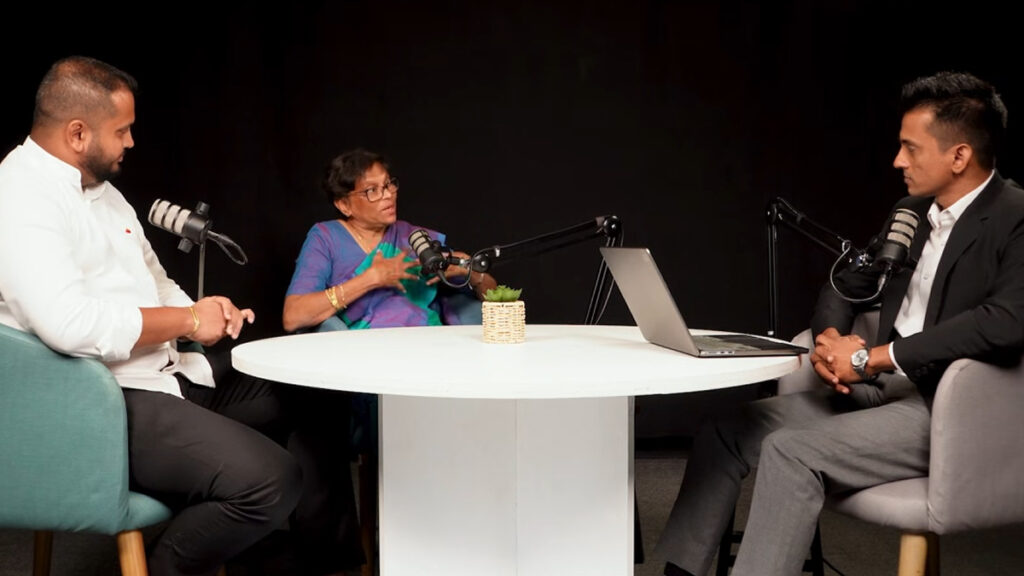
This episode of the Advocata podcast, produced in partnership with the Sri Lanka Tourism Alliance, examines one of the most persistent gaps in Sri Lanka’s tourism sector: the chronic underrepresentation of women in its workforce. The guest is Malik Fernando, who brings a dual perspective as both a hotelier — chairman of the boutique hotel group Resplendent Ceylon — and as chairman of the Sri Lanka Tourism Alliance, an industry body focused on strengthening the sector’s communication, sustainability, and workforce development.
The conversation opens with a broader read on tourism’s recovery. Fernando describes Sri Lanka as a long-standing “bucket list” destination whose growth has been held back less by lack of demand and more by traveler nervousness following past setbacks, compounded by weak industry communication. With two years of relative stability, arrivals are showing solid year-on-year growth, though Fernando argues there is significant room to attract a higher-value type of traveler.
From here, the discussion turns to the core theme: female labor force participation in tourism, which Fernando and the host frame as a key lever for the sector’s next phase of growth — one that has been identified as important but has seen little concrete action. Fernando explains the origins of the Sri Lanka Tourism Alliance, formed in 2019 in the aftermath of the Easter attacks by industry figures seeking to better communicate that Sri Lanka was safe and open. Alongside this core mission, the Alliance also works on sustainable tourism development and addressing structural weaknesses in the sector, including high staff turnover — with many hotel workers leaving for better-paying jobs in the Middle East or the Maldives.
Fernando presents a stark statistic: women currently make up less than 10% of Sri Lanka’s tourism workforce, despite representing as much as 40% of those who complete academic and vocational qualifications in the field. He contrasts this with Europe, where female participation in similar roles — housekeeping, for instance — runs as high as 50–60%, compared to an almost entirely male housekeeping workforce in Sri Lanka. To address this gap, the Alliance partnered with the Market Development Facility (MDF), an Australian government-funded program, on a 2023 study surveying roughly 1,200 women across the country through focus groups and interviews.
The study’s findings, according to Fernando, point primarily to a perception and awareness problem rather than structural exclusion. Many women were simply unaware of the job opportunities available and were not searching for work in a systematic way. There was also stigma tied to a lack of clarity around working conditions and safety, and in rural areas, many women relied on referrals — often from a male family member — to decide where to seek employment, which meant tourism rarely surfaced as a first choice compared to sectors like apparel or ICT. Fernando notes this is despite tourism being a genuinely rewarding sector financially, given that income includes not just salary but also service charge.
In response, the Alliance, together with MDF, launched a digital marketing and awareness campaign featuring real women working across different segments of the tourism industry, sharing their career paths and experiences as relatable role models. The campaign is designed to correct a narrow public perception of hospitality jobs — highlighting roles beyond the stereotypical waiter or steward, including naturalists, interpreters, front office staff, management, and sustainability roles.
The host raises Advocata’s own research interest in labor regulation, noting inconsistencies in working-hour rules across different roles within the same hotel. Fernando confirms that restrictions on women working after 10 p.m. have recently been lifted, addressing a formal legal barrier, but argues the more persistent obstacle now is perception — particularly among women’s families and husbands, who may hold outdated assumptions about the hospitality industry without visibility into how formal, well-managed hotel operations actually function.
Asked where investment should be directed to increase female participation, Fernando identifies the creation of separate, secure dormitory facilities for women as the single biggest necessary investment, since many properties historically had only shared accommodation blocks. Beyond that, he points to English-language training (offered to both genders) and broader communication efforts as comparatively low-cost but high-impact interventions.
The conversation then turns to Fernando’s own segment of the industry — boutique properties like those under Resplendent Ceylon. He suggests smaller-scale hotels may offer a more comfortable entry point for women, given closer management oversight and a more intimate, “village-style” working environment compared to the scale of large properties where staff may feel more anonymous. He’s careful to frame this as a research finding rather than self-promotion, noting that larger properties equally value and need gender balance.
On the guest experience, Fernando shares a candid observation: many international travelers — particularly female travelers — have told him they find it noticeably unusual and slightly uncomfortable when hotel staff are almost entirely male, especially given the contrast with rural village life in Sri Lanka, where women are often visibly central to community and craft activities. He argues that a stronger gender balance in hotel staffing is therefore not just a labor equity issue but a meaningful driver of guest satisfaction and retention, and by extension, a competitive advantage for Sri Lanka’s tourism brand.
On family and caregiving support, Fernando describes the hospitality industry’s HR culture as comparatively progressive out of necessity, given high competition for workers regionally. He notes that hotels generally offer flexibility around childcare, extended leave, and career breaks, allowing women to step away during early motherhood and return once children are older — supported, he argues, by Sri Lanka’s strong extended family and community networks, which he contrasts favorably with more isolated family structures in Western countries.
The discussion also covers where female employees tend to be recruited from. Fernando notes that women are more likely than men to work close to their home village or region — sometimes commuting from within walking distance, or from towns 10–20 kilometers away — allowing them to balance work with family responsibilities, while male staff are more willing to relocate farther for opportunities. Regions like the North Western, Central, and Uva provinces were identified in the Alliance’s research as showing greater openness among women toward tourism employment.
Looking at the campaign’s next steps, Fernando explains this initial phase is a focused six-month digital communication push featuring around 10–15 real-life role models, delivered via Facebook and digital ads in Sinhala and Tamil, targeted at women in relevant regions and demographics. Recognizing the influence of male family members as gatekeepers to women’s employment decisions, the campaign will also target men directly to shift perceptions at the household and community level. Following this phase, the Alliance plans a fresh study to assess impact before determining next steps, building on past initiatives that have included subsidized placements of women into specific hotel roles, particularly at small and medium-sized properties.
Fernando also connects gender balance in tourism to Sri Lanka’s global positioning, noting the country’s strong safety reputation for solo female travelers — citing a study ranking Sri Lanka among the top 10 safest countries globally alongside Japan. He argues that visible gender balance among hotel staff reinforces this reputation and improves overall guest comfort, particularly for female travelers.
Addressing whether certain hotel roles are inherently gendered, Fernando pushes back on the idea that any operational area is closed to women, while acknowledging that roles with unpredictable or intense hours — such as culinary positions — can be more demanding to balance with family responsibilities, even as he points to successful female chefs in Sri Lankan kitchens as proof of what’s possible. Roles like front office and housekeeping, by contrast, tend to offer more predictable schedules.
The conversation closes on the sector’s broader trajectory. Fernando warns that if tourism grows as expected without addressing the labor pool, hotels will increasingly compete for the same limited pool of staff, poaching workers from one another rather than expanding overall capacity. Given that half of Sri Lanka’s working-age women remain underemployed or entirely outside the workforce, he frames increased female participation as essential infrastructure for the industry’s next growth phase, with a target of reaching 20% female participation by the end of the following year.
In a final aside, Fernando connects tourism to foreign direct investment, arguing that Sri Lanka currently attracts limited FDI in the sector because its tourism product remains comparatively low-margin and underpriced relative to regional peers. He suggests that stronger destination positioning and nation branding — with tourism as the entry point — could not only unlock direct investment in the sector but also indirectly support other export categories like tea and cinnamon, and improve the country’s broader global image with prospective investors, many of whom, he notes, historically discovered Sri Lanka first as tourists before deciding to invest.