 Research Publication
Strengthening Sri Lanka’s Social Contract: Reforming Samurdhi and Building a Modern Social Security System
3, September 2026
Summary
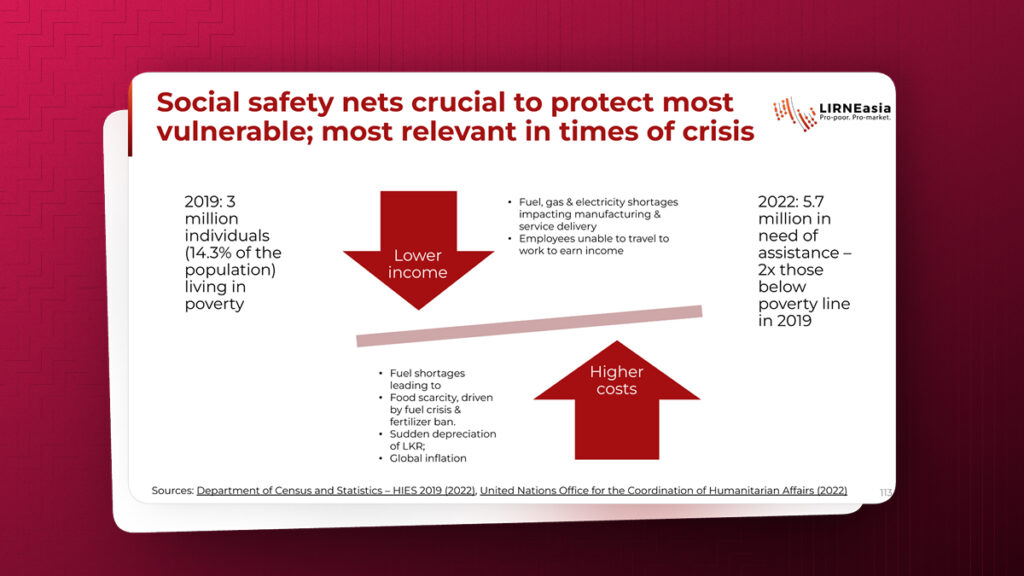
Dr Stephen Kidd argues that Sri Lanka’s narrowly targeted poor-relief model leaves many low- and middle-income households without meaningful protection and weakens trust in government. Samurdhi is presented as poorly targeted, while the wider social-security system receives limited investment and has only a modest effect on poverty. In contrast, universal and entitlement-based public services can strengthen the social contract by giving citizens a clear stake in institutions they collectively finance.
The presentation proposes moving towards a modern lifecycle system with benefits for children, people with disabilities, those facing unemployment or sickness, survivors and older people. As an immediate crisis response, it outlines a six-month universal cash-transfer programme reaching most households. It then proposes a tax-financed system that progressively establishes child, disability and old-age benefits. The central choice is between continuing a complex, exclusion-prone poor-relief system and building simpler, more transparent and inclusive social security.
Key Points
- Narrow poverty targeting excludes many households living on low and insecure incomes.
- Samurdhi’s targeting failures and limited impact weaken confidence in the social-protection system.
- Universal programmes can build legitimacy because citizens understand the benefits and share responsibility for financing them.
- A modern system should protect people across childhood, working age, disability and old age.
- The proposed emergency transfer would reach most households while prioritising children, people with disabilities and older people.
- Long-term reform should replace fragmented poor relief with transparent, tax-financed lifecycle benefits.
Tags