 Research Publication
Resetting Samurdhi: Social Safety Nets in Sri Lanka
5, August 2022
Summary
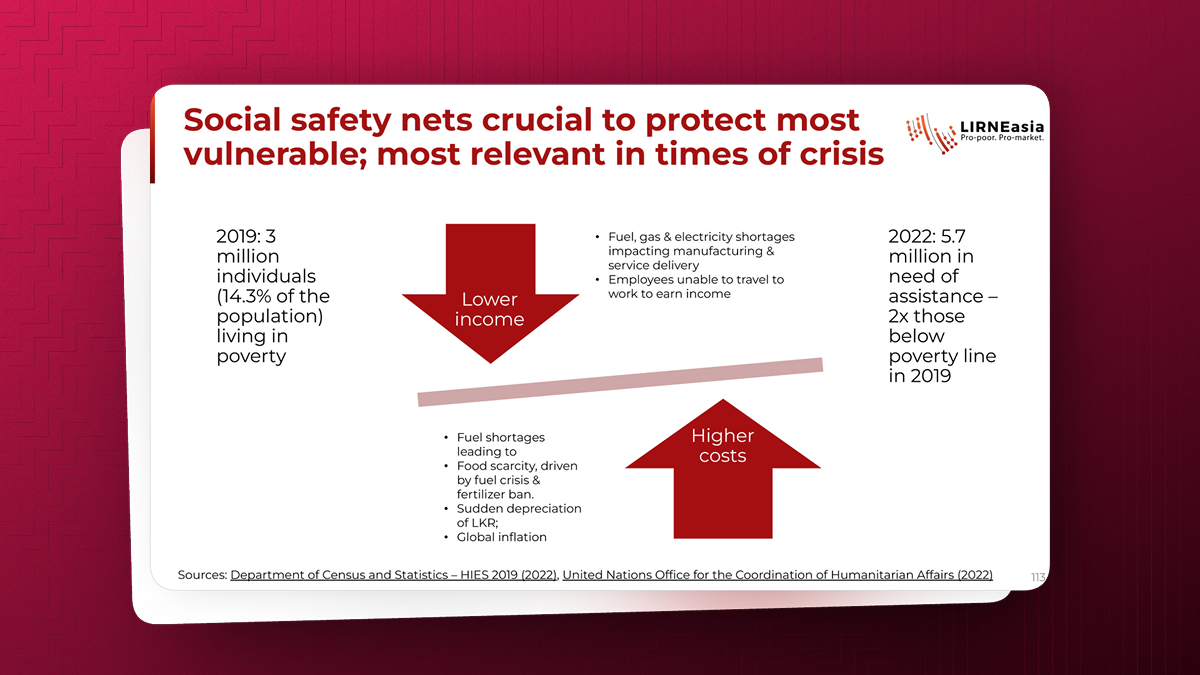
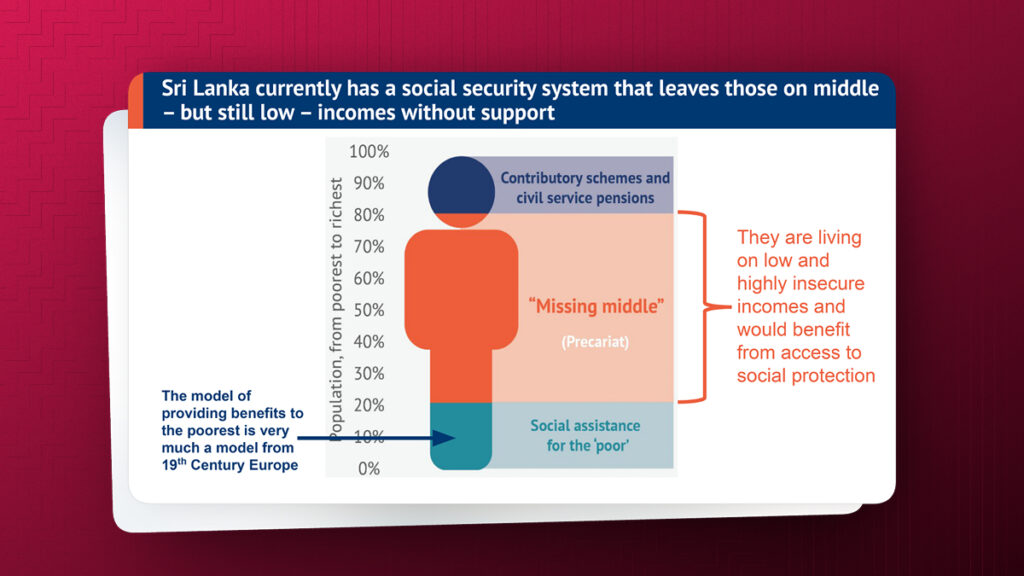
Gayani Hurulle examines the weaknesses of Sri Lanka’s social-protection system at the height of the 2022 economic crisis. Rising prices, shortages and lost incomes sharply increased the number of people needing assistance, but the country’s many welfare programmes were spread across multiple ministries and institutions, with overlapping responsibilities, weak coordination and inconsistent beneficiary lists. Existing programmes reduced poverty only modestly and suffered from both exclusion and inclusion errors.
The presentation proposes modernising how need is identified and how assistance is delivered. A unified beneficiary database, improved proxy-means testing and carefully governed use of new data could help reach newly poor households. Direct transfers through banks and mobile-money networks could reduce travel costs, leakage and administrative burdens. Reform must balance urgent improvements in coverage, benefit adequacy and ease of access with longer-term priorities including fiscal sustainability, depoliticisation, programme effectiveness and pathways that help recipients graduate from assistance.
Key Points
- The 2022 crisis greatly expanded the number of households needing support beyond those captured by older poverty lists.
- Sri Lanka operates more than 30 social-protection programmes across numerous ministries and agencies.
- Fragmented administration and multiple beneficiary lists create duplication, opacity and high transaction costs.
- Existing welfare programmes have had only a limited effect on poverty and display serious targeting errors.
- A unified beneficiary database and better data can improve identification of vulnerable and newly poor households.
- Bank and mobile-money transfers can make assistance faster, cheaper and less vulnerable to leakage.
- Emergency expansion should be accompanied by longer-term reform of adequacy, fiscal sustainability, depoliticisation and graduation.
Tags