 Event
Event
Labour Market Reforms for More Inclusive Growth: Context and Trends
5, August 2022
Summary
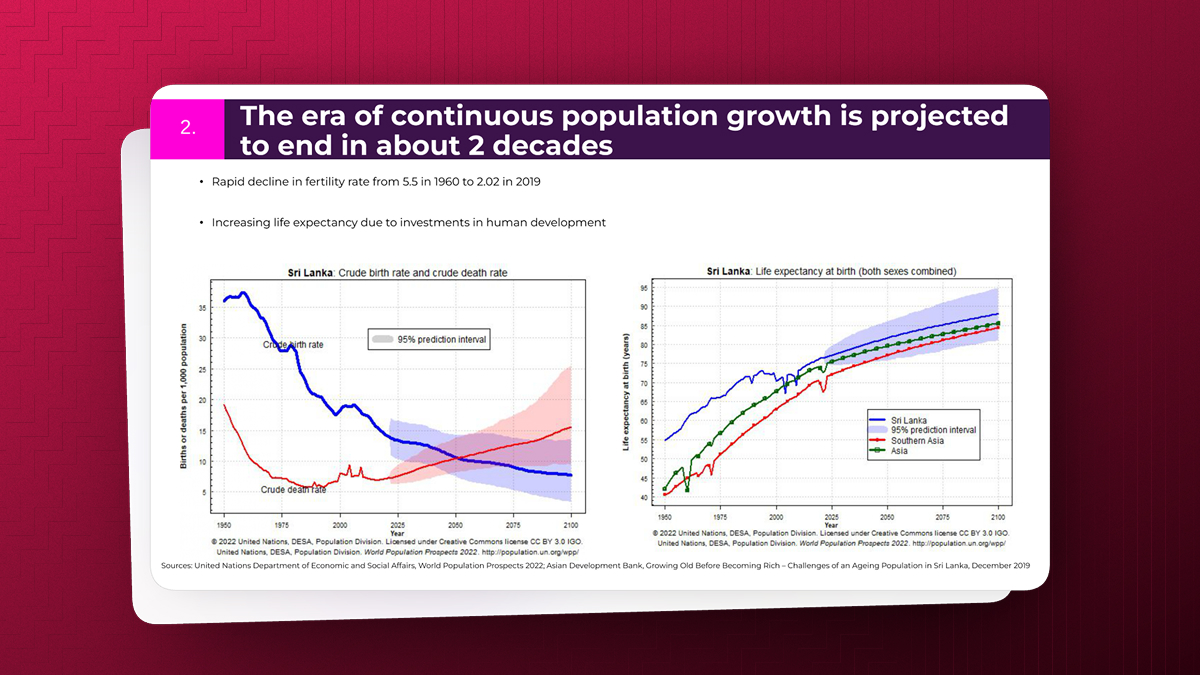
This context-setting presentation examines the demographic and employment trends that make labour-market reform increasingly urgent for Sri Lanka. Population growth is projected to end within two decades, the working-age population is expected to peak before beginning to decline, and the share of older people is rising rapidly. These shifts will place greater pressure on a relatively small active workforce.
Labour-force participation is also highly unequal. In 2021, overall participation was just under 50%, with male participation at 71% and female participation at 31.8%. Female unemployment is higher than male unemployment, informal work remains more common than formal employment, and overseas migration by women is concentrated in semi-skilled and low-skilled occupations. The presentation establishes the demographic and labour-market evidence against which reforms to employment law, skills, care, migration and female workforce participation should be assessed.
Key Points
- Sri Lanka’s population is ageing rapidly and is expected eventually to contract.
- The working-age population is projected to peak before the overall population, increasing the urgency of productivity reform.
- Female labour-force participation remains less than half the male rate.
- Women experience higher unemployment and are underrepresented in formal employment.
- Informal employment leaves a large share of workers outside normal labour protections and social benefits.
- Female labour migration is concentrated in semi-skilled and low-skilled work, limiting the returns available to workers and the economy.