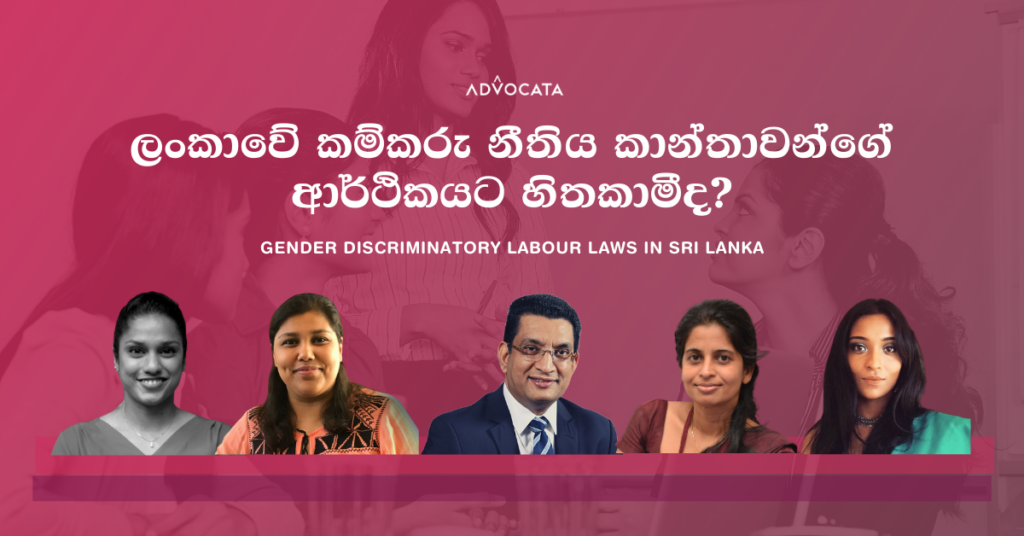
ලංකාවේ කම්කරු නීතිය කාන්තාවන්ගේ ආර්ථිකයට හිතකාමීද? Are Sri Lanka’s Labour Laws Friendly Towards Women’s Economic Participation?
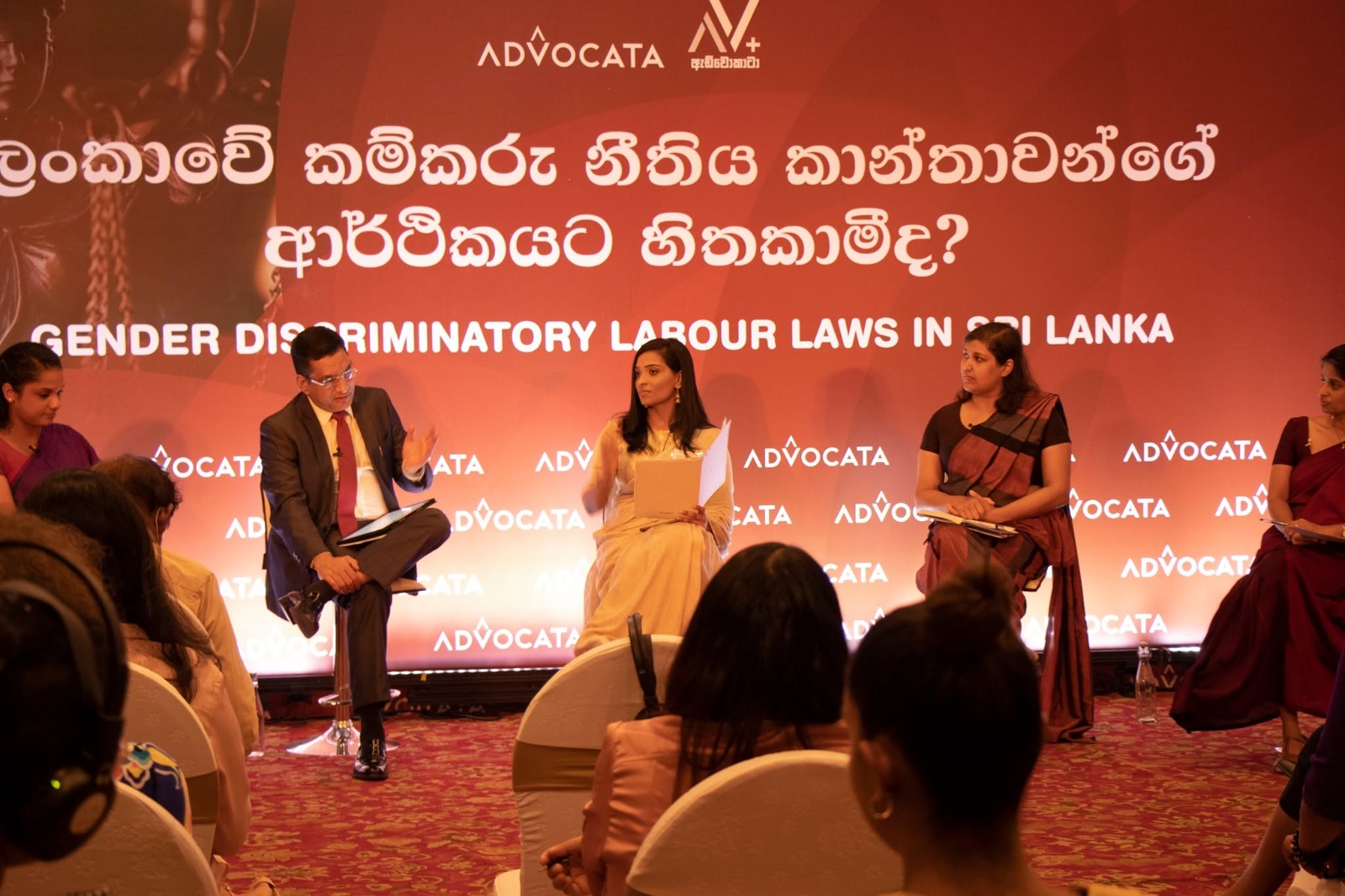
Sri Lanka has long faced the challenge of low female participation in the labour force, despite women making up a significant proportion of the country’s educated population. While a number of factors influence women’s decisions and ability to participate in employment, the legal and regulatory framework governing work is an important part of the equation.
Against this backdrop, the Advocata Institute hosted a public discussion titled “ලංකාවේ කම්කරු නීතිය කාන්තාවන්ගේ ආර්ථිකයට හිතකාමීද?” (Are Sri Lanka’s Labour Laws Friendly Towards Women’s Economic Participation?) on 5 March 2021, ahead of International Women’s Day.
The discussion sought to examine the relationship between Sri Lanka’s labour laws and women’s economic empowerment, while creating greater public awareness of the conditions faced by women in the workforce. It brought together policymakers, legal researchers, labour officials and private-sector representatives to discuss whether existing labour regulations adequately support women’s participation in the economy.
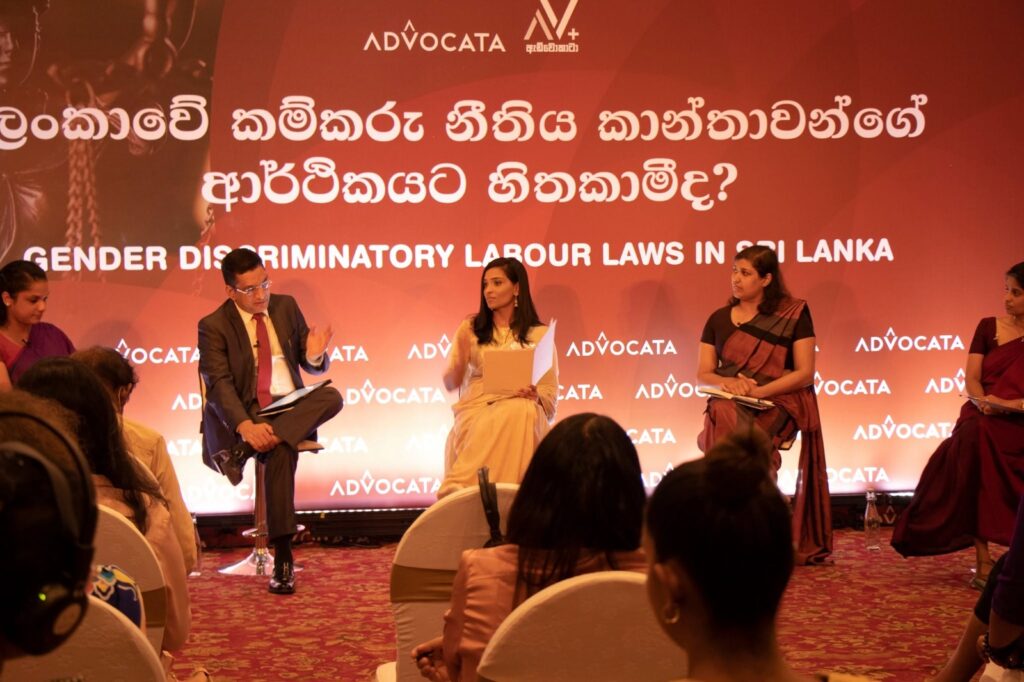
The panel featured Hon. Ali Sabry, Minister of Justice and Prison Reforms; Madhavie Gunawardena, former Commissioner of Labour responsible for Women and Children’s Affairs and Director at the Telecommunications Regulatory Commission; Malsirini de Silva, Deputy Head of Legal Research at Verité Research; and Kanishka Paternott, Human Resources Business Partner at Fonterra.
Why examine labour laws through a gender lens?
Labour laws are intended to establish standards and protections for workers. They regulate issues such as working hours, employment conditions and workplace protections, and play an important role in ensuring that employees are treated fairly.
However, laws can also have unintended effects.
Where legislation treats men and women differently, even when such provisions are intended to protect women, it can affect the types of jobs women are able to undertake and the choices available to them in the labour market.
This creates an important policy question: when does protection become a restriction?
The Advocata discussion explored this question by considering how Sri Lanka’s existing labour laws affect women’s ability to participate in employment and whether the country’s legal framework is aligned with the realities of the modern workforce.
Women’s economic empowerment
Women’s participation in paid employment is closely connected to their economic independence. Employment can provide women with an income, professional experience, skills and greater control over economic decisions.
However, participation in the labour market is influenced by a wide range of factors. Social expectations, household responsibilities, childcare, workplace conditions and access to suitable employment can all affect whether women enter or remain in paid work.
The legal environment is another part of this picture.
If regulations restrict women from working certain hours or in particular circumstances, these provisions can limit the employment opportunities available to them. The discussion therefore considered whether Sri Lanka’s labour laws provide women with the flexibility necessary to participate in a changing economy.
Protection versus opportunity
One of the central issues surrounding gender-specific labour legislation is the balance between protecting women and providing equal economic opportunities.
Historically, restrictions on women’s employment have often been introduced with the intention of protecting women from difficult or potentially unsafe working conditions.
However, the labour market has changed considerably over time. Women now work across a wide range of industries and occupations, while businesses increasingly operate across different working hours and employment arrangements.
This raises the question of whether protections designed for an earlier labour market remain appropriate today.
Rather than assuming that restrictions are beneficial simply because they apply specifically to women, the discussion encouraged consideration of their actual economic consequences.
A modern labour framework needs to protect workers from exploitation and unsafe conditions while also ensuring that women are not unnecessarily prevented from making their own choices about employment.
The role of workplace conditions
The welfare of the female workforce was another important component of the discussion.
Legal reform alone cannot address all of the barriers women face in employment. Workplaces also need to provide appropriate conditions that enable women to participate safely and productively.
This includes considering issues such as workplace safety, harassment, working conditions and the ability to balance employment with responsibilities outside the workplace.
For employers, creating an environment that supports women can also contribute to employee retention and productivity. Businesses benefit when they are able to recruit from the widest possible pool of talent rather than being constrained by unnecessary restrictions.
The discussion therefore brought together both the legal and practical dimensions of women’s employment.
Bringing different perspectives together
The composition of the panel reflected the multifaceted nature of the issue.
As Minister of Justice and Prison Reforms, Hon. Ali Sabry brought a policymaking and legal perspective to the conversation. Madhavie Gunawardena’s experience within the Department of Labour provided insight into the administration of labour regulations and women’s employment. Malsirini de Silva contributed a legal research perspective, while Kanishka Paternott brought experience from the private sector and human resources.
Bringing these perspectives together allowed the discussion to move beyond a purely legal examination of labour legislation.
The question of whether labour laws support women’s economic participation involves policymakers, regulators, employers and workers alike. Changes to legislation can affect how businesses recruit and manage employees, while workplace practices can influence whether women are able to remain in employment.
An informed discussion therefore requires all of these perspectives.
Creating an informed public discussion
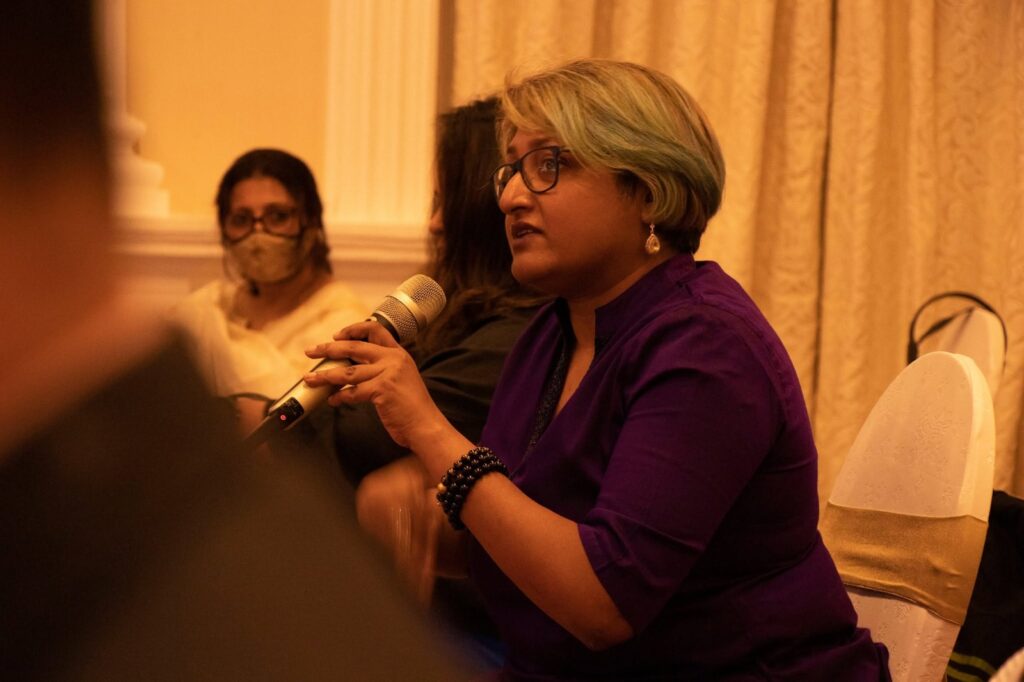
A key objective of the event was to create greater awareness of the relationship between labour legislation and women’s economic empowerment.
Public discussions around women’s employment often focus on social or cultural barriers. While these remain important, examining the regulatory environment provides another way of understanding why women may face difficulties entering or remaining in the workforce.
By placing labour law at the centre of the conversation, Advocata sought to encourage policymakers and the wider public to consider whether existing regulations remain fit for purpose.
This was particularly important given the changing nature of employment. New industries, evolving business models and changing expectations around work have created employment opportunities that may not have existed when many of Sri Lanka’s labour regulations were first introduced.
Looking towards reform
The discussion highlighted the importance of continuously reviewing labour legislation to ensure that it reflects the realities of the modern economy.
Reform does not necessarily mean removing protections. Instead, it requires asking whether protections are achieving their intended objectives and whether they can be designed in a way that does not unnecessarily limit women’s economic choices.
A gender-responsive labour framework should allow women to participate in employment on equal terms while ensuring that appropriate protections are available to all workers.
This could involve reconsidering provisions that distinguish between men and women, strengthening workplace protections and creating greater flexibility in employment arrangements.
The beginning of a wider conversation
The March 2021 discussion formed an important part of Advocata Institute’s broader work examining the relationship between labour regulation and women’s economic participation.
The questions raised during the event would continue to be relevant to the Institute’s subsequent work on gender-discriminatory labour laws, including its later research study “Gender Discriminatory Labour Laws in Sri Lanka and Female Labour Force Participation,” launched in 2022.
At its core, the discussion asked a simple but important question: are Sri Lanka’s labour laws helping women participate in the economy, or are some provisions unintentionally standing in their way?
Answering that question requires looking beyond the intention behind individual laws and examining their actual effects on women, employers and the labour market.
As Sri Lanka considers how to increase female labour force participation and make better use of its available workforce, ensuring that the legal framework supports rather than restricts women’s economic opportunities remains an important part of the reform conversation.
The “ලංකාවේ කම්කරු නීතිය කාන්තාවන්ගේ ආර්ථිකයට හිතකාමීද?” discussion provided a platform for beginning that conversation, bringing together policymakers, researchers and the private sector to examine how Sri Lanka can create a labour market that protects women while giving them greater freedom to participate in the economy.