Research Publication
Professor Mick Moore argues that Sri Lanka’s immediate revenue challenge is rooted in a long history of businesses and individuals paying relatively little tax. The economy’s shift from heavily taxed tea and rubber exports towards lightly taxed or exempt tourism and garment production weakened the revenue base, while tax administration was allowed to drift.
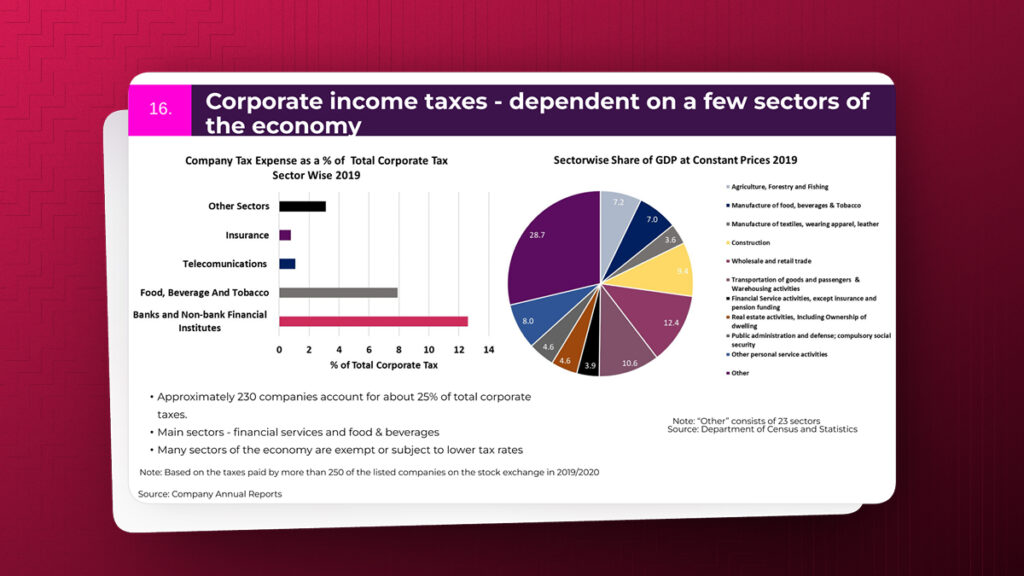
Rapid revenue mobilisation must therefore be accompanied by a visible commitment to fairness. The presentation calls for a broader and more effective personal income-tax base, a major review of business tax exemptions and serious taxation of real estate. It also warns against treating VAT as inherently regressive: when designed alongside wider fiscal measures, VAT can be an efficient source of revenue without placing an unfair burden on lower-income households. Administrative reform and a consistent public narrative about fairness are essential to restoring legitimacy.