 Commentary
The Case for Private Industrial Zones: Lessons from the Dominican Republic
6, August 2022
Summary
Juan Ariel Jiménez examines how the Dominican Republic used free trade zones and privately operated industrial parks to build a competitive platform for global companies. The country’s development strategy moved away from dependence on agricultural exports and import substitution towards greater openness, tourism and export-oriented manufacturing.
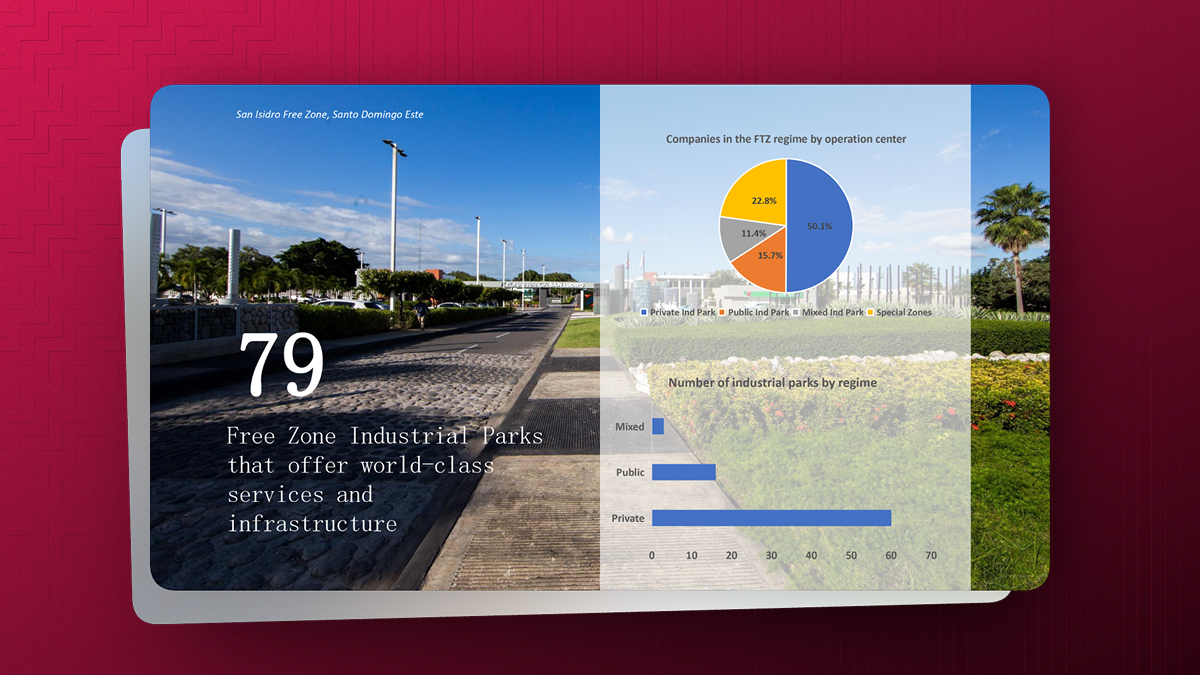
The presentation attributes the growth of the free-zone sector to stable rules, tax exemptions, privately provided infrastructure, preferential access to major markets, active investment promotion and close coordination between government and industry. By 2021, the sector included 79 industrial parks and 734 companies, supported more than 183,000 direct jobs and generated exports worth over US$7.1 billion. A proposed private industrial park near Caucedo Port illustrates how long-term land and infrastructure investment can become commercially viable while attracting export manufacturers, although the presentation also notes limited local supply-chain linkages and entrepreneurship.
Key Points
- The Dominican Republic shifted from import substitution towards an export-promotion strategy centred on tourism and free trade zones.
- Privately operated industrial parks combine serviced land, infrastructure and administrative support for export-oriented companies.
- Stable regulation, tax exemptions, market access and rapid government response helped attract multinational investment.
- The free-zone sector expanded to 79 parks and 734 companies by 2021, supporting more than 183,000 direct jobs.
- Private parks can become operationally profitable relatively early, but investors require a long horizon for recovering their capital.
- The model’s weaker points include limited backward linkages to local suppliers and relatively little employee-led entrepreneurship.