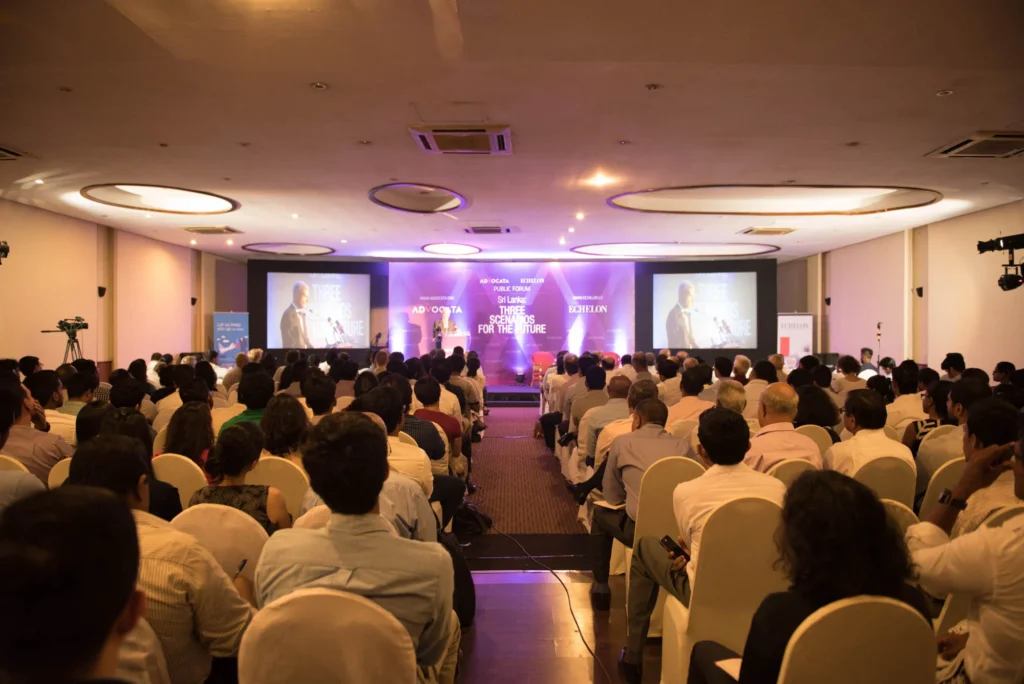
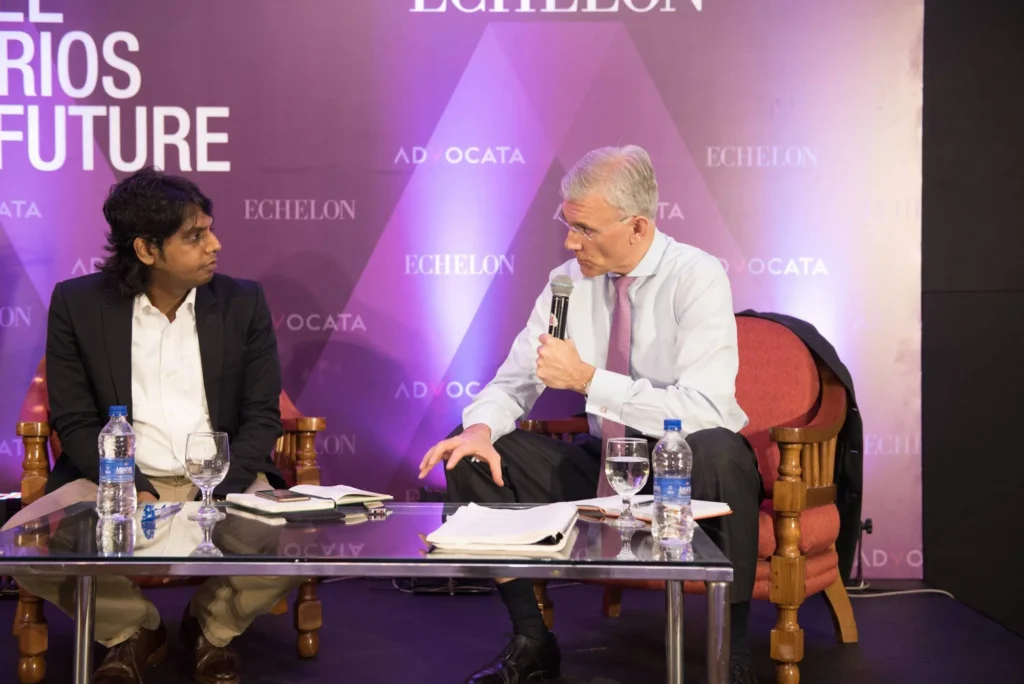
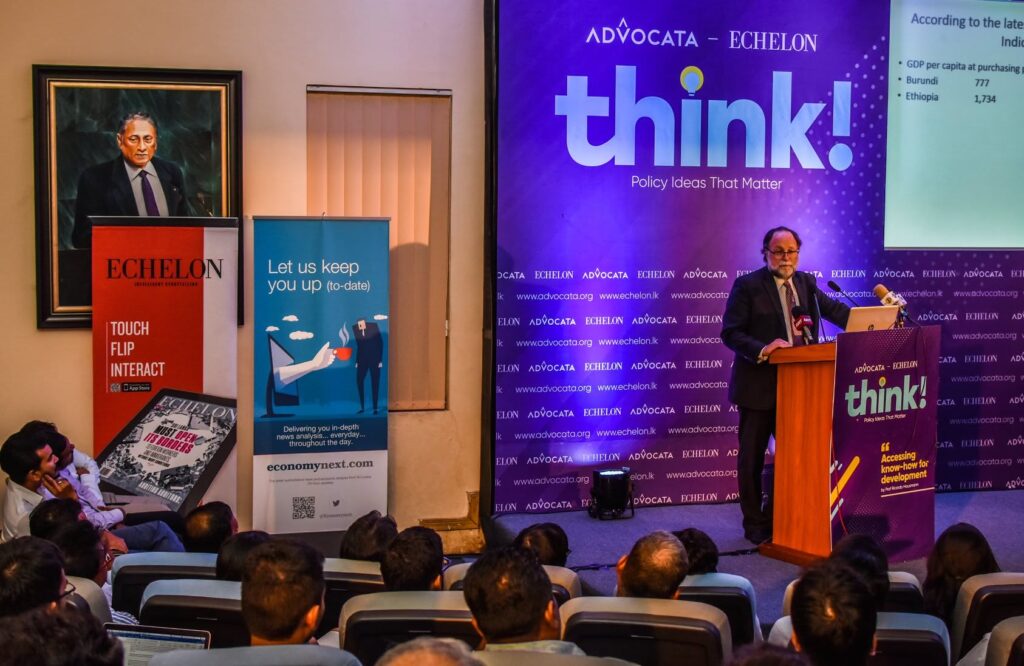
Public Lecture #3 Prof Razeen Sally on Sri Lanka’s Future : 3 Scenarios

Delivered in December 2016 at an Advocata–Echelon public forum, this became one of Advocata’s most widely discussed and debated early lectures. Prof. Razeen Sally, a member of the Mont Pelerin Society whose research focuses on global trade policy, used scenario analysis to sketch three possible paths for Sri Lanka’s economy — Take-off, Drift and Stagnation, and Reversal — as a framework for thinking rigorously about the country’s future rather than assuming any single trajectory was inevitable. His diagnosis of the starting point was blunt: Sri Lanka’s trade-to-GDP ratio, at 50% or less, was shockingly low for an economy of its type, with exports (including services) stuck around 20% of GDP when they should have been double that, foreign investment reduced to a trickle of under a billion dollars in 2016 with almost none of it export-oriented, and an export basket still dominated by tea, other plantation crops, and garments — largely unchanged and undiversified compared to the manufacturing and services diversification achieved by East Asian peers. Sally connected this economic stagnation to what he saw as more deep-seated institutional and social fragilities, arguing that Sri Lanka’s foundations remained “too brittle” and posing hard, direct questions about whether the country’s underlying social hierarchies and the legacy of its civil conflict were genuinely behind it. The lecture drew significant public pushback — including a published critique from a group calling itself the “Avocado Collective” — making it a genuine flashpoint in Colombo’s policy discourse and prompting Advocata itself to publicly clarify its mission and independence in response.