Pricing Fuel & Energy : Lessons From India
Fuel and energy pricing are central to the functioning of any economy. Changes in the price of fuel affect households, businesses and the government, influencing transportation costs, the cost of production and ultimately the prices consumers pay for goods and services. For countries that rely heavily on imported fuel, the way energy is priced can also have significant implications for public finances and the wider economy.
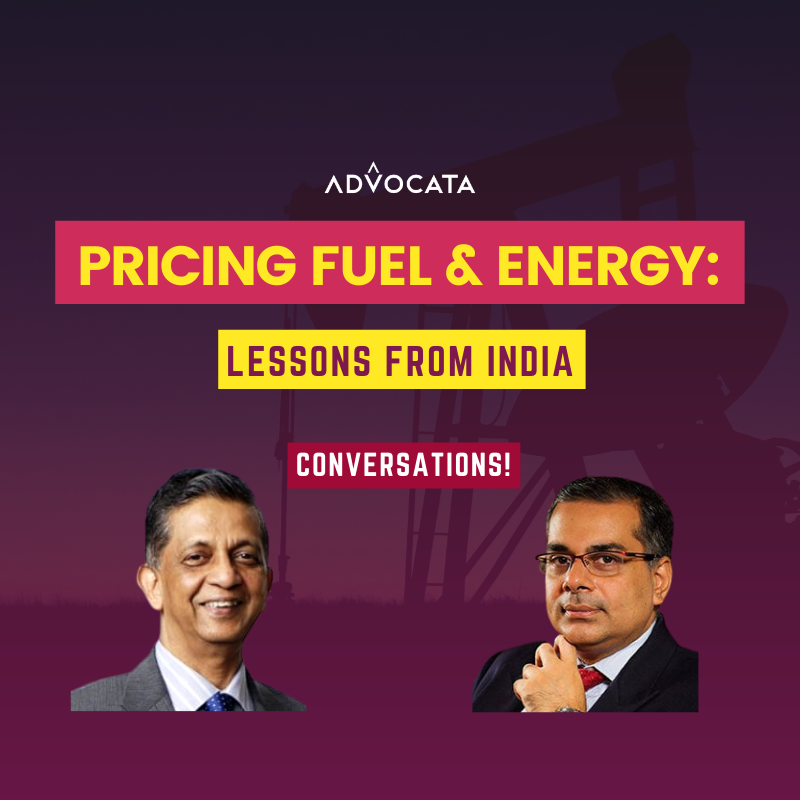
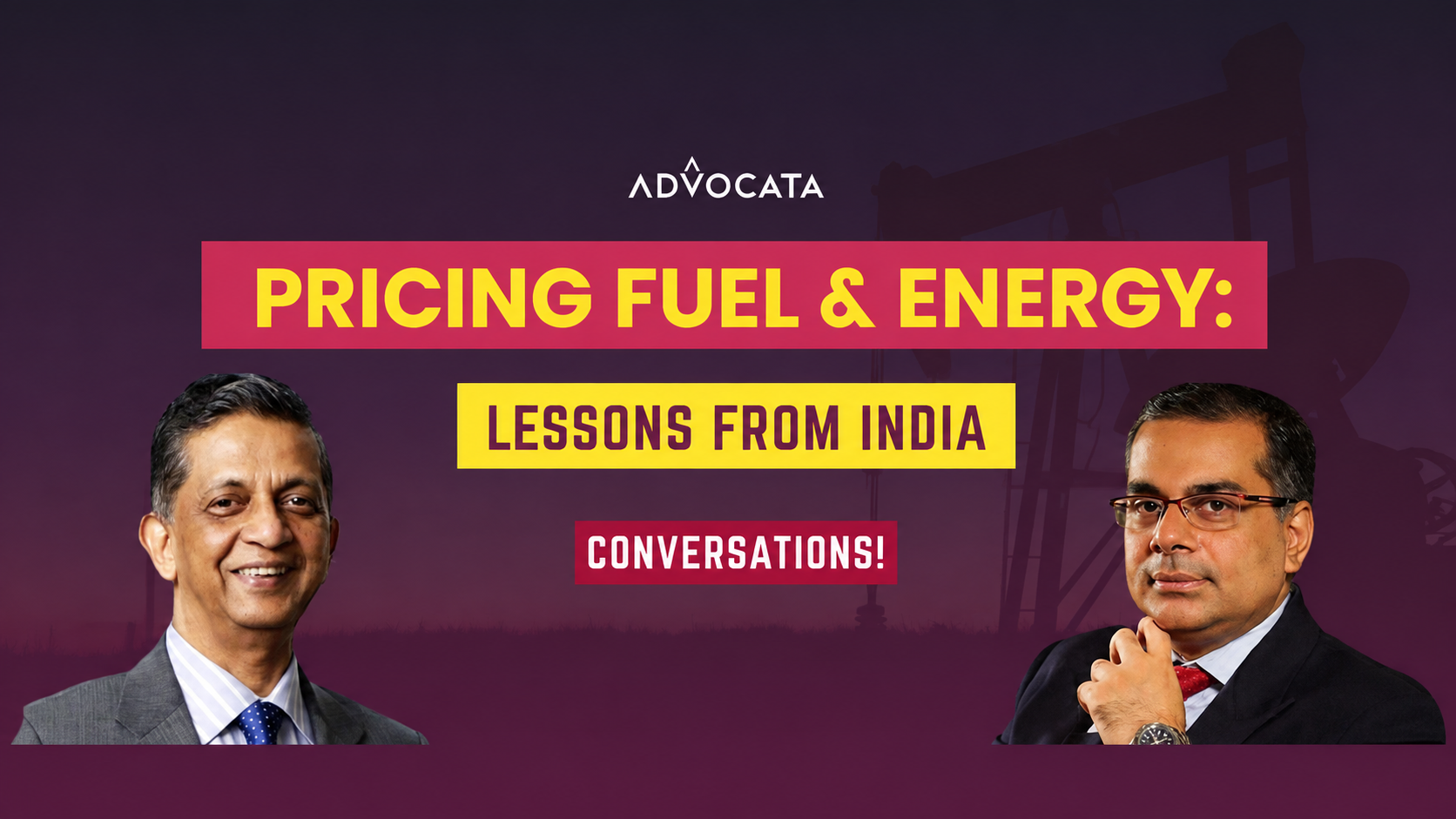
Against this backdrop, the Advocata Institute hosted an online discussion on “Pricing Fuel and Energy: Lessons From India” on 24 June 2021. The discussion examined India’s experience with fuel and energy pricing and considered what lessons could be relevant for Sri Lanka.
The conversation featured Dr. S. Narayan, former Secretary of India’s Ministry of Finance, Department of Petroleum and Industrial Development, and former Economic Adviser to the Prime Minister of India, alongside Murtaza Jafferjee, Chair of the Advocata Institute.
The discussion provided an opportunity to examine the challenges involved in pricing fuel and energy and the policy choices governments face when attempting to balance affordability, fiscal sustainability and economic efficiency.
Why fuel pricing matters
Fuel is an essential input into almost every part of an economy. It powers transportation, supports businesses and industries, and is an important component of the cost of producing and distributing goods and services.
As a result, keeping fuel prices artificially low can have consequences that extend beyond the price consumers pay at the pump.
When governments intervene to control or subsidise fuel prices, they may absorb part of the cost through public finances. If the price paid by consumers does not reflect the underlying cost of supplying fuel, the difference has to be financed in some way.
This creates an important policy question: how should fuel prices be determined, and what role should the government play in determining them?
These questions are particularly important for countries that depend on imported petroleum products, as international oil prices can fluctuate significantly.
India’s experience with fuel pricing
India provided an important case study for the discussion.
Over time, India has undergone significant changes in the way petroleum products are priced. Its experience demonstrates the difficulties involved in moving between government-controlled prices and pricing mechanisms that respond more closely to market conditions.
The participation of Dr. S. Narayan brought first-hand experience of India’s economic policymaking process to the conversation. Having served in senior positions within India’s Ministry of Finance and as Economic Adviser to the Prime Minister, Dr. Narayan was able to provide insight into the policy considerations involved in managing petroleum and energy markets.
India’s experience is particularly relevant to Sri Lanka because both countries have faced questions surrounding the affordability of fuel, the fiscal implications of energy policy and the challenge of responding to changes in global oil prices.
The challenge of keeping fuel affordable
Fuel is a politically sensitive commodity because changes in its price have a direct impact on households.
When fuel prices increase, the effects can extend beyond motorists. Higher transportation costs can increase the cost of moving food and other goods, while businesses that rely on fuel as an input may face higher operating costs.
This can ultimately contribute to broader increases in the cost of living.
Governments therefore face a difficult trade-off. Keeping fuel prices low can provide short-term relief to consumers, but maintaining prices below their underlying cost can place pressure on public finances. On the other hand, allowing prices to adjust can improve fiscal sustainability but may create immediate difficulties for households and businesses.
The discussion around India’s experience provided an opportunity to consider how policymakers can navigate this trade-off.
Pricing and public finances
The way fuel is priced can also have significant implications for government revenue and expenditure.
When fuel prices are subsidised or controlled, governments may have to absorb part of the cost. This can create substantial fiscal burdens, particularly when international oil prices rise.
For countries already facing pressure on public finances, these costs can become increasingly difficult to sustain.
The question is therefore not simply whether fuel should be affordable. It is also who ultimately bears the cost of keeping it affordable.
A pricing system that makes the cost of fuel more transparent can help reveal the fiscal implications of energy policy and allow policymakers and the public to better understand the trade-offs involved.
Learning from international experience
The event was part of Advocata Institute’s broader efforts to bring international experience into Sri Lanka’s policy discussions.
India’s experience offers an important example of how a large developing economy has approached the complex relationship between energy markets, government policy and consumers.
International comparisons can be particularly useful when considering policy reform because they allow policymakers to examine how other countries have addressed similar challenges, including the transition towards more market-oriented pricing mechanisms.
However, lessons from other countries cannot simply be copied. Differences in economic structures, energy markets, taxation systems and social conditions mean that policies need to be adapted to local circumstances.
The value of examining India’s experience therefore lies in understanding the principles, challenges and trade-offs involved, rather than simply replicating a particular policy.
The role of market-based pricing
A key consideration in discussions about fuel pricing is the role that market signals can play.
Prices provide information about the cost and scarcity of resources. When prices are allowed to respond to changes in international oil prices and other market conditions, consumers and businesses receive clearer signals about the true cost of energy.
This can encourage more efficient consumption and investment decisions.
By contrast, artificially maintaining prices below their economic cost can weaken these signals. It can encourage greater consumption while making it more difficult for consumers and businesses to understand the actual cost of energy.
This does not mean that governments have no role to play. Policymakers may still need to address issues of affordability and protect vulnerable households. The policy challenge is determining how this can be achieved without creating broad and costly distortions in the energy market.
Balancing efficiency and social protection
One of the broader questions surrounding fuel pricing is how governments can combine economically efficient pricing with appropriate social protection.
Energy is an essential component of modern life, meaning that sharp increases in prices can disproportionately affect lower-income households.
However, broad fuel subsidies are not necessarily the most effective way of protecting vulnerable groups. When everyone receives the same subsidy, a significant portion of the benefits can accrue to higher-income households that consume more fuel.
This creates a case for considering more targeted approaches to social protection while allowing prices to more accurately reflect underlying costs.
The discussion provided an opportunity to consider these difficult policy choices and examine how lessons from India’s experience could inform Sri Lanka’s own approach.
Why energy policy matters for economic recovery
The question of fuel pricing cannot be separated from the broader health of the economy.
Energy prices affect inflation, household expenditure, business costs, transportation and government finances. For a country attempting to strengthen its economy, an energy pricing system that is financially sustainable and economically efficient is therefore an important part of wider economic policy.
Transparent and predictable pricing can also provide businesses with greater certainty when making investment and production decisions.
For Sri Lanka, these considerations are particularly important given the country’s reliance on imported energy and its exposure to changes in international commodity prices.
Continuing the conversation
The “Pricing Fuel & Energy: Lessons From India” discussion provided a platform for examining these issues through the experience of a neighbouring country.
By bringing together Dr. S. Narayan and Murtaza Jafferjee, the event connected international policy experience with Sri Lankan economic perspectives and encouraged a broader conversation about how energy pricing should be approached.
The discussion highlighted that fuel pricing is not simply a question of determining what consumers pay at the pump. It is closely connected to government finances, market incentives, household welfare and the overall performance of the economy.
India’s experience demonstrates that reforms to energy pricing can involve difficult choices and significant political and economic challenges. For Sri Lanka, understanding these experiences can help inform the debate around creating a pricing framework that is transparent, sustainable and responsive to changing economic conditions.
Ultimately, the challenge for policymakers is to develop an energy pricing system that balances the interests of consumers, businesses and the government while ensuring that the wider economic costs of energy policy are recognised.
The Advocata Institute’s discussion sought to contribute to this conversation by examining India’s experience and considering what lessons could be relevant as Sri Lanka continues to debate the future of its fuel and energy policy.