How can we improve Sri Lanka’s debt sustainability?
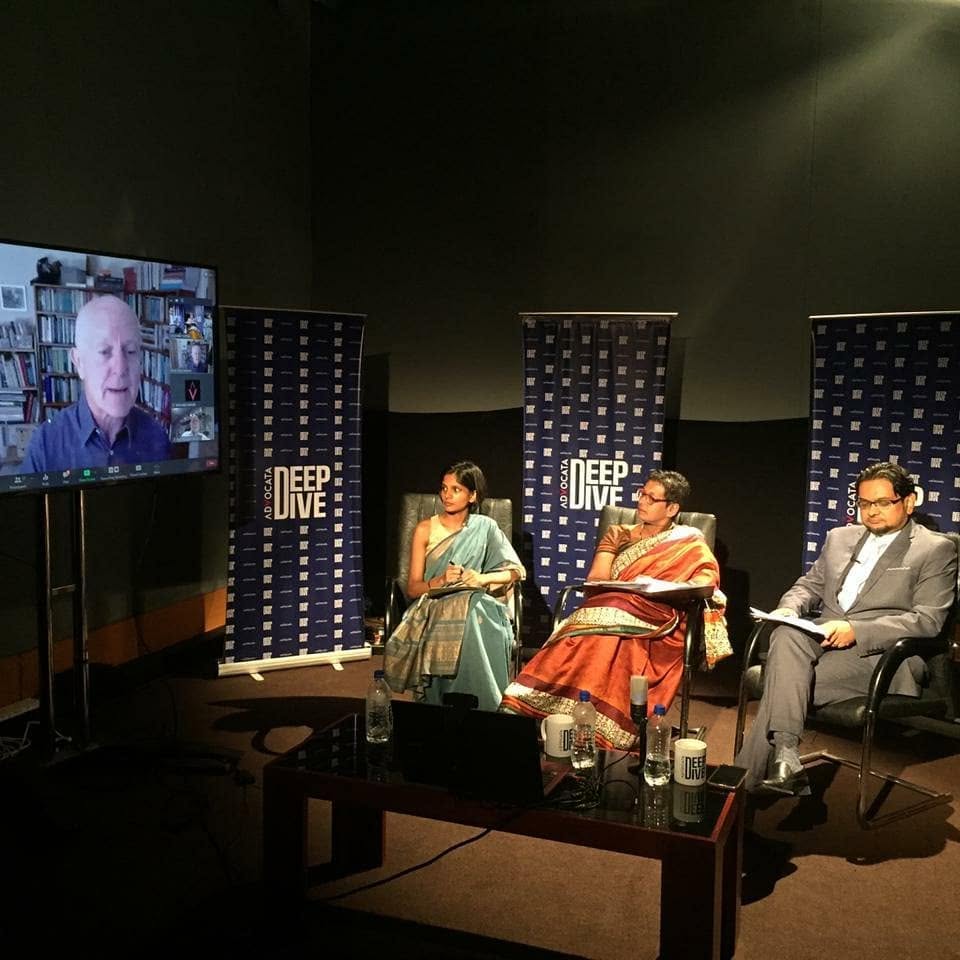
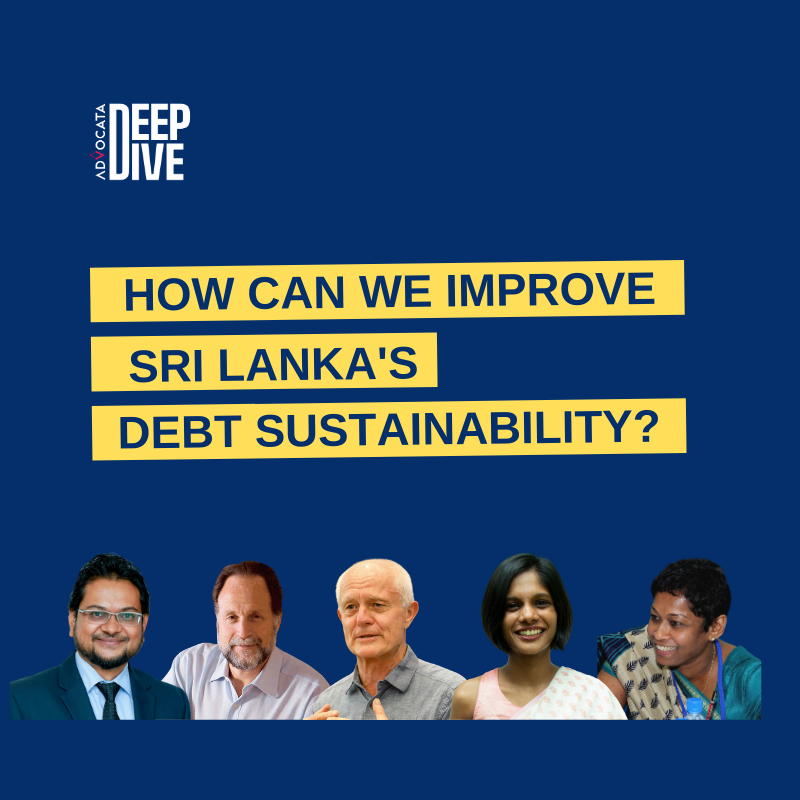
Livestreamed on 30 September 2020, this discussion launched Advocata’s “Deep Dive” public policy discussion series, opening with a primer lecture from Advocata Chairman Murtaza Jafferjee (part of a three-part series covering debt sustainability, fiscal performance, and economic growth) before moving into a panel featuring an unusually prestigious international lineup for a Sri Lankan think-tank event: Prof. Ricardo Hausmann, Director of Harvard’s Growth Lab at the Center for International Development, Prof. Mick Moore, founding CEO of the International Centre for Tax and Development, and Dr. Nishan De Mel, Executive Director of Verité Research, moderated by Dr. Roshan Perera, a former Director of the Central Bank of Sri Lanka’s Risk Management Department, and Aneetha Warusavitarana. The discussion was framed by a stark, specific number: with an estimated $4.2 billion in capital and interest repayments due in 2020 alone according to the Ministry of Finance, and COVID-19 already worsening debt positions across emerging markets, Sri Lanka’s debt position was already precarious well before the eventual 2022 default. The main highlight was the panel’s focus on genuinely actionable strategy rather than diagnosis alone — debating what specific policies and reforms would let Sri Lanka meet its existing and future payment obligations without requiring exceptional external financial assistance, a framing that in hindsight reads as a road not taken, since the country would indeed require exactly that kind of exceptional assistance from the IMF less than two years later.