 Commentary
57% of Sri Lankans unwilling to pay higher food bill to protect local industry – Advocata Survey
3, January 2020
2 min read

First appeared in Republic Next, Daily News, Daily Mirror, Daily FT , and Ceylon Times
A survey commissioned by the Advocata Institute in April 2019 revealed that 57% of Sri Lankans were unwilling to pay extra for food, even if it meant that the local agricultural industry would be protected.
This survey covered 855 respondents in 18 districts within 8 provinces in Sri Lanka. The demographic variables considered were age, gender, educational qualification, socio-economic class, and monthly household income.

The survey also revealed that the lower the Socio-Economic Category (SEC), the less willing respondents were to pay extra for their food, to protect the local industry. SEC is the category an individual falls into based on their education and occupation. It was only in the highest SEC where 51% answered ‘yes’, agreeing to incur a higher cost of living at the cost of protectionist taxes. SECs following it were increasingly reluctant to pay more for food, even if it meant that local businesses were protected.
Lower-income households spend most of their income on food according to the Household Income and Expenditure (HISE) Survey. The lower the income level higher the proportion of their expenditure on food-related items.

The survey also noted differences across provinces. Respondents from the North Central and Sabaragamuwa provinces were more willing to incur higher food costs, with 64% from the North Central Province and 61% from the Sabaragamuwa Province answering ‘yes’. In contrast, only 22% of respondents from the Southern Province and 24% from the North Western Province answered ‘yes’.
Interestingly, 72% of males were unwilling to bear the burden of a higher cost for food according to the survey. To put this into perspective, Sri Lanka has 4 million male-headed households (Household Income and Expenditure Survey, 2016).
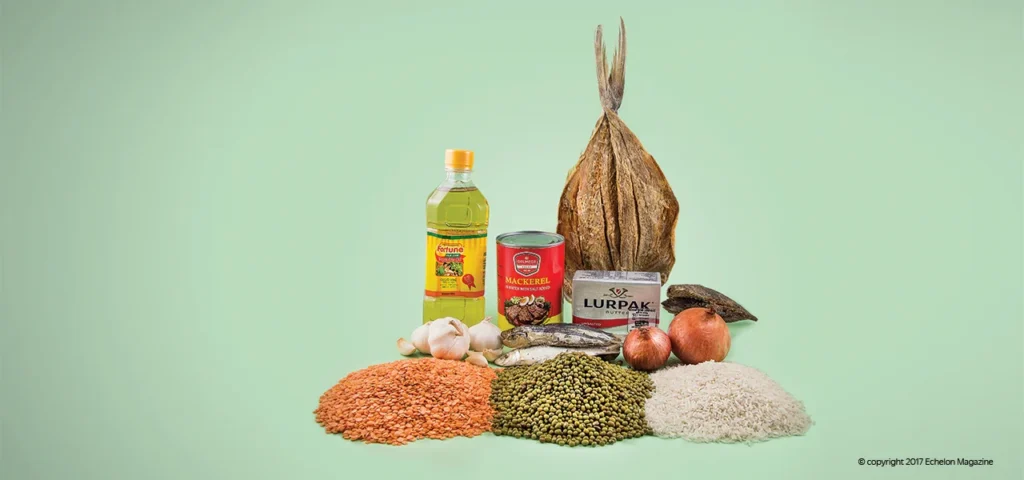
Below is a breakdown of tariffs on ingredients used everyday by Sri Lankans:

Key Points:
-
57% of people were not willing to pay more for their food, even if it meant that the local industry is protected.
-
Socioeconomic classes B,C,D and E were less willing to incur higher costs for food, resulting from exorbitant tariffs.
“Sri Lanka has a high cost of living compared to its peers in the region. Tariffs and protectionist taxes on food items, some close to 100% mean that consumers will continue to suffer at the expense of ill-framed policy” – Dhananath Fernando, Chief Operating Officer, Advocata Institute.